

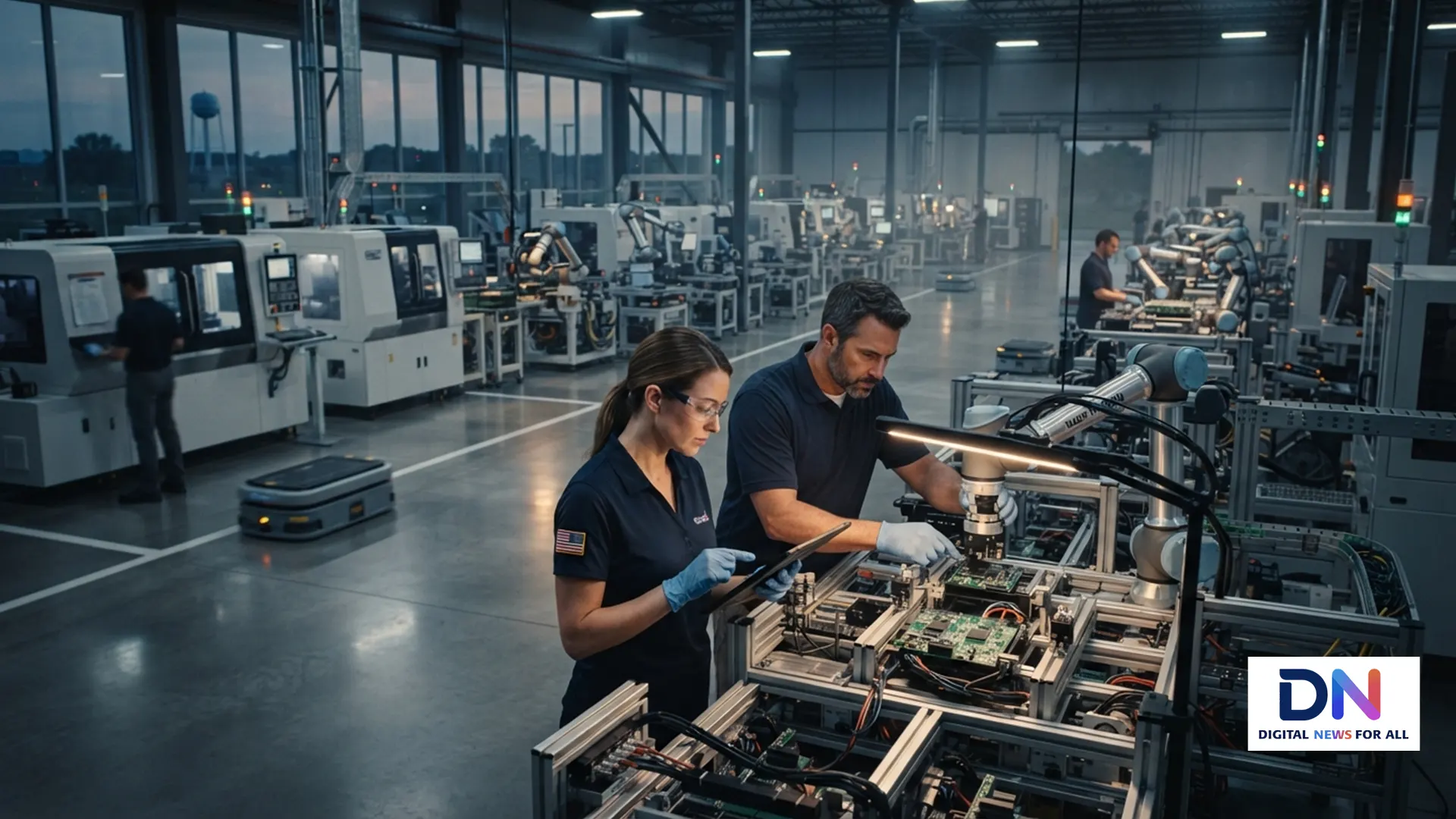
Manufacturing jobs comeback headlines are becoming harder to ignore in the United States. Through August 2026, factory activity had expanded for eight consecutive months, marking a sharp change after a prolonged period of weakness. The question now is whether stronger factory production can translate into lasting employment gains.
Factory Activity Is Finally Moving Higher
The Institute for Supply Management reported an August Manufacturing PMI of 54.6%. It was the sector’s eighth straight month of expansion.
New orders also remained above the growth threshold, while production posted a strong 58.3 reading. That combination suggests manufacturers are receiving enough demand to keep plants busy.
The Federal Reserve’s industrial production data also showed total industrial output holding near its highest levels of the year through August. Computer and electronics production remained an important part of that strength.
Jobs Are Improving, But Slowly
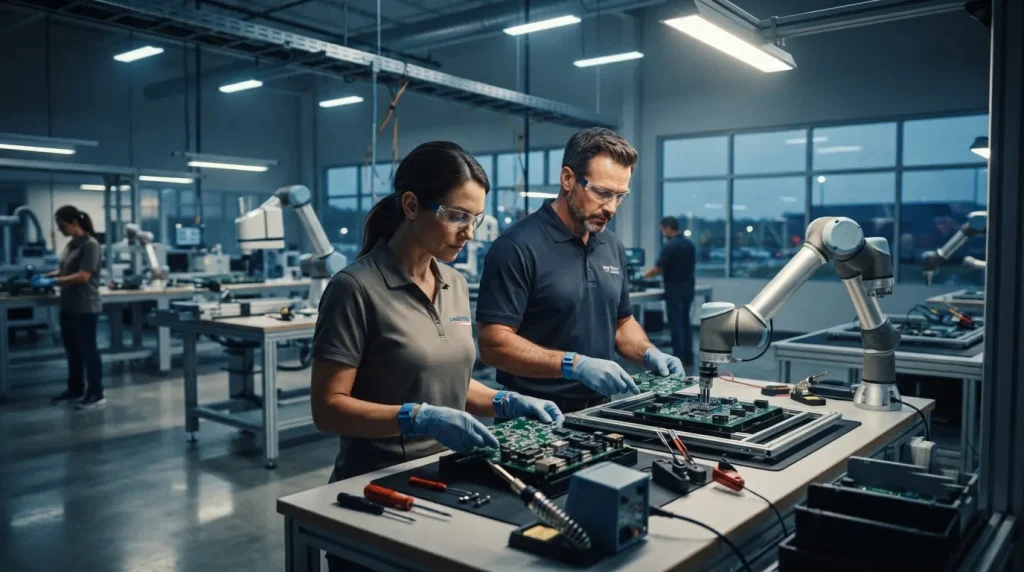
The employment picture is more complicated. Bureau of Labor Statistics data showed manufacturing employment increased by 16,000 in August, following a 14,000 gain in July. Yet the sector averaged a slight employment decline over the prior 12 months.
That difference matters. Factories can increase production without dramatically expanding payrolls. Automation, robotics, improved equipment and worker productivity allow companies to produce more with fewer employees.
BLS projects overall manufacturing employment to remain little changed from 2024 to 2034. However, nearly one million annual openings are projected across production occupations, largely because workers retire or move into other careers.
Why New Factories Could Change the Equation
One major structural shift is the construction of advanced manufacturing facilities. The Commerce Department’s semiconductor program says proposed domestic projects could create more than 115,000 jobs.
Investment is also reaching steel and energy-related manufacturing. In August, the Department of Energy announced a $500 million award supporting a $1 billion Cleveland-Cliffs steel investment in Ohio and protecting 2,300 jobs.
The Census Bureau’s manufacturing indicators provide another important signal. Durable-goods orders are closely watched because they can indicate future production commitments.
Can the Manufacturing Jobs Comeback Last?
The answer remains uncertain. A durable recovery would require sustained orders, competitive production costs, investment and skilled workers.
There is also a major qualification: September employment data were not yet available as of October 1. The next BLS Employment Situation report is scheduled for October 2.
For now, the evidence points to something more nuanced than a simple factory renaissance. U.S. manufacturing is producing stronger signals, and selected industries are adding workers. But whether that becomes a broad, permanent manufacturing jobs comeback will depend on how much of today’s investment ultimately becomes long-term production and payroll growth.
#ManufacturingJobs #FactoryJobs #USManufacturing #AmericanManufacturing #Reshoring #Jobs #Economy #Factories #Industry