

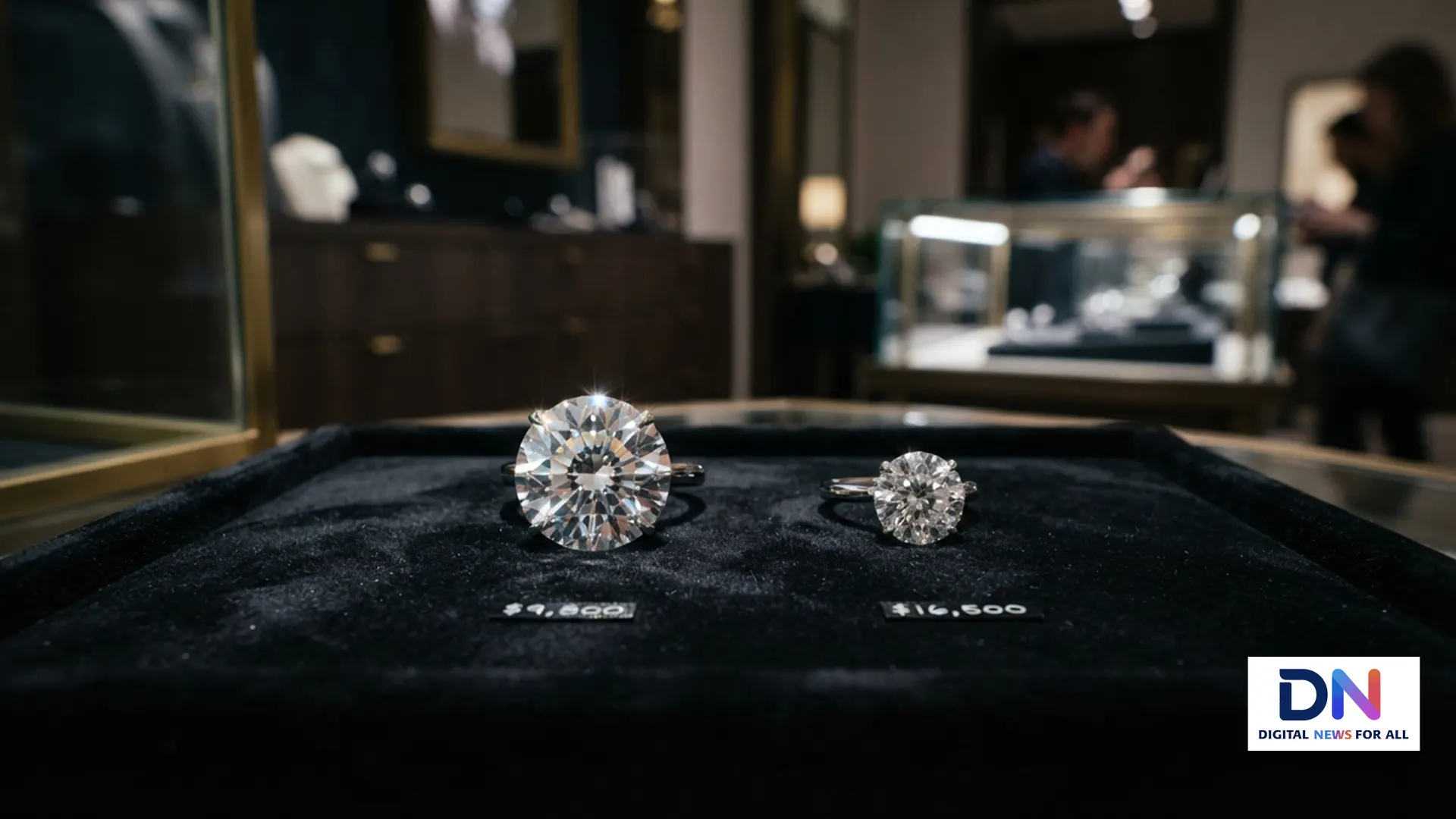
The diamond market is entering a major pricing reset. Lab-grown diamonds have moved from a niche alternative to a mainstream jewelry option, putting new pressure on natural stones and traditional retail margins.
Recent industry data shows just how dramatic the shift has become. Natural diamond wholesale prices are now roughly 30% to 40% below their 2021 peaks, although the decline varies by size and quality. At the same time, lab-grown diamond wholesale prices have fallen about 93% since 2020.
Why Lab-Grown Diamonds Are Changing Prices
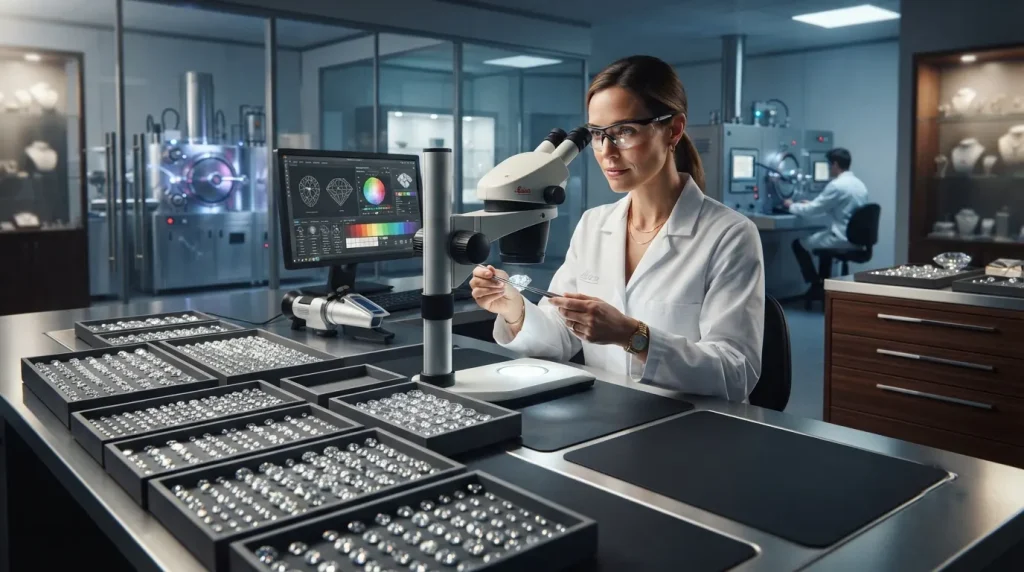
Lab-grown diamonds are real diamonds in chemical, physical and optical terms. According to the Gemological Institute of America, they can be produced using high-pressure, high-temperature or chemical-vapor-deposition methods.
The major difference is origin. Natural diamonds form underground over geological timescales, while laboratory stones can be produced within weeks. That production model makes supply far more scalable.
The De Beers Diamond Report says synthetic lab-grown wholesale prices have declined 93% since 2020. It also estimates average wholesale prices at around $100 per carat in 2026.
Natural Diamonds Face a New Consumer Equation
The growing price gap changes how shoppers compare diamonds. A buyer who previously faced a premium for a larger natural stone can now consider a much larger laboratory-grown diamond for the same budget.
De Beers reported that synthetic diamonds continued to pressure lower-value natural diamonds during the first half of 2026. Its average realized rough-diamond price also declined 32% year over year, while the company’s rough-price index fell 16%.
However, the market is not disappearing overnight. De Beers’ 2026 research shows natural diamonds still represented 75% of U.S. diamond demand by value in 2025. Higher-value natural diamonds have also shown greater resilience than lower-value categories.
What Falling Prices Mean for Shoppers
For consumers, falling prices can create more choice but also introduce a complicated resale question. Buyers should not assume that either a natural or lab-grown diamond will automatically retain its original retail price.
The Federal Trade Commission recommends understanding a diamond’s origin and asking sellers about testing and documentation before purchasing.
The FTC Jewelry Guides also require truthful descriptions of laboratory-created and natural gemstones. Consumers should therefore look carefully at whether a listing identifies a stone as laboratory-grown.
Is the Natural Diamond Market Dying?
Calling it the “death” of natural diamonds may be premature. The evidence instead points to a structural separation between two increasingly distinct categories.
Natural diamonds continue to command a premium based on rarity, geological origin and consumer preference. Meanwhile, lab-grown diamonds are competing primarily through size and affordability.
The bigger transformation may be happening at the retail level. As shoppers gain access to instant price comparisons, retailers face greater pressure to justify premiums and protect margins. The latest De Beers results acknowledge that falling lab-grown retail prices are expected to increase competitive pressure.
The diamond industry is therefore not simply losing one product to another. It is being forced to redefine what consumers are paying for: rarity, provenance, size, design or simply the emotional meaning attached to the stone.
For shoppers, that could mean a permanent shift toward greater choice and more aggressive diamond pricing.
#LabGrownDiamonds #NaturalDiamonds #DiamondMarket #JewelryIndustry #LuxuryMarket #EngagementRings #ConsumerTrends #DigitalNews