

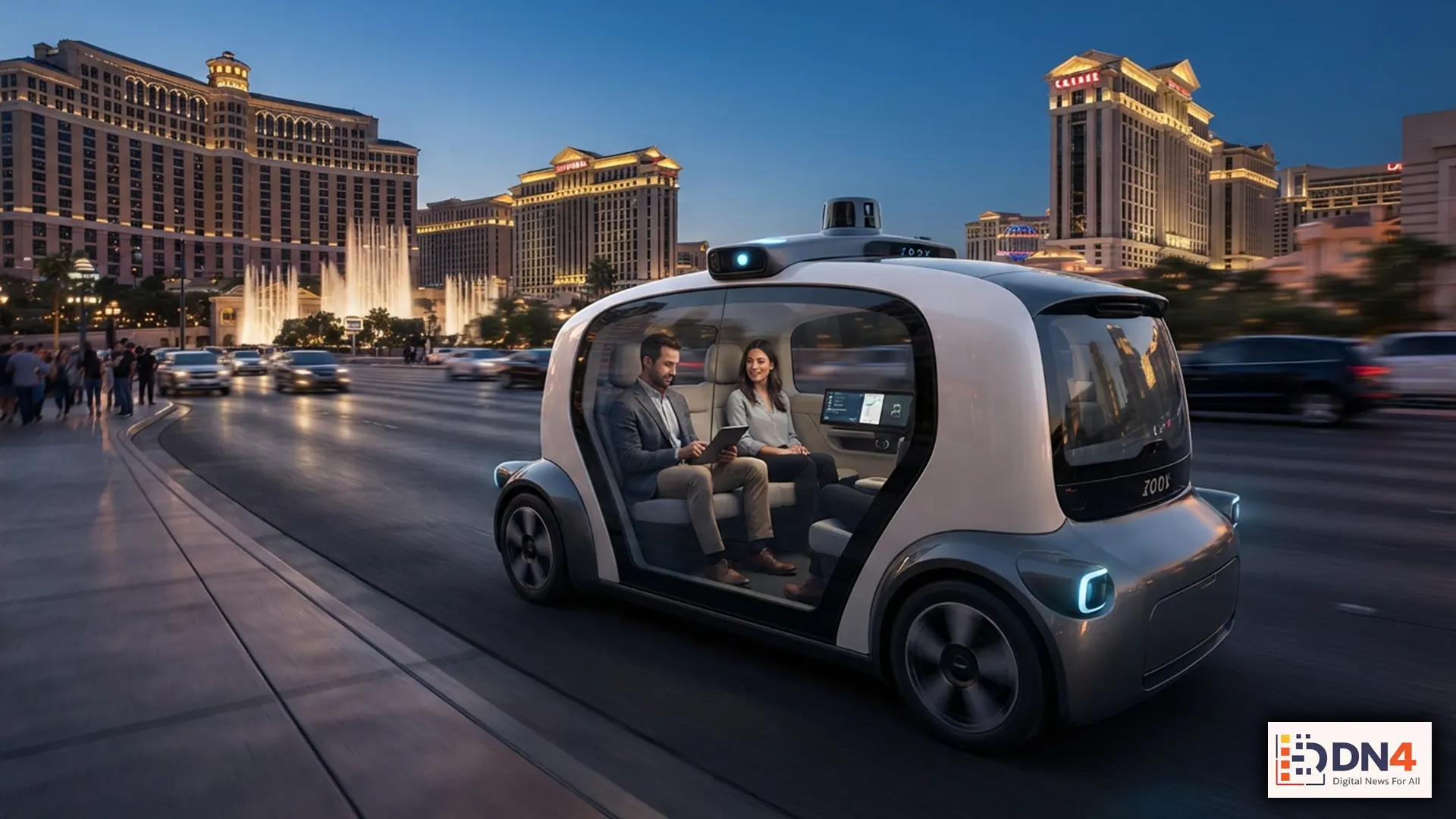
Amazon-owned Zoox is moving from autonomous-vehicle testing toward a new phase of commercial robotaxi operations, with its purpose-built vehicle offering something ordinary cars cannot: a ride without a steering wheel, pedals or a human driver.
Zoox has already launched ride-hailing service in Las Vegas and has opened San Francisco service to selected riders. In July 2026, the National Highway Traffic Safety Administration granted Zoox a federal exemption that cleared the way for the company to charge passengers for rides. Amazon said the approval was a major milestone because Zoox became the first purpose-built robotaxi to receive this type of exemption for paid commercial service.
Why Zoox’s design is different
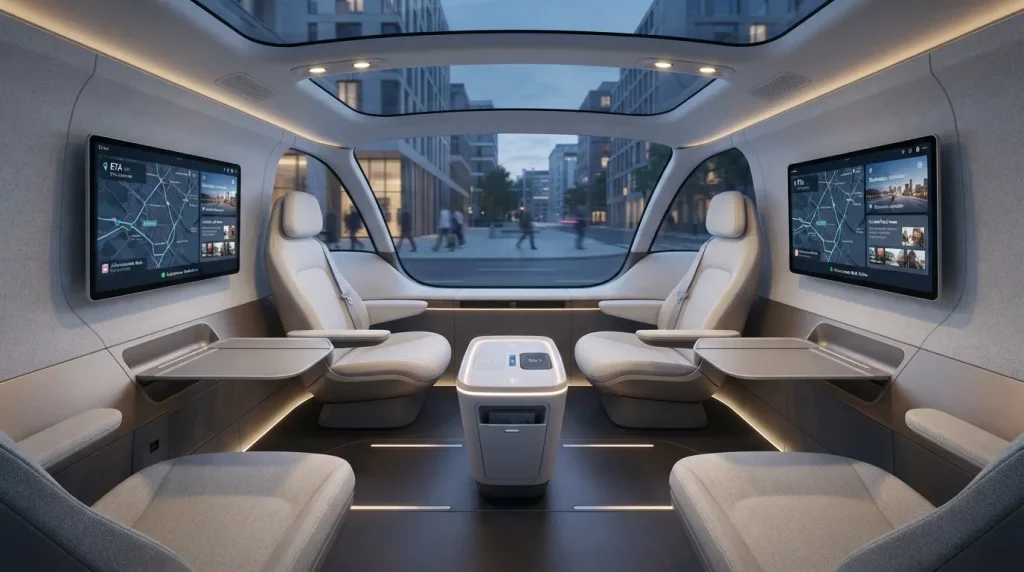
Unlike conventional autonomous vehicles that start with a standard car and add self-driving technology, Zoox designed its vehicle specifically for autonomous transportation. It has no steering wheel or pedals, uses a symmetrical design and seats passengers facing one another.
Amazon describes the Zoox vehicle as a purpose-built robotaxi designed around the passenger experience rather than a driver’s cockpit. The vehicle can carry up to four riders and is intended to operate as an on-demand urban mobility service.
From experiments to paid rides
The shift to commercial service changes the significance of Zoox’s technology. Testing can demonstrate that an autonomous system works under controlled operating conditions; paid service requires a company to deliver a repeatable experience to ordinary customers.
Zoox says Las Vegas is its first public commercial market, while San Francisco has been expanding through its rider program. The company has also been testing its purpose-built robotaxi in Austin and Miami and has announced plans for further expansion.
What this could mean for urban transit
Robotaxis are unlikely to replace buses, trains and other forms of mass transit overnight. Their more immediate role could be as an additional layer of urban mobility, particularly for short trips, first- and last-mile connections and areas where traditional public transportation is less convenient.
Zoox’s vehicle design also points toward a different relationship between passengers and cars. If there is no driver and no front-seat cockpit, interior space can be organized around riders rather than vehicle control. That could eventually influence how cities think about curb space, parking and on-demand transportation.
Research into real-world robotaxi experiences suggests that passengers can value consistency and convenience, but also remain concerned about transparency, emergency handling, flexibility and accountability.
The regulatory and safety challenge
Commercial deployment does not mean autonomous vehicles have eliminated every safety question. Zoox has developed its own safety-case framework covering the vehicle, driving software and supporting operational processes. The company says the framework is intended to demonstrate how risks are identified and managed across the complete system.
The regulatory landscape is also evolving. The National Highway Traffic Safety Administration oversees federal vehicle-safety requirements, while state and local authorities have additional roles in regulating autonomous transportation.
Uber could accelerate the transition
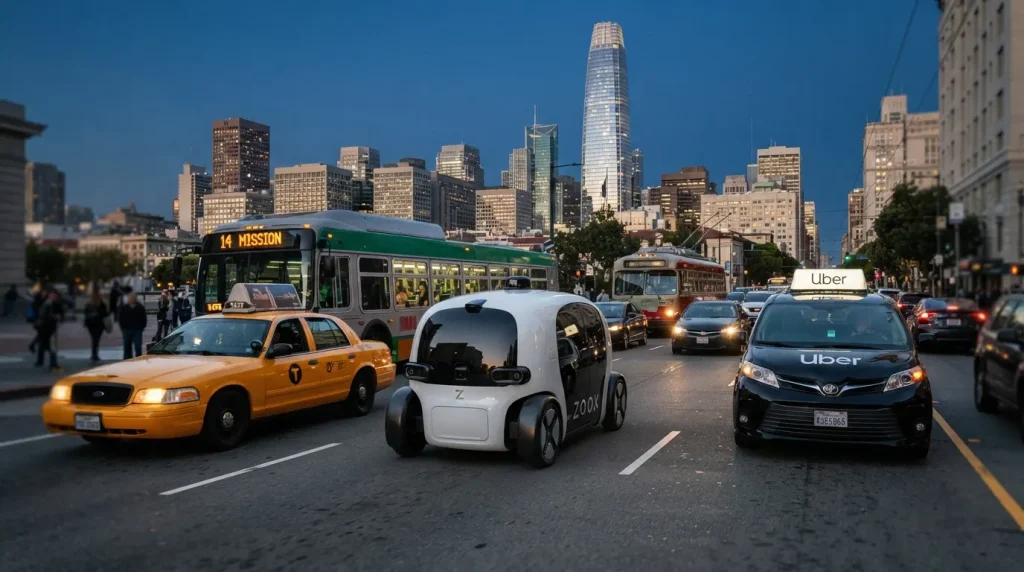
Zoox’s commercial strategy extends beyond its own app. Uber and Zoox announced a partnership under which Zoox robotaxis are planned for the Uber network in Las Vegas and later Los Angeles.
If that expansion proceeds, robotaxis could become less of a novelty and more like another ride option inside an established transportation marketplace. That would give autonomous vehicles access to customers who may never download a dedicated robotaxi app.
What happens next?
Zoox’s rollout is an important test of whether purpose-built autonomous vehicles can move beyond demonstrations and become a scalable transportation business. The company will have to balance safety, regulatory compliance, vehicle production, customer trust and operating costs as it expands.
The bigger urban-transit question is not simply whether a vehicle can drive without a steering wheel. It is whether cities can integrate autonomous rides into a transportation system that is affordable, accessible and efficient. Zoox’s commercial rollout could provide an early answer.
#Zoox #Amazon #Robotaxi #AutonomousVehicles #SelfDrivingCars #UrbanTransit #FutureOfMobility #AI #TransportationTech