

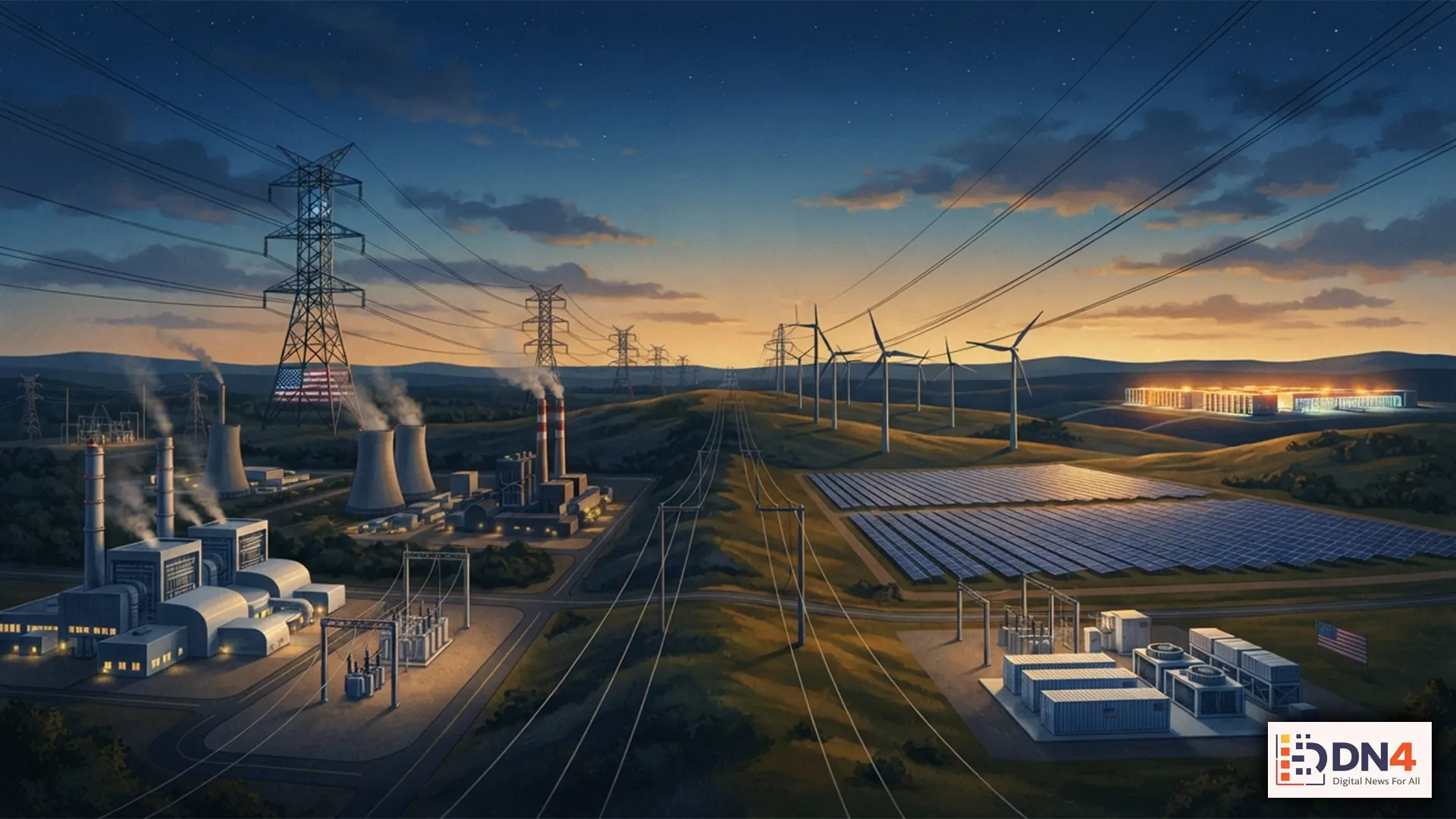
America’s electricity debate is entering a new phase. The question is no longer simply whether the United States should move toward cleaner energy, but how it can expand and secure the power grid while electricity demand rises.
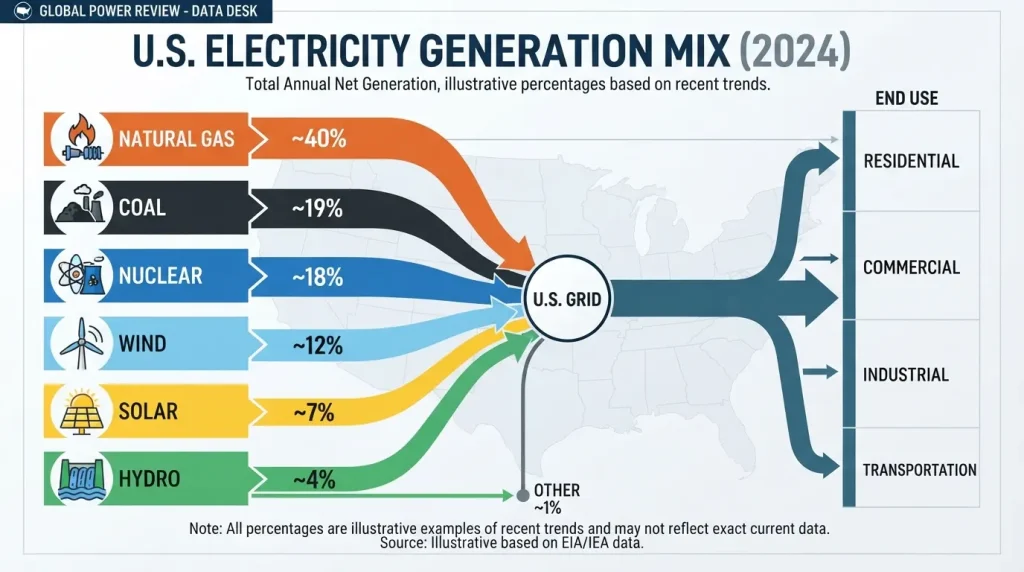
Natural gas remains central to the U.S. electricity system. According to the U.S. Energy Information Administration, fossil fuels supplied about 58% of utility-scale U.S. electricity generation in 2025, with natural gas accounting for roughly 41%. Renewables supplied about 24%.
Why Grid Reliability Is Becoming a National Priority
The pressure on the grid is increasing as data centers, artificial intelligence, advanced manufacturing and electrification create new demand. The U.S. Department of Energy said its 2026 draft National Transmission Needs Study identified an urgent need for additional transmission infrastructure because of data centers, manufacturing and broader economic growth.
At the same time, federal regulators are focusing on reliability and cybersecurity. The Federal Energy Regulatory Commission approved new measures in March 2026 addressing reliability challenges including cybersecurity, extreme weather and rising demand.
Natural Gas Still Has a Role
Supporters of natural gas argue that flexible gas-fired generation can help maintain electricity supplies when demand spikes or renewable output falls. EIA notes that combined-cycle gas turbines can ramp their output and support grid operations as more renewable capacity is integrated.
That does not mean fossil fuels are replacing clean energy. Instead, the emerging system is increasingly diversified, combining dispatchable generation, renewable power, storage and stronger transmission networks.
Renewables Are Reshaping the Grid
Wind and solar are expanding rapidly. EIA reported that wind and solar together produced a record 17% of U.S. utility-scale electricity in 2025. Including small-scale solar increased their combined share to about 19% of total U.S. generation.
The challenge is infrastructure. Renewable projects can be located far from major demand centers, making transmission investment essential. Battery storage, grid controls and stronger interconnections can also help manage variability.
The Real Competition Is Infrastructure
The biggest issue may not be fossil fuels versus renewables at all. It is whether America can build enough generation, transmission, storage and grid technology quickly enough to meet demand.
NERC reliability assessments continue to evaluate long-term supply, demand and transmission risks across the United States and Canada. Meanwhile, FERC has highlighted the need to integrate very large new loads such as data centers and manufacturing facilities.
What Comes Next?
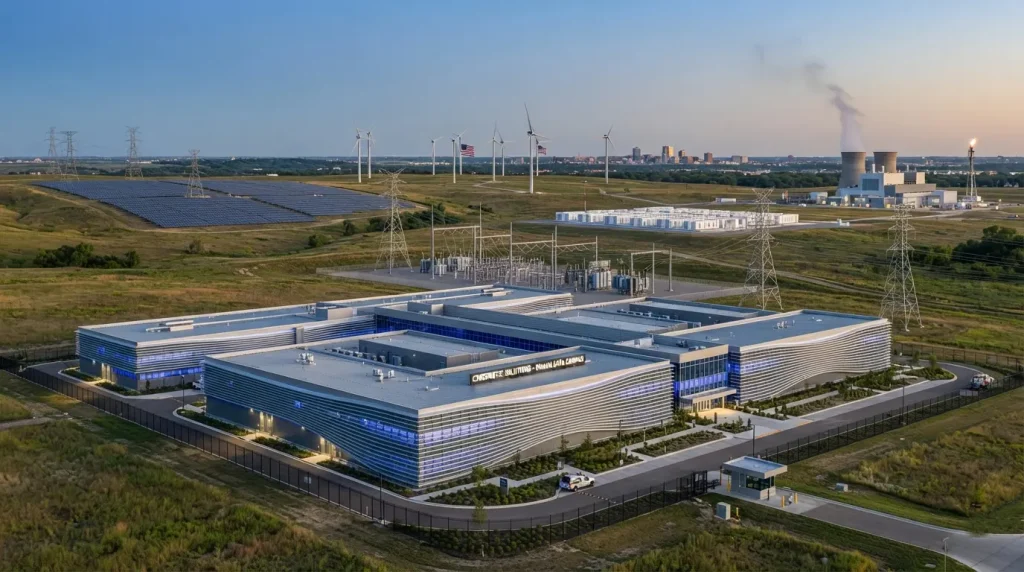
America’s power strategy is likely to become more diversified rather than dominated by one technology. Natural gas can provide dispatchable capacity, while solar, wind, nuclear, hydropower, batteries and expanded transmission can contribute to a more flexible system.
The central challenge is speed. As electricity demand grows, securing America’s power infrastructure will require investment in generation and the networks that connect it. The future of the U.S. grid may therefore depend less on choosing one energy source and more on building a resilient system capable of using many of them together.
- U.S. Energy Information Administration — Electricity in the United States
- EIA — Wind and Solar Generated a Record 17% of U.S. Electricity in 2025
- U.S. Department of Energy — 2026 Draft National Transmission Needs Study
- FERC — New Reliability Safeguards for the American Power Grid
- FERC — Grid Efficiency and Reliability Action
- North American Electric Reliability Corporation — Long-Term Reliability Assessments
- EIA — Natural Gas-Fired Generation and Grid Reliability
#DigitalNews #CleanEnergy #USPowerGrid #GridReliability #EnergyInfrastructure #RenewableEnergy #NaturalGas #EnergyTransition #PowerGrid #AI #DataCenters