


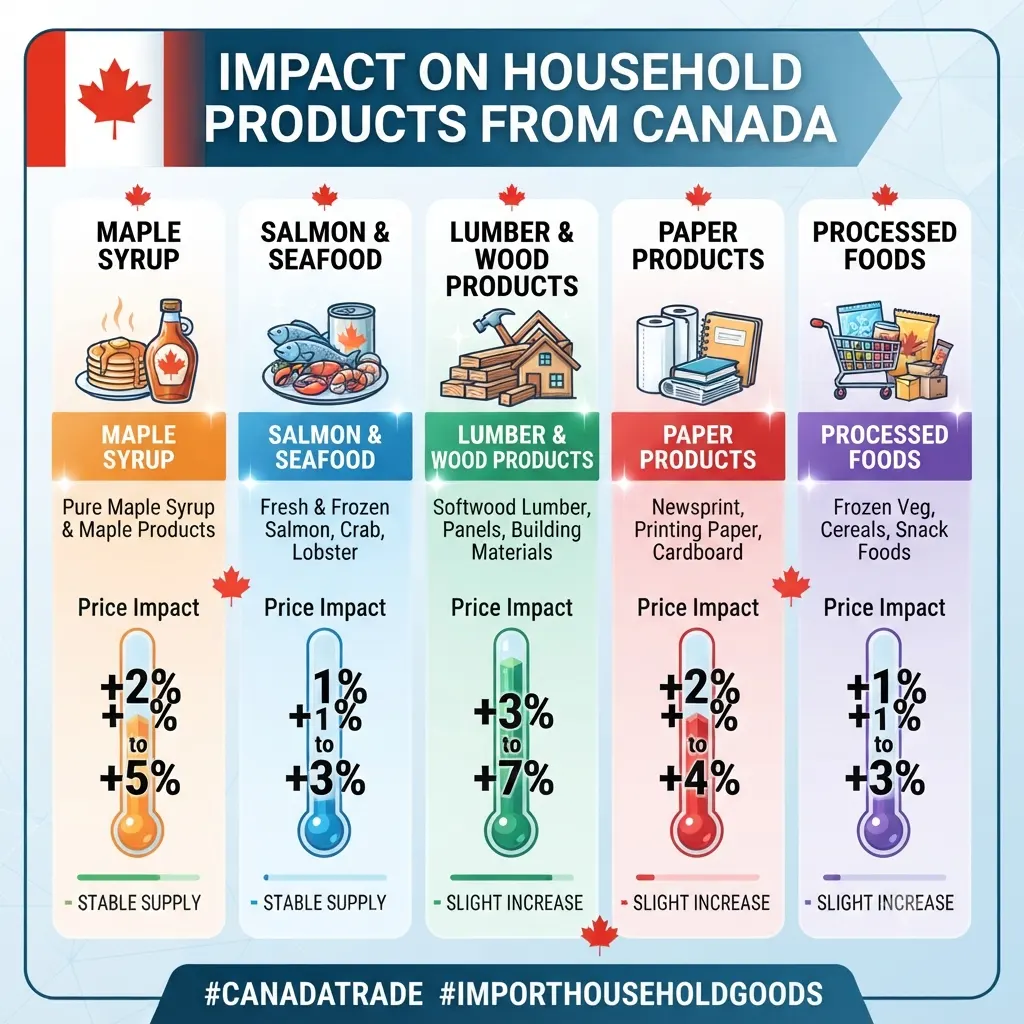
If the proposed 50% tariffs on Canadian goods take effect, American households could begin seeing higher prices on several everyday products. Since Canada is one of the United States’ largest trading partners, increased import costs often work their way through manufacturers, wholesalers, and retailers before reaching consumers. While not every item will become more expensive immediately, experts believe certain categories are more vulnerable than others.
According to the Office of the U.S. Trade Representative, Canada remains one of America’s largest trading partners, with billions of dollars in goods crossing the border every year. That close relationship means trade policy changes can directly influence consumer prices.
Lumber and Home Improvement Products
Canadian lumber has long supplied U.S. home builders and renovation projects. Higher tariffs could increase prices for framing lumber, plywood, decking materials, fencing, and cabinets. The National Association of Home Builders has previously warned that rising lumber costs often make new homes and remodeling projects more expensive.
Paper Products Could Follow
Canada exports large quantities of paper products to the U.S., including office paper, tissues, paper towels, and packaging materials. As current inventories run out, retailers may gradually pass higher import costs on to shoppers. Trade data published by the U.S. Census Bureau highlights the importance of Canadian paper exports in North American supply chains.
Appliances and Household Goods
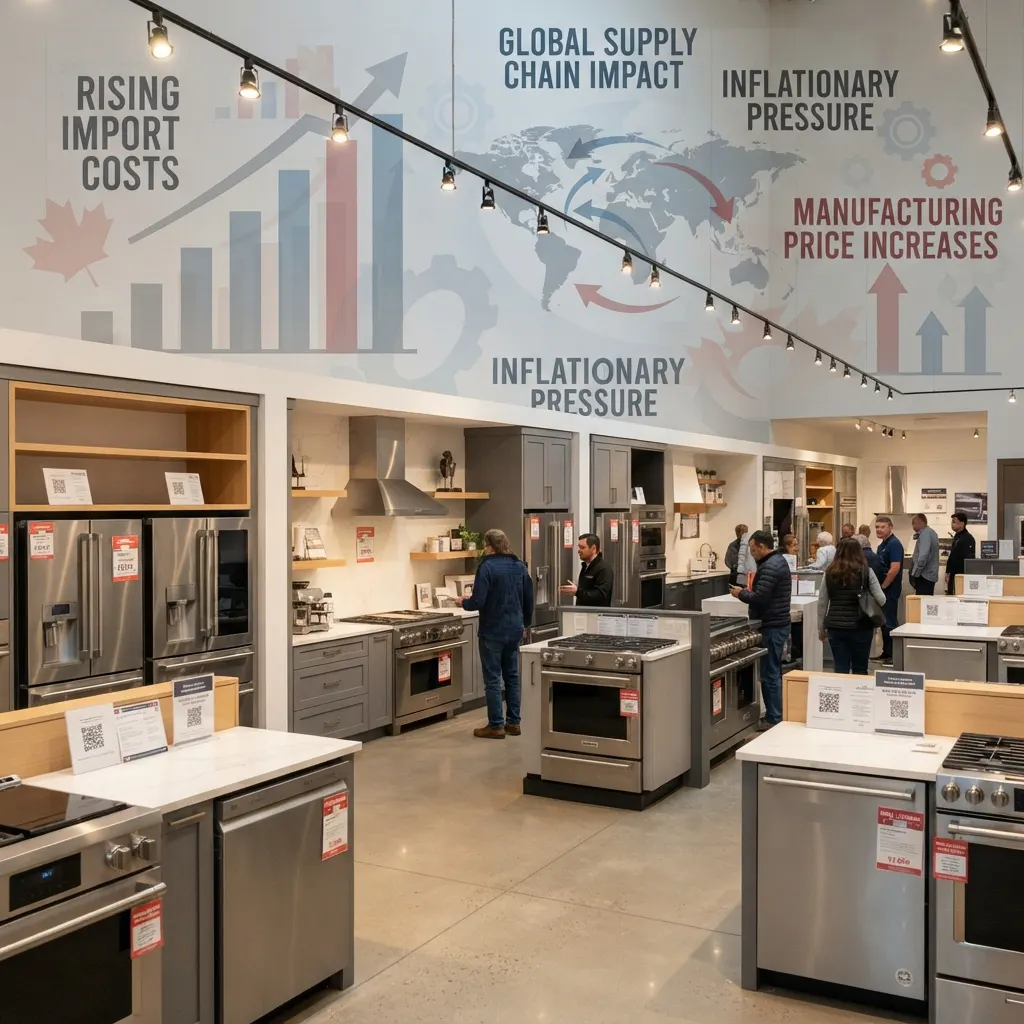
Many appliances contain Canadian-made steel, aluminum, or specialized components. Refrigerators, washing machines, ovens, and small kitchen appliances may become more expensive if manufacturers face higher production costs. Market analysts from the U.S. Bureau of Economic Analysis regularly track how trade policies influence manufacturing costs and consumer spending.
Furniture and Building Supplies
Furniture manufacturers that depend on Canadian wood products could also adjust prices. Dining tables, cabinets, bookshelves, and other wood-based household furnishings may experience modest increases, especially in premium product lines.
Packaged Foods and Grocery Items
Some grocery items imported from Canada—including maple syrup, processed foods, beverages, and ingredients used in food manufacturing—could also become more expensive. Price changes will likely depend on existing retailer inventories and supplier contracts. Economic outlooks from the Bank of Canada and the International Monetary Fund note that tariffs can contribute to broader inflationary pressures.
Should Consumers Be Concerned?
Most economists expect price increases to appear gradually rather than overnight. Retailers often use existing inventory before adjusting prices, while some manufacturers may absorb part of the additional costs to remain competitive. Consumers planning major home renovations or appliance purchases may benefit from comparing prices across retailers and watching for seasonal promotions.
Ultimately, the actual impact will depend on the final tariff policy, business responses, and global supply chain conditions. Monitoring official updates and trusted economic data can help shoppers make informed purchasing decisions instead of reacting to short-term headlines.
#CanadianTariffs #ConsumerPrices #TradeNews #Inflation #HouseholdCosts #CanadaTrade #Economy #RetailNews #ShoppingTips