


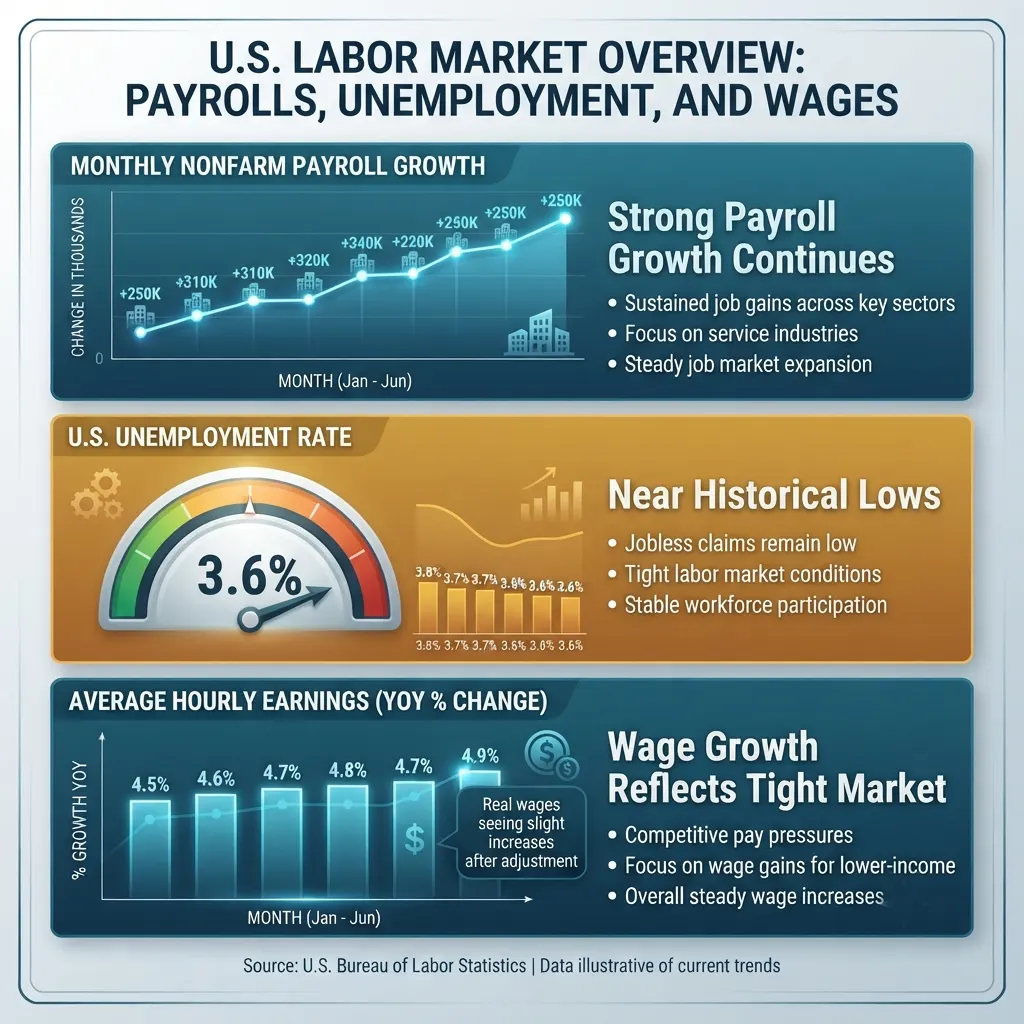
The U.S. labor market is entering a new phase this summer as recent employment data points to slower—but still positive—job growth. While hiring remains resilient in several industries, economists say employers are becoming more selective amid higher borrowing costs, persistent inflation concerns, and uncertainty surrounding future economic policy. For workers, job seekers, and businesses alike, understanding these changes can help guide career and financial decisions.
According to the U.S. Bureau of Labor Statistics (BLS), monthly payroll gains continue to support overall employment, although hiring has moderated compared to the rapid expansion seen after the pandemic recovery. Meanwhile, the Federal Reserve continues to closely monitor labor market conditions as it evaluates future interest rate decisions.
Job Growth Is Slowing, Not Stopping
Recent payroll reports indicate that the economy is still creating jobs, but at a slower pace than previous years. Industries such as healthcare, education, professional services, and government continue to add workers, while hiring in manufacturing and some technology sectors has cooled. Economic indicators published by the U.S. Bureau of Economic Analysis suggest consumer spending remains relatively healthy, helping sustain employment despite economic headwinds.
What This Means for Job Seekers
For individuals looking for work, competition may become more intense in white-collar roles as employers focus on efficiency and productivity. However, skilled workers in healthcare, construction, skilled trades, logistics, and cybersecurity continue to find strong demand. Career resources from the U.S. Department of Labor CareerOneStop highlight growing opportunities in these sectors.
Employers Are Hiring More Strategically
Businesses are increasingly prioritizing candidates with specialized skills and relevant experience rather than expanding headcount aggressively. Many organizations are also investing in automation and artificial intelligence to improve productivity while controlling labor costs. Market research from the The Conference Board shows employers remain optimistic but cautious about future hiring.

Will Wage Growth Continue?
Although wage increases have moderated, salaries continue to rise in many sectors facing talent shortages. Workers with certifications, technical expertise, or leadership experience are generally better positioned to negotiate higher compensation. Inflation trends tracked by the International Monetary Fund also influence how far wage gains translate into increased purchasing power.
Economists expect the labor market to remain stable through the remainder of the year, though hiring could fluctuate depending on inflation, consumer spending, and Federal Reserve policy decisions. Rather than signaling an economic downturn, slower job growth may indicate a transition toward a more balanced labor market. For workers, staying current with in-demand skills, networking actively, and remaining flexible can improve long-term career prospects regardless of short-term market shifts.
#USJobs #LaborMarket #Employment #Economy #Hiring #FederalReserve #Payroll #JobGrowth #EconomicNews