

 By Vinod Ram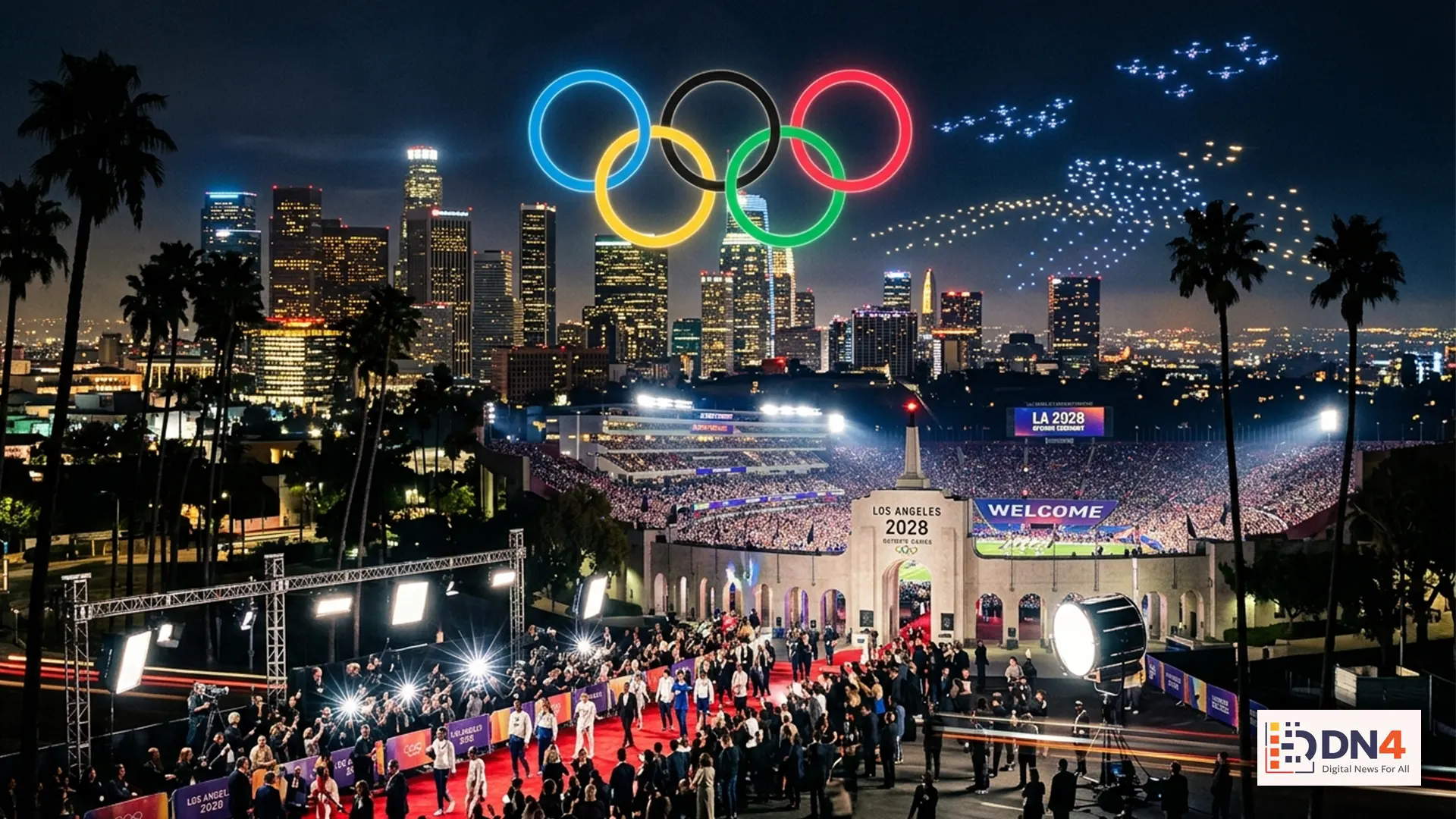
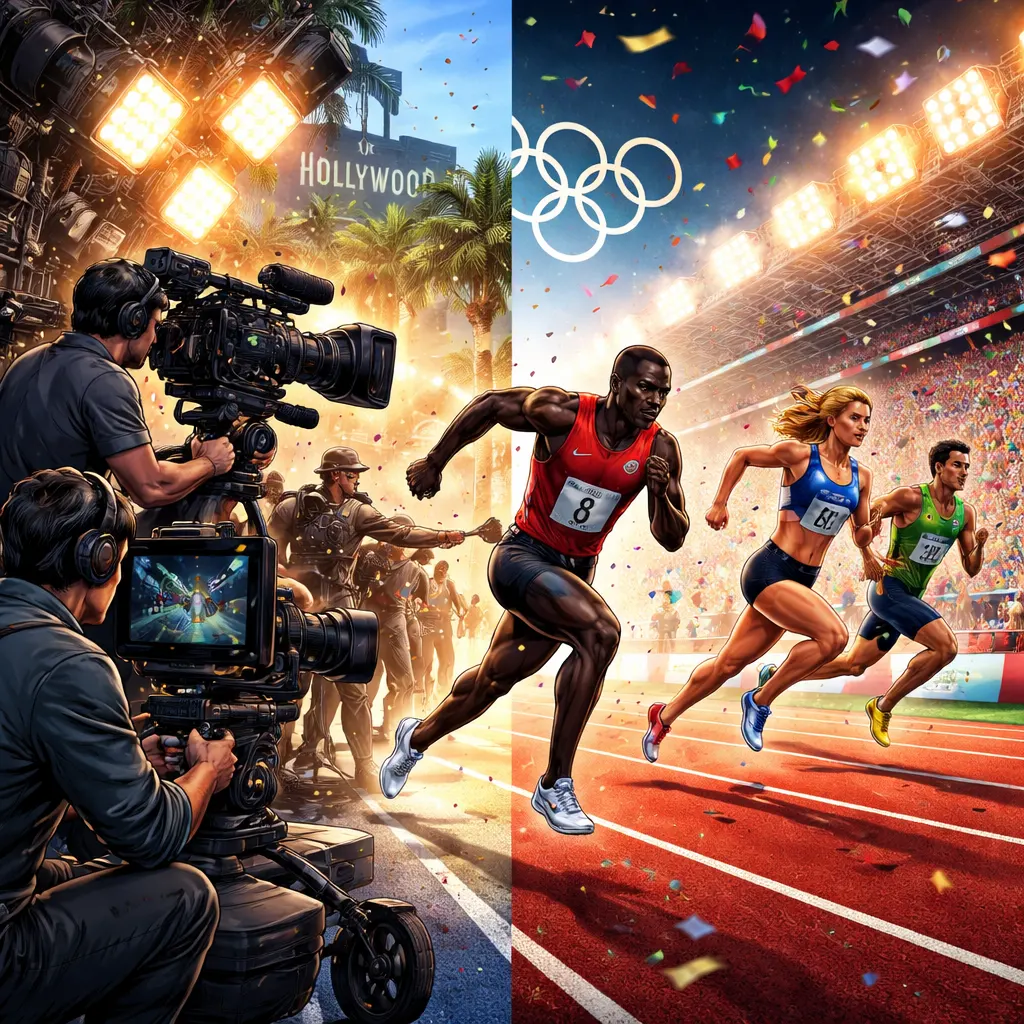
When Los Angeles hosts the 2028 Olympic and Paralympic Games, it won’t just be another Summer Olympics. It will be a global entertainment event built for the streaming age, social media culture, and a fan base that expects more than just competition. In many ways, LA28 is shaping up to be the “Hollywood Olympics” — a version of the Games designed not only for sport, but for spectacle, storytelling, and modern audience behavior.
That’s not accidental. Los Angeles is the capital of film, celebrity culture, and live entertainment. It is also one of the world’s most recognizable sports cities. By blending those identities, LA28 is positioning itself as a blueprint for what the modern Olympic Games could become.
Why LA28 Feels Different From Previous Olympics
Unlike many recent host cities, Los Angeles is not trying to build an entirely new Olympic identity from scratch. Instead, LA28 is leaning into what the city already does best: world-class venues, cultural relevance, and global entertainment power.
According to the official LA28 Games Plan, the event will use a vast network of existing venues across Los Angeles and beyond, reducing the need for costly new infrastructure. That approach supports both sustainability and financial efficiency — two areas where the Olympics has faced heavy criticism in the past.
But what really makes LA28 stand out is its tone. The Games are being framed not just as a sporting event, but as a full-scale cultural production. Think less “traditional host city pageantry” and more “global live content franchise.”
Iconic Venues, Cinematic Backdrops
One of LA28’s strongest advantages is visual storytelling. Very few cities can match Los Angeles when it comes to instantly recognizable scenery. From beaches and mountains to downtown skylines and legendary stadiums, the city naturally lends itself to highly shareable, broadcast-friendly moments.
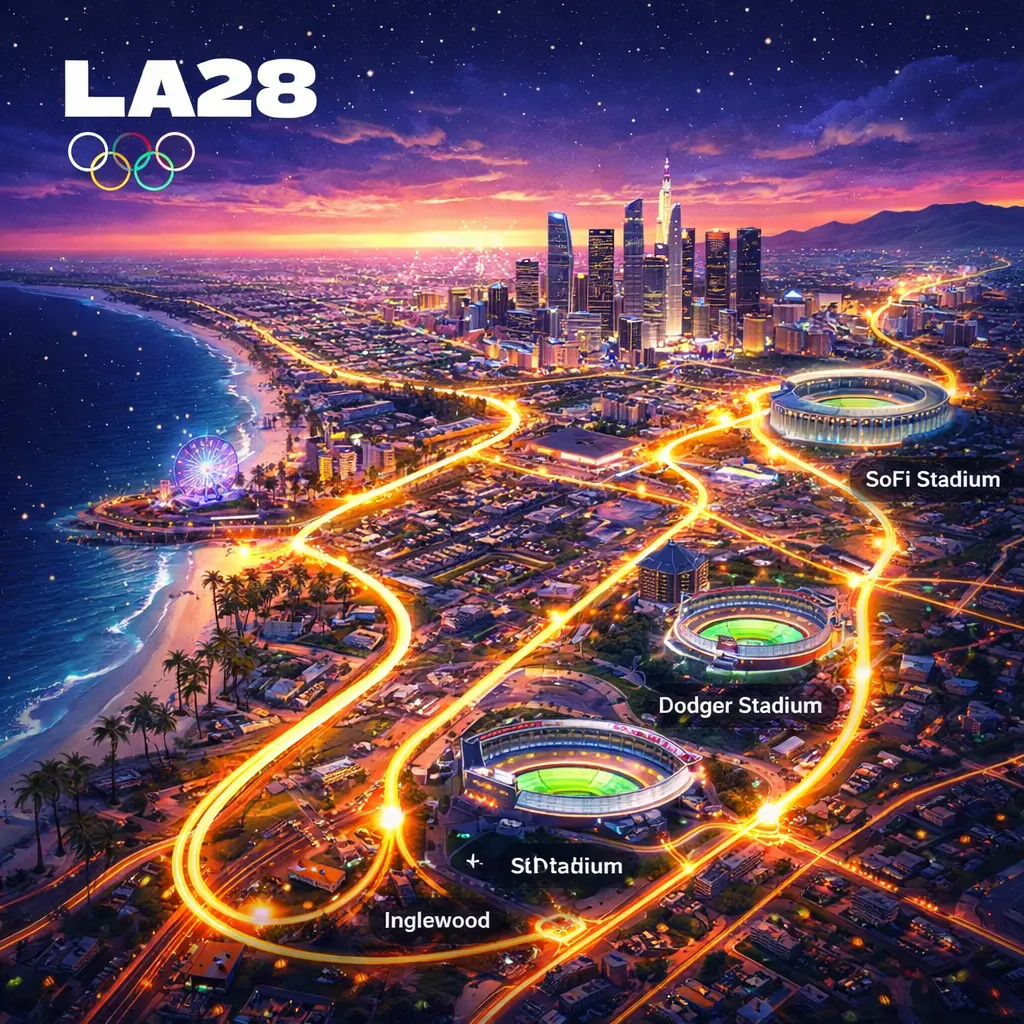
The official LA28 venue map shows competitions spread across major zones including Downtown LA, Exposition Park, Long Beach, Inglewood, Venice, and the San Fernando Valley. That creates a built-in cinematic quality: every event can feel like it belongs to a different “scene” in the same giant production.
LA28 has also confirmed that the Opening Ceremony will be shared between the Los Angeles Memorial Coliseum and the Stadium in Inglewood, a move that captures both Olympic history and futuristic entertainment energy. It’s a symbolic decision: one foot in tradition, one foot in reinvention.
Entertainment Is No Longer a Side Show
For decades, Olympic organizers treated entertainment as a supporting feature. LA28 appears ready to flip that formula. In Los Angeles, entertainment is infrastructure. Music, celebrity partnerships, immersive fan events, branded experiences, and digital-first storytelling are likely to become core parts of how the Games are consumed.
That matters because today’s audience doesn’t watch sports the same way it did 20 years ago. Fans don’t just tune in for medal counts. They want behind-the-scenes access, viral moments, athlete personality, and crossovers with music, fashion, gaming, and creator culture.
LA28 is built for exactly that environment. It can package Olympic sport not just as competition, but as a premium content ecosystem.
The Social Media Olympics
If Paris 2024 accelerated the creator era of sports coverage, LA28 could fully mainstream it. Los Angeles is home to influencers, production studios, talent agencies, and the kind of media machinery that can amplify every Olympic moment in real time.
That means the Games will likely be experienced across multiple layers:
- Traditional live broadcasts
- Short-form clips on TikTok, Instagram, and YouTube
- Behind-the-scenes athlete storytelling
- Brand collaborations and sponsored fan content
- Live reaction culture across social platforms
In practical terms, LA28 may become the most commercially integrated Olympics ever — and that could be exactly what keeps the event relevant for younger global audiences.
New Sports, New Energy, New Audience
Part of LA28’s reinvention also comes from sport selection and presentation. The official sport lineup includes major crowd-friendly events and newer disciplines that naturally perform well in digital media environments, including flag football, cricket, squash, baseball/softball, and lacrosse.
These aren’t just athletic additions — they’re audience strategy. They broaden international appeal, create fresh storytelling opportunities, and help the Olympics feel less static and more responsive to evolving sports culture.
That’s especially important in a media economy where attention is fragmented. LA28 seems to understand that relevance is no longer guaranteed by tradition alone.
Can LA28 Also Fix the Olympic Business Model?
One of the biggest long-term questions around the Olympics is whether the Games can remain financially and politically viable. Many cities have become wary of bidding due to infrastructure costs, displacement concerns, and uncertain returns.
Los Angeles may offer a more workable model. By relying heavily on existing venues and a privately driven commercial strategy, LA28 is trying to prove that the Olympics can still be a prestige event without becoming a fiscal burden. Official LA28 planning materials emphasize a “no-new-build” and sustainability-led approach for much of the event footprint.
If that works, LA28 won’t just host the Olympics — it could redefine how future Olympic hosts think about scale, cost, and fan value.
The Bigger Meaning of the “Hollywood Olympics”
Calling LA28 the “Hollywood Olympics” is not a criticism. It’s a recognition of where global sport is heading. The modern Games are no longer just about who wins gold. They are also about who controls attention, how stories are told, and whether legacy sports institutions can stay culturally relevant in a hyper-competitive media landscape.
Los Angeles is uniquely equipped to answer that challenge. It has the venues, the climate, the star power, the production talent, and the global brand recognition to turn the Olympics into something bigger than a tournament.
By 2028, the world won’t just be watching athletes compete in Los Angeles. It will be watching a city attempt to reinvent the Olympic experience itself.
LA28 has the potential to become the most entertaining, commercially savvy, and visually compelling Olympic Games in modern history. If it succeeds, it may permanently change what audiences, sponsors, and host cities expect from the Olympics.
And if there was ever a city built to merge sport with spectacle, it was always going to be Los Angeles.
#LA28 #Olympics2028 #LosAngelesOlympics #HollywoodOlympics #SportsBusiness #OlympicGames #FutureOfSports #EntertainmentIndustry