

 By Vinod Ram
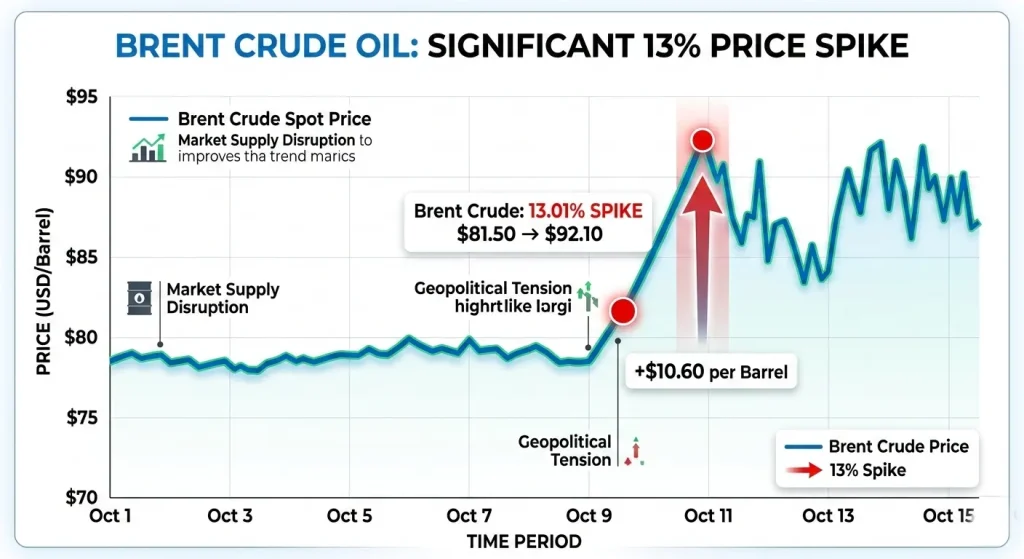
The threat of a Strait of Hormuz closure is no longer just geopolitical rhetoric. After a sudden 13% spike in Brent crude futures, energy markets are pricing in the risk of a severe supply disruption that could hit consumers worldwide — especially at the gas pump.
The Strait of Hormuz carries nearly 20% of the world’s oil supply. If shipping lanes are blocked or severely restricted, global energy markets would face what economists are calling a “dual supply shock.”
What Is the Dual Supply Shock?
The dual supply shock refers to two simultaneous pressures:
- Physical Supply Disruption: Tankers cannot move crude from Gulf producers to global markets.
- Financial Market Shock: Traders price in prolonged instability, pushing futures contracts higher.
Even before a full closure, oil markets react to risk premiums. That’s why Brent jumped 13% in a matter of days — a signal that traders fear escalation.
Why Your Gas Prices React Almost Immediately
Retail gasoline prices are closely linked to global crude benchmarks like Brent. When Brent rises sharply:
- Refineries face higher feedstock costs.
- Futures markets raise wholesale gasoline prices.
- Retail stations pass on increases within days or weeks.
In countries heavily exposed to imports — including much of Europe and parts of Asia — the impact could be rapid and severe.
Why 2026 Could See Renewed Global Inflation
Energy is the backbone of modern economies. A sustained Strait of Hormuz closure would:
- Increase transportation and logistics costs.
- Raise manufacturing input prices.
- Trigger higher food prices due to fuel and fertilizer costs.
Central banks such as the Federal Reserve and the European Central Bank could face a difficult dilemma: fight inflation with higher interest rates or cushion economic slowdown.
Strategic Flashpoints to Watch
- Naval activity near Gulf shipping lanes.
- Statements from OPEC producers.
- Insurance costs for tanker shipments.
- Sanctions developments involving Iran.
Insurance premiums alone can spike oil prices, even without a complete shutdown.
Could Markets Stabilize?
If tensions ease, strategic reserves may offset temporary disruptions. The U.S. Strategic Petroleum Reserve and coordinated releases from allies could soften the blow — but only temporarily.
However, a prolonged disruption lasting months could cement higher oil price averages into 2026, embedding inflation across global economies.
The Strait of Hormuz closure risk is not just a regional security issue — it’s a direct line to your wallet. A 13% Brent spike is only the opening signal. If the dual supply shock intensifies, global inflation in 2026 could surge again, forcing governments and central banks into crisis mode.
#StraitOfHormuz #OilPrices #BrentCrude #EnergyCrisis #GlobalInflation #GasPrices