

 By Vinod Ram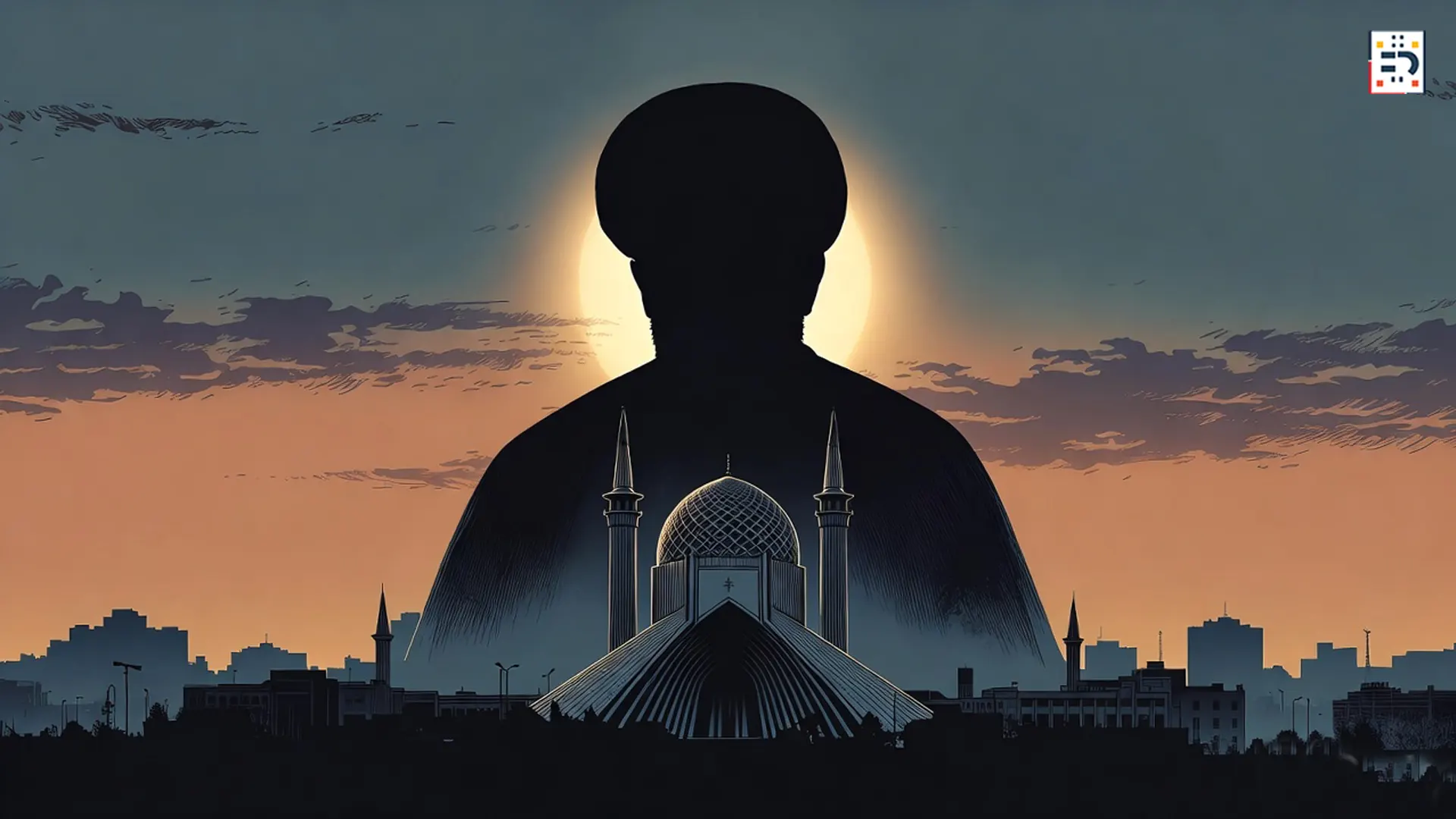
The question of who will lead Iran after Ayatollah Ali Khamenei is no longer theoretical. At 85, the long-serving Supreme Leader stands at the center of a quiet but intense political chess match inside Tehran. The outcome could dramatically alter Iran’s domestic trajectory—and more importantly, its approach to regional wars and confrontation with the West.
Under Iran’s constitution, the Assembly of Experts formally appoints the Supreme Leader. But in reality, power dynamics within the Islamic Republic—including the powerful Islamic Revolutionary Guard Corps (IRGC)—will shape the final decision.
The Frontrunners: Who Are the Key Contenders?
1. Ali Larijani – The Strategic Pragmatist
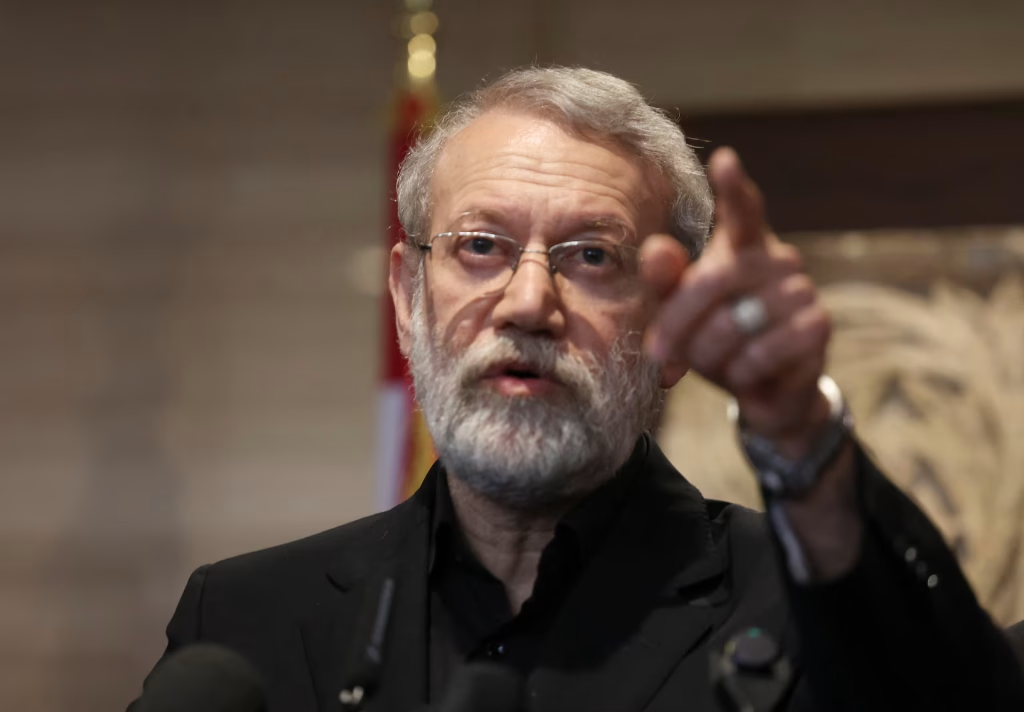
Ali Larijani, former Speaker of Parliament and long-time regime insider, is often described as a pragmatic conservative. With deep roots in Iran’s political establishment and close ties to security institutions, Larijani could represent continuity with subtle recalibration.
What would Larijani’s leadership mean for the war?
- Possible diplomatic flexibility with the United States and Europe.
- Strategic restraint in direct military escalation.
- Renewed back-channel negotiations over sanctions relief.
Larijani has historically supported negotiations such as the JCPOA nuclear deal, suggesting he might seek economic stabilization over aggressive confrontation.
2. Mohammad Bagher Ghalibaf – The Security Hardliner
Mohammad Bagher Ghalibaf, former IRGC commander and current parliamentary figure, represents the security establishment more directly. His background in the Revolutionary Guard signals strong ties to Iran’s military elite.
Under Ghalibaf, expect:
- A firmer regional military posture.
- Expanded support for proxy forces across the Middle East.
- Reduced willingness to compromise with Western powers.
This path could intensify tensions across flashpoints like the Gulf and deepen Iran’s alignment with Russia and China.
The Role of the IRGC in the Succession
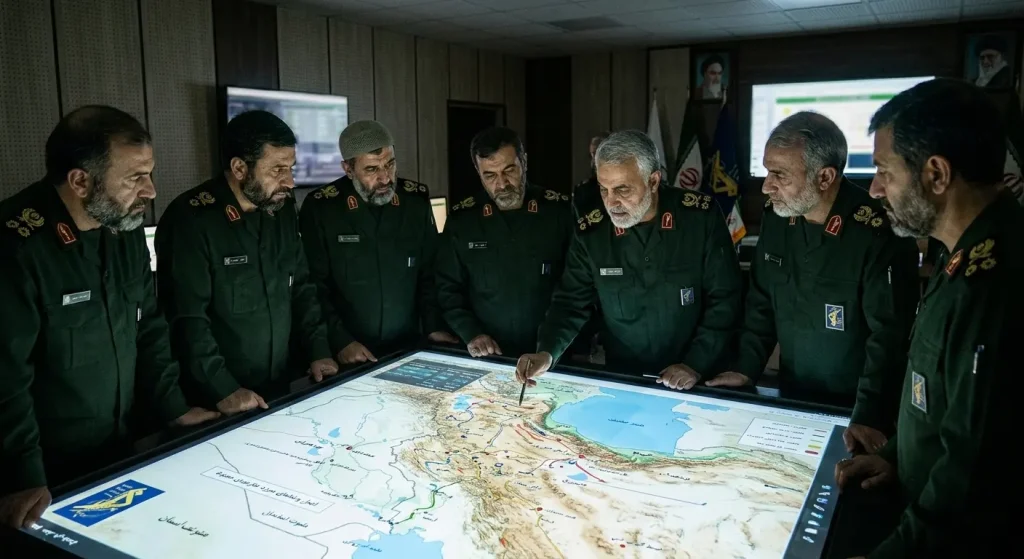
The IRGC is arguably the most powerful institution in Iran outside the Supreme Leader himself. While the Assembly of Experts votes, few believe the Guards will remain neutral.
If the IRGC consolidates behind a hardliner, Iran’s military doctrine could shift toward:
- Greater direct confrontation in regional conflicts.
- Acceleration of advanced weapons programs.
- More assertive naval operations in strategic waterways.
What This Means for the Ongoing War
Iran’s leadership transition will directly affect:
1. Regional Proxy Strategy
Tehran’s support for allied groups across the Middle East could expand or recalibrate depending on who takes power.
2. Nuclear Calculations
A pragmatic successor may reopen diplomatic channels, while a hardliner might escalate uranium enrichment activities.
3. Global Energy Markets
Any leadership shift impacts oil flows, sanctions, and geopolitical risk—key drivers for global energy prices.
Could There Be a Surprise Candidate?
Iranian politics often unfolds behind closed doors. Clerical figures within Qom’s religious establishment or compromise candidates backed by both political factions could emerge unexpectedly.
Some analysts even speculate about institutional reform that weakens the single-leader model—though such a transformation remains unlikely in the near term.
The succession of Iran’s Supreme Leader is more than a domestic political event—it is a geopolitical turning point. Whether Tehran moves toward cautious pragmatism under Larijani or hardened military assertiveness under Ghalibaf, the impact will ripple across regional wars, global markets, and diplomatic alliances.
For now, the shadow struggle continues quietly—but its consequences will be loud.
#IranPolitics #Khamenei #MiddleEast #Geopolitics #GlobalSecurity #PowerStruggle #DigitalNews #BreakingNews