

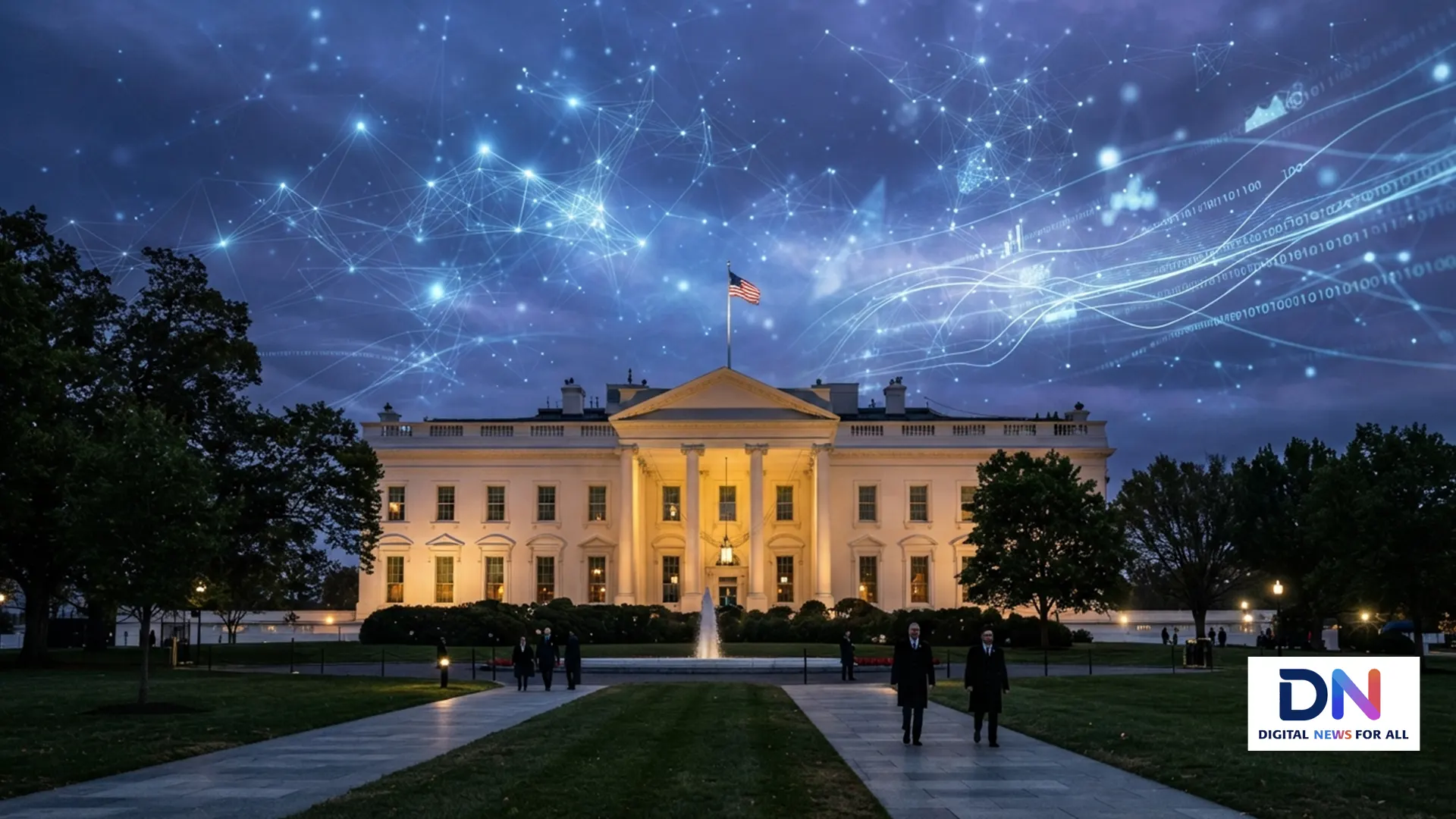
The White House is giving artificial intelligence a new name: “Super Intelligence.” President Donald Trump announced the terminology shift during his September 22, 2026, address to the United Nations General Assembly. He said U.S. government documents would use the new term instead of “artificial intelligence.” The White House transcript confirms the announcement.
Why the AI Rebrand Is Getting Attention
The AI rebrand is more than a vocabulary change. Trump argued that the word “artificial” makes the technology sound less real than it is. The announcement follows several days of discussion about whether AI needs a more ambitious name and whether governments should impose additional restrictions on its development.
Reuters reported that Trump also rejected what he described as attempts to create international controls over AI while emphasizing continued American technological leadership. Reuters’ coverage of the UN speech provides additional context.

Is “Super Intelligence” Actually a New Concept?
Not exactly. In technical discussions, superintelligence already has a specific meaning. It generally describes an AI system whose intellectual capabilities exceed those of humans across important domains. The White House itself has previously discussed the distinction between specialized AI, artificial general intelligence and artificial superintelligence.
The 2026 Economic Report of the President explains that superintelligence refers to AI capabilities surpassing human intelligence, while AGI concerns the breadth of tasks an AI can perform.
PR Strategy or Policy Signal?
Calling AI “Super Intelligence” could influence how the public thinks about the technology. The phrase emphasizes capability and potential rather than the artificial origin of the systems.
However, terminology does not change how an AI model performs. Stanford’s 2026 AI Index documents rapid gains in AI capabilities while also highlighting limitations in benchmarks and evaluation methods.

The Bigger Debate: Innovation vs. Safety
The naming debate arrives alongside a larger policy question: how quickly should advanced AI development move, and what safeguards should accompany it?
NIST’s AI Risk Management Framework focuses on issues such as reliability, security, transparency, accountability and privacy. Those technical considerations remain relevant regardless of what policymakers call the technology.
Meanwhile, OpenAI’s research on superintelligence has described the challenge of controlling systems that could eventually become substantially more capable than humans.
What Comes Next?
The AI rebrand may become a memorable political and communications phrase, but its practical importance will depend on whether it changes government policy, research priorities or regulatory language. For now, the technology remains governed by its capabilities, risks and real-world applications—not simply by its name.
The White House has already pursued policies aimed at accelerating AI development and infrastructure. Its June 2026 executive order on advanced AI emphasizes innovation, security and American leadership. Read the White House executive order.
#AI #ArtificialIntelligence #SuperIntelligence #AIRebrand #WhiteHouse #AITechnology #AIPolicy #TechNews #AI2026 #FutureOfAI