


Technology has transformed modern life, but not every country offers the same digital experience. In several parts of the world, governments maintain tightly controlled digital ecosystems where internet access, online services, social media, and payment platforms operate within strict regulatory frameworks. While supporters argue these systems enhance national security and digital sovereignty, critics warn they can limit innovation, competition, and freedom of information.
What Is a Restricted Tech Ecosystem?
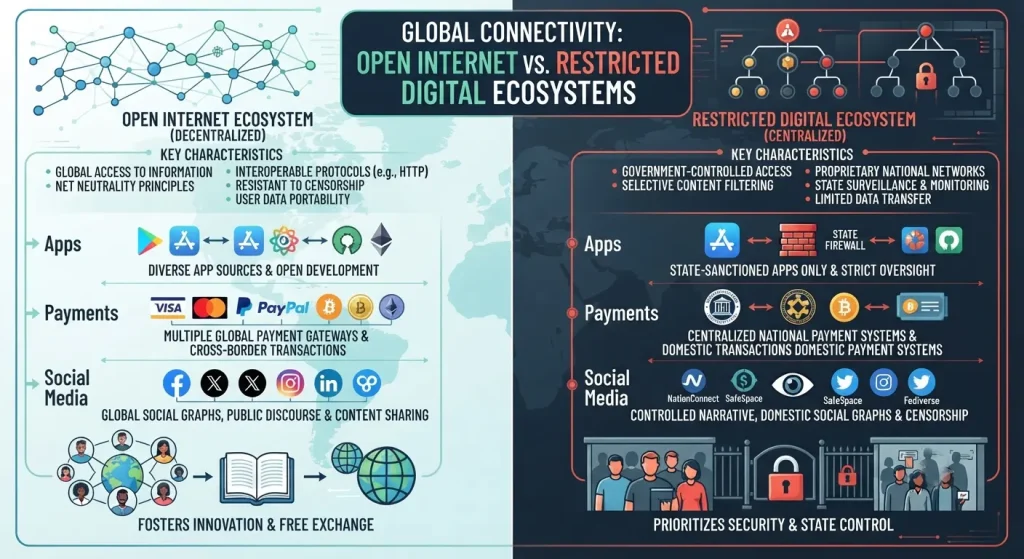
A restricted technology ecosystem is one where governments regulate or limit access to global digital platforms while promoting domestic alternatives. These ecosystems often include local search engines, messaging apps, cloud services, payment networks, and e-commerce platforms that operate under national regulations.
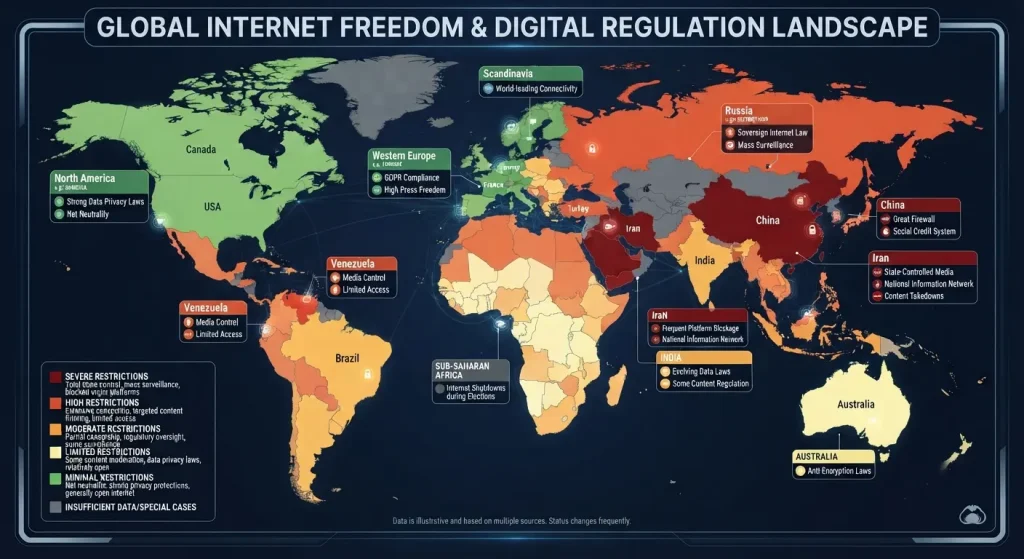
Organizations like the Freedom House and the International Telecommunication Union (ITU) regularly study internet governance and digital accessibility across countries.
How Daily Life Changes
For residents living within these digital environments, everyday activities—from communication to shopping—can look very different. Popular international platforms may be unavailable or replaced by domestic alternatives. Digital payments, navigation, cloud storage, and even entertainment services often function within a nationally managed ecosystem.
Governments argue this approach strengthens cybersecurity, protects sensitive data, and reduces dependence on foreign technology providers. Guidance from the U.S. National Institute of Standards and Technology (NIST) also emphasizes the importance of cybersecurity and digital resilience, although implementation varies by country.
The Benefits
- Improved national control over digital infrastructure.
- Greater support for domestic technology companies.
- Enhanced cybersecurity measures against external threats.
- Reduced reliance on foreign cloud and communication platforms.
The Challenges
- Limited access to global information sources.
- Reduced competition and innovation.
- Privacy concerns related to digital surveillance.
- Potential barriers for international businesses and travelers.
The OECD and the World Bank have both published research showing that digital openness often supports innovation, investment, and cross-border commerce.
What It Means for the Future
As geopolitical tensions, cybersecurity threats, and artificial intelligence continue evolving, more countries may seek greater control over their digital infrastructure. The challenge will be balancing national security with innovation, economic growth, and digital rights.
The World Economic Forum continues to highlight the need for international cooperation on cybersecurity, digital governance, and responsible AI development.
Ultra-restricted technology ecosystems present both opportunities and challenges. While they can strengthen digital sovereignty and cybersecurity, they also raise important questions about privacy, innovation, and access to global information. As digital policies continue to evolve, understanding these trade-offs will become increasingly important for businesses, policymakers, and everyday users.
#RestrictedTech #DigitalEcosystem #InternetFreedom #CyberSecurity #DigitalPrivacy #Technology #Innovation #DigitalGovernance #TechNews