

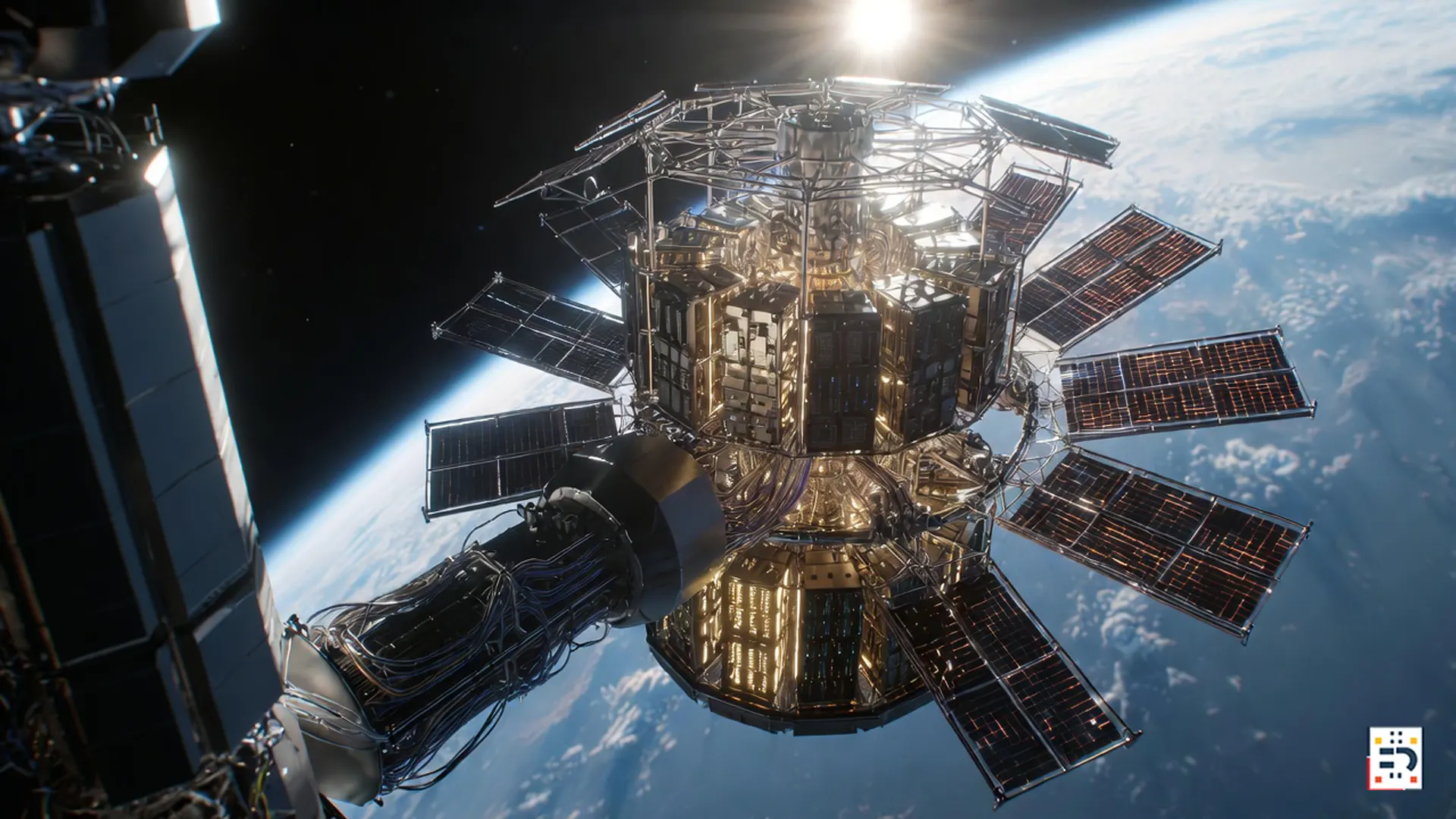
Elon Musk has never shied away from ambitious ideas, but the latest conversation surrounding SpaceX and xAI may be one of his boldest yet. As artificial general intelligence (AGI) inches closer to reality, Musk and other tech leaders are grappling with a core constraint: energy. The idea now circulating in Elon Musk xAI news circles is the concept of orbital data centers — massive computing infrastructure placed in space.
The question is no longer whether AI can scale, but whether Earth’s energy systems can support it.
Why AI’s Energy Demand Is Becoming a Crisis
Training and operating frontier AI models already consume enormous amounts of electricity. According to reporting from the International Energy Agency (IEA), global data center power demand is rising faster than most national grids can comfortably support.
xAI, Musk’s artificial intelligence company, is designed to compete at the highest level of model scale — which means exponentially higher computing and cooling requirements.

The Orbital Data Center Concept Explained
The idea behind orbital data centers is deceptively simple: move energy-intensive computing off Earth. In space, solar energy is constant, unobstructed by weather or night cycles.
SpaceX’s reusable launch capabilities, detailed on SpaceX’s Starship program page, are what make this concept theoretically feasible. Starship could deliver massive payloads — including servers and power systems — into orbit at dramatically lower cost per kilogram.
Why Space-Based Computing Appeals to xAI
For xAI, orbital infrastructure could offer three strategic advantages:
- Access to near-continuous solar power
- Reduced strain on terrestrial power grids
- Physical separation of critical AGI systems
Musk has repeatedly emphasized the importance of energy abundance for AI safety and progress, a theme echoed in coverage by Bloomberg Technology.
The Environmental Trade-Offs
While orbital data centers could reduce land-based emissions, they are not environmentally neutral. Rocket launches produce carbon emissions and atmospheric pollutants, and large-scale orbital infrastructure raises concerns about space debris.
Environmental analysts writing for Nature warn that unchecked expansion of space-based industry could create long-term sustainability risks beyond Earth’s atmosphere.

Can Orbital Computing Really Scale?
The biggest unanswered question is scale. Even with reusable rockets, maintaining, upgrading, and cooling orbital servers presents unprecedented engineering challenges.
Latency is another issue. While low-Earth orbit reduces delay, real-time AI applications may still favor terrestrial or hybrid cloud systems.
Is This About AGI More Than Energy?
Some analysts argue that orbital data centers aren’t really about solving today’s energy shortages — they’re about preparing for AGI-level systems that could dwarf current computing needs.
If AGI requires orders of magnitude more compute, space-based infrastructure may shift from science fiction to necessity.
The idea of SpaceX-enabled orbital data centers powering xAI sits at the intersection of innovation and speculation. It offers a compelling vision of energy abundance, but comes with environmental, technical, and economic risks.
Whether this becomes a cornerstone of AI’s future or remains an ambitious thought experiment will depend on how quickly AI scales — and how urgently the energy crisis deepens.
#ElonMusk #xAI #SpaceX #OrbitalDataCenters #AIEnergy #AGI #FutureOfComputing #TechAnalysis