

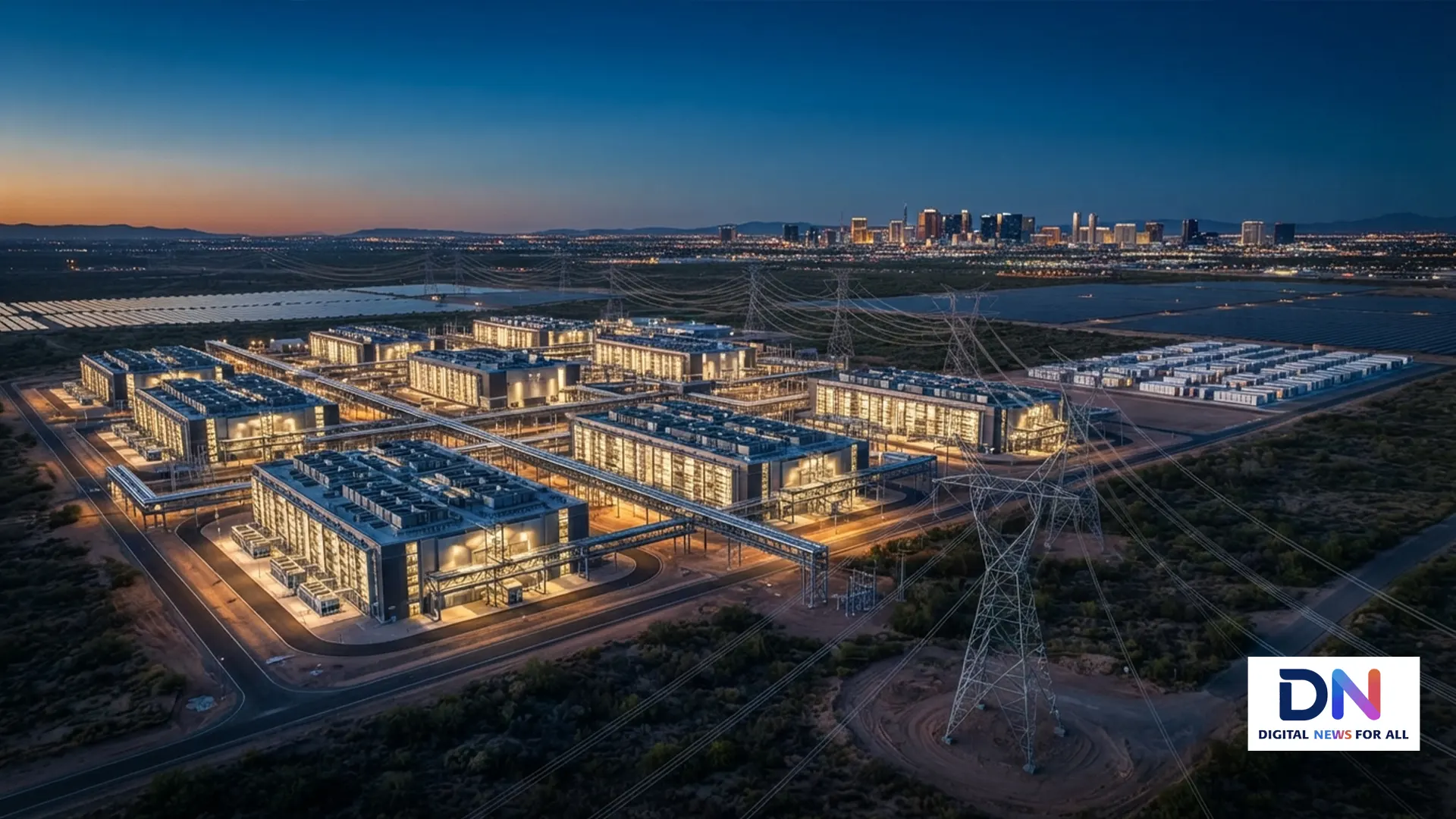
America’s artificial intelligence boom is creating a power problem that can no longer be ignored. Data center power demand is rising rapidly, forcing utilities, regulators, and energy developers to rethink how the United States produces and delivers electricity.
The good news is that America is building new generation at an impressive pace. The bad news is that demand is accelerating at the same time. The result is a race between data center power demand and the country’s ability to expand its grid.
AI Is Turning Data Centers Into Massive Power Customers
The scale of the challenge is becoming clearer. A 2026 Lawrence Berkeley National Laboratory update estimates that U.S. data centers could consume 11.8% of total American electricity by 2030, with scenarios ranging from 9.5% to 15.3%.
The growth is being driven by increasingly powerful AI servers. The Department of Energy says U.S. data center electricity consumption increased 14% between 2023 and 2024. Its reference case projects continued rapid growth as accelerated computing expands.
Lawrence Berkeley National Laboratory’s 2025 data center energy report shows why efficiency improvements alone may not solve the problem.
The Grid Is Feeling the Pressure
The problem is not simply how much electricity America needs. It is where and when that electricity is required.
Large AI campuses can demand enormous amounts of continuous power. They are also concentrated in specific regions, creating transmission and generation bottlenecks.
The Department of Energy’s 2026 transmission needs study identifies data centers and other large industrial loads as major drivers of new transmission requirements.
The Federal Energy Regulatory Commission is also examining how large loads can be connected to the transmission system without shifting unreasonable costs or reliability risks onto other consumers.
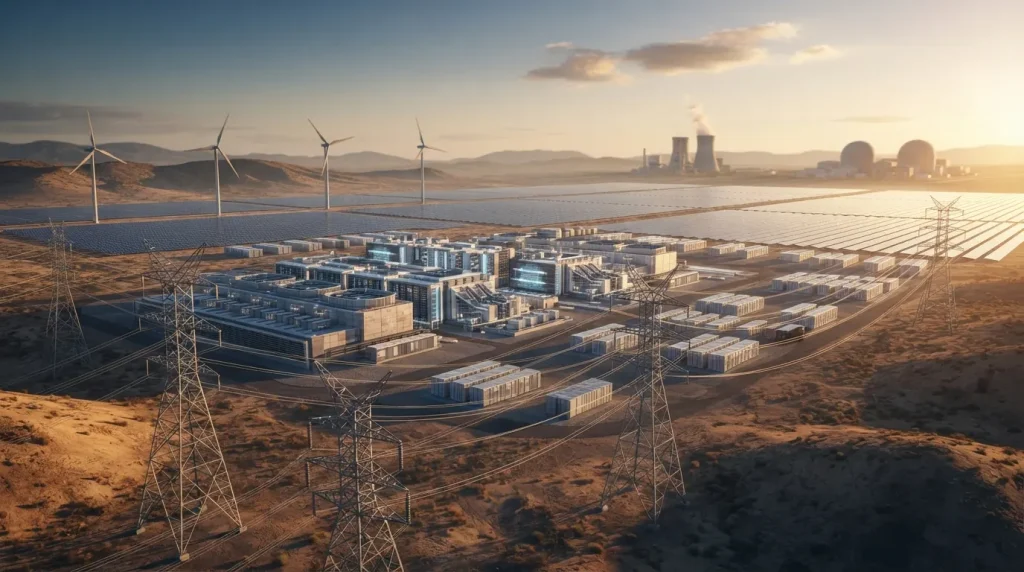
Clean Energy Is Growing — But Is It Fast Enough?
This is where the story becomes more complicated than a simple “AI versus the environment” debate.
America is adding enormous amounts of renewable capacity. The Energy Information Administration expects developers to add approximately 86 gigawatts of utility-scale generating capacity in 2026. Solar represents 51% of those planned additions, while battery storage represents another 28%.
EIA data shows the scale of America’s 2026 generation buildout, suggesting that the energy system is responding to rising demand.
Solar and wind are also becoming increasingly important. They produced a record 17% of U.S. utility-scale electricity generation in 2025, according to the EIA.
But renewable generation has a fundamental limitation: solar and wind output varies. Data centers, meanwhile, generally need reliable electricity around the clock.
The Natural Gas Paradox
This creates an uncomfortable short-term reality.
If electricity demand rises faster than new clean generation, utilities may rely more heavily on natural gas plants to maintain reliability. The EIA has warned that faster-than-expected data center demand could increase natural gas generation, particularly in regions such as Texas.
EIA modeling shows how faster electricity demand growth could increase fossil generation even as renewable capacity expands.
That means the AI boom could simultaneously accelerate clean-energy investment and extend America’s dependence on fossil fuels.
Nuclear Power Could Become More Important
There is another piece of the puzzle: firm, low-carbon electricity.
Nuclear plants can provide continuous generation regardless of sunlight or wind conditions. The Department of Energy has identified nuclear, geothermal, storage, solar, wind, and efficiency measures as potential components of a broader strategy for serving growing data center loads.
DOE’s analysis argues for a portfolio approach rather than relying on one technology to solve the data center electricity challenge.
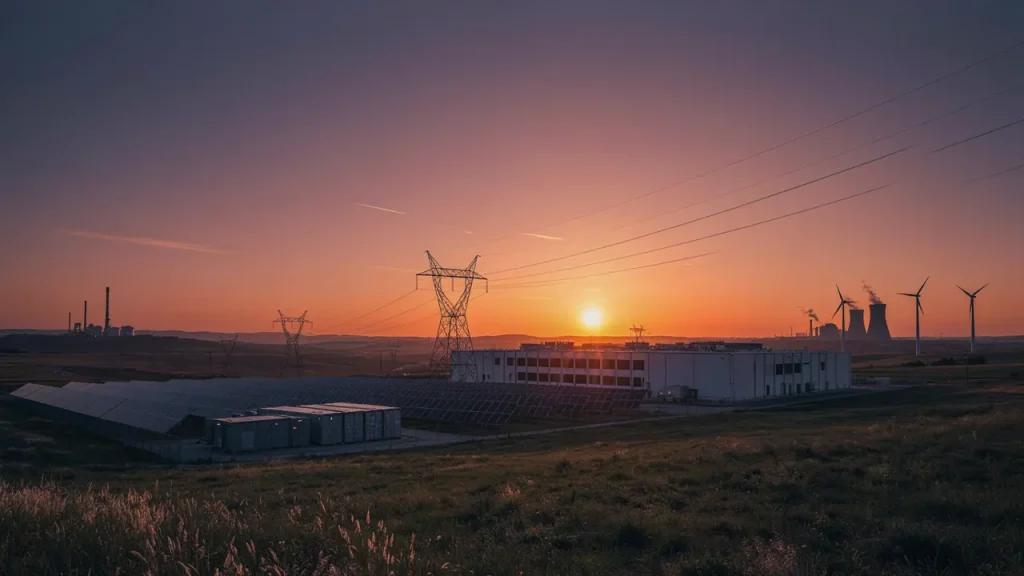
So, Is America Facing a Grid Collapse?
Not necessarily. The more accurate description is a race against time.
The EIA expects U.S. electricity consumption to reach record levels in 2026 and 2027, while solar, wind, batteries, natural gas, and other resources expand to meet demand.
However, grid infrastructure takes years to plan and build. Transmission projects can face permitting, land-use, financing, and regulatory obstacles. Data center construction can move much faster.
NERC has warned that resource additions and transmission development may struggle to keep pace with rapidly increasing demand, particularly from AI data centers and other large loads.
The Brutal Truth
America does not have to choose between an AI economy and clean energy. But it does have to build electricity infrastructure much faster.
The winners may be the companies and communities that can combine new generation, transmission, batteries, nuclear power, efficiency, and smarter demand management.
The real danger is not that data centers will suddenly switch off America’s grid. It is that electricity demand grows faster than infrastructure, pushing up prices, increasing congestion, slowing new projects, and forcing more fossil generation into the mix.
The AI revolution may therefore become one of America’s biggest clean-energy tests. If the country builds fast enough, data center power demand could help finance a dramatically larger and more modern grid. If it does not, the same boom could become one of the biggest stresses the American electricity system has faced in decades.
#DataCenters #AI #PowerGrid #Energy #CleanEnergy #Electricity #NuclearEnergy #RenewableEnergy #Tech #ArtificialIntelligence