

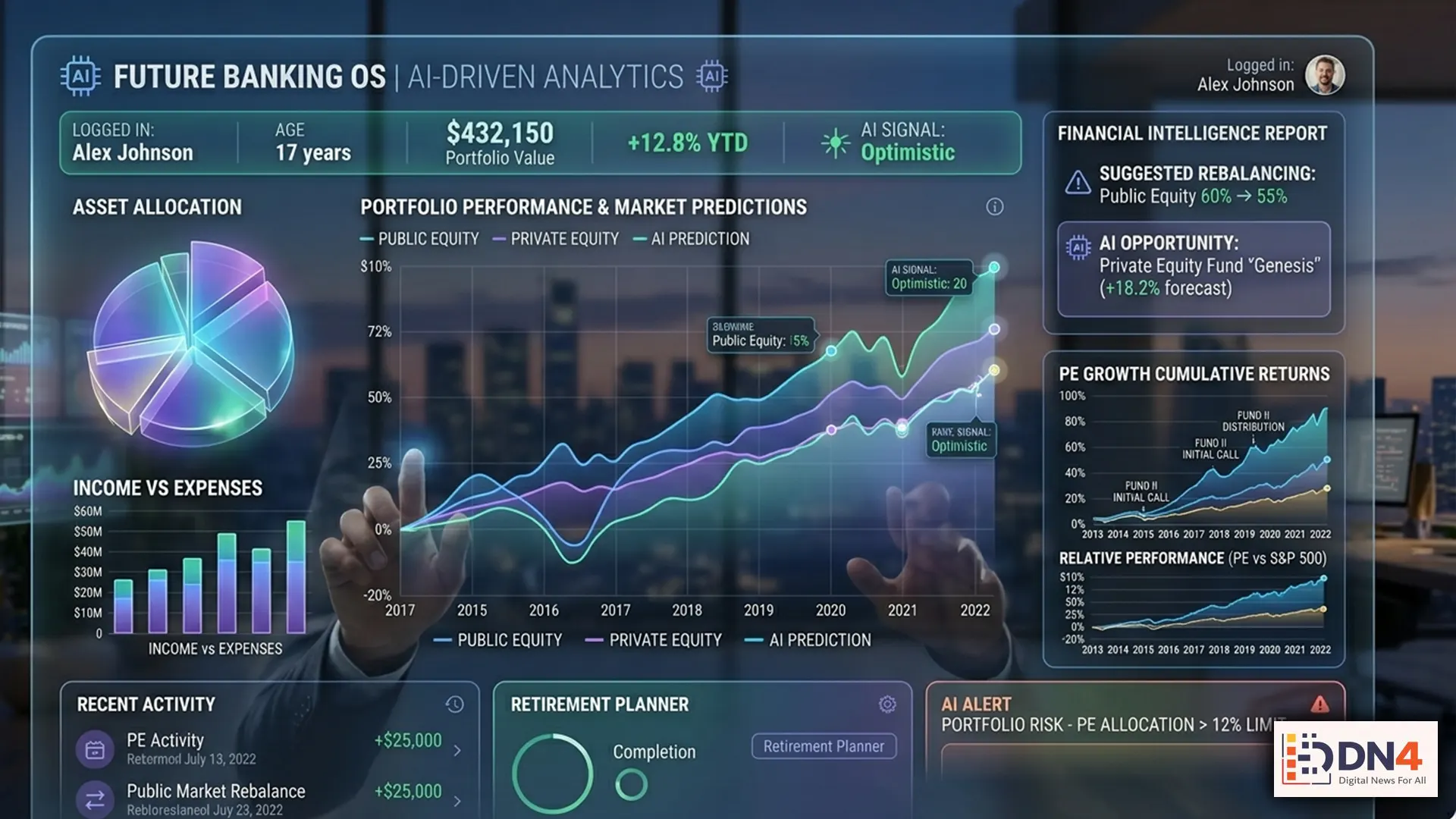
Artificial intelligence is no longer just a Silicon Valley buzzword — it is rapidly becoming the driving force behind the global economy. According to recent insights from Deloitte, 2026 could mark a major turning point where AI fundamentally reshapes banking, employment, investing, and personal wealth management.
From AI-powered financial advisors to automated workplaces, the next wave of technological disruption may directly affect how people earn, save, and spend money. The biggest question for consumers now is simple: Is your bank account ready for the AI revolution?
AI Is Transforming the Financial World
Financial institutions worldwide are investing billions into artificial intelligence technologies. Major banks are already using AI for fraud detection, customer support automation, loan approvals, and predictive analytics.
According to reports from McKinsey & Company, AI adoption in banking could generate trillions in global economic value over the next decade.
Consumers are also seeing the impact firsthand through:
- AI-powered budgeting apps
- Automated investing platforms
- Smart credit monitoring systems
- Personalized financial recommendations
- AI-driven fraud protection

Will AI Replace Jobs or Create Wealth?
One of the most debated topics surrounding AI is employment disruption. Deloitte predicts that while automation may eliminate some repetitive roles, it could also create new opportunities in technology, cybersecurity, AI management, and digital services.
The World Economic Forum estimates that AI and automation could transform millions of jobs globally by 2030.
Workers with skills in data analysis, AI operations, cloud computing, and digital marketing may benefit the most from this transition.
How AI Could Impact Your Savings
AI-driven economic changes may influence everything from salaries to inflation and investment returns. Experts at Goldman Sachs have warned that AI could significantly reshape labor markets while boosting productivity across industries.
For consumers, this means financial planning may become even more important in the coming years. Individuals who adapt early to AI-driven trends could potentially gain advantages in:
- Career growth opportunities
- Investment strategies
- Digital entrepreneurship
- Remote work flexibility
- Passive income creation
AI Investing Is Becoming Mainstream
Retail investors are increasingly using AI-powered trading and financial analysis platforms. Companies like OpenAI and leading fintech firms are accelerating innovation across financial services.
Meanwhile, major technology companies continue to invest heavily in AI infrastructure, cloud computing, and machine learning systems.
Analysts from Bloomberg believe AI could become one of the largest economic growth drivers of the decade.

How to Prepare Financially for the AI Era
Financial experts recommend several strategies to stay ahead during the AI transformation:
- Build digital and AI-related skills
- Diversify income sources
- Monitor emerging tech investment opportunities
- Strengthen emergency savings
- Stay informed about AI-driven industry changes
Consumers who remain adaptable may be better positioned to benefit from the opportunities created by artificial intelligence rather than being negatively affected by disruption.
Deloitte’s 2026 predictions highlight a future where artificial intelligence influences nearly every aspect of personal finance and the global economy. While AI promises innovation and productivity growth, it may also increase economic uncertainty for workers and households that fail to adapt.
The AI revolution is already underway — and the financial decisions people make today could determine how successfully they navigate tomorrow’s digital economy.
#AIRevolution #ArtificialIntelligence #Deloitte2026 #FutureOfWork #AIInvesting #DigitalEconomy #Fintech #TechNews