

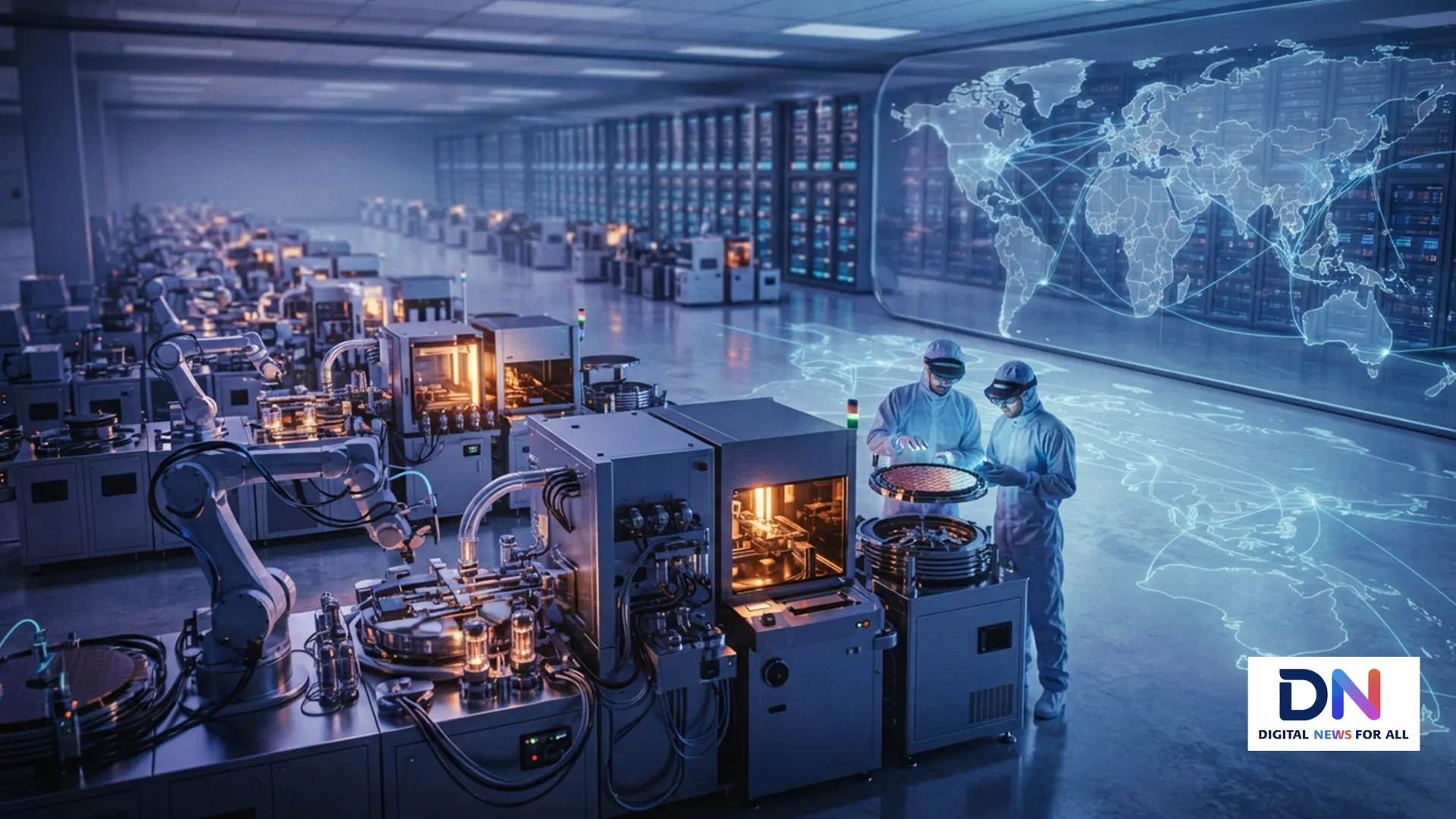
The AI hardware boom is doing something few economists expected from a technology cycle: it is helping global trade accelerate despite higher tariffs and geopolitical uncertainty. From advanced semiconductors to servers and networking equipment, artificial intelligence is creating an enormous cross-border supply chain.
AI Is Becoming a Trade Engine
According to the World Trade Organization, global merchandise trade value increased 11% year over year in the first quarter of 2026. AI-enabling goods played a major role.
Trade in AI-enabling products increased more than 40% during the quarter. The broader office and telecommunications equipment category jumped 44%, showing how quickly demand for computing infrastructure is spreading through international markets.
The WTO previously estimated that AI-related products accounted for 42% of global merchandise trade growth in 2025. That makes the AI hardware boom much more than a Silicon Valley story.
South Korea Shows the Scale of the Chip Boom
South Korea provides one of the clearest examples. September exports reached a record $120.9 billion, according to South Korea’s Ministry of Trade.
Semiconductor exports alone surged 262.8% to $60.3 billion. Computer exports also jumped more than 400%. The extraordinary numbers reflect demand for memory chips and other components required to build AI data centers.
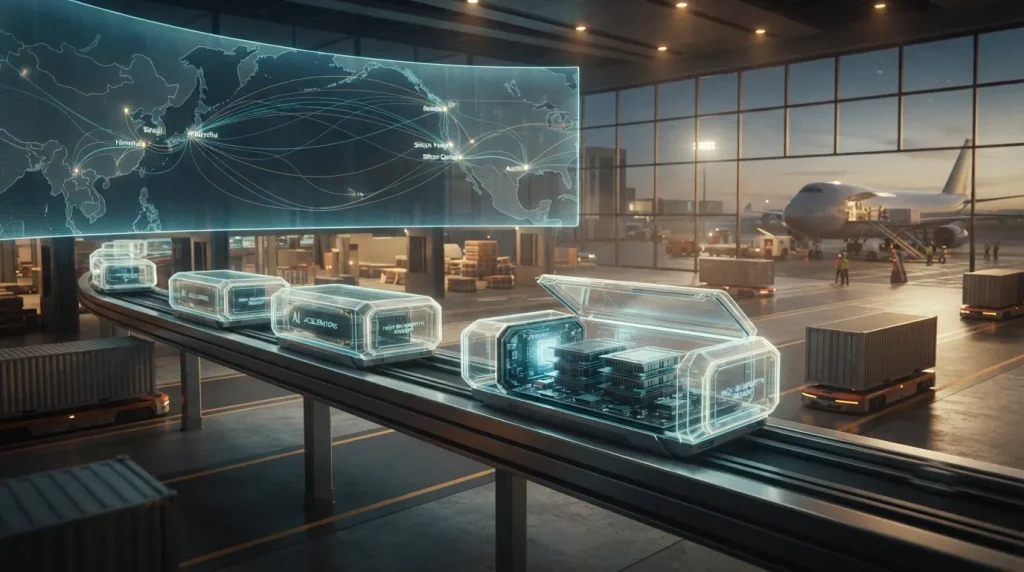
That surge is spreading across the supply chain. Chips may be designed in one country, manufactured in another, packaged elsewhere and ultimately installed in servers thousands of miles away.
Why Tariffs Haven’t Stopped the Boom
Tariffs are raising costs across many international supply chains, but AI hardware has an unusual advantage. The WTO’s 2026 trade outlook notes that key AI-related products such as semiconductors and data-transmission equipment remain exempt from many new tariffs.
That does not mean the technology industry is immune to trade restrictions. Governments are increasingly treating advanced chips as strategic assets. Export controls, investment restrictions and national-security rules can be just as important as traditional tariffs.

The New Global Trade Map
The result is a more complicated trading system. The United States remains a crucial market for AI infrastructure, while Asian economies dominate important stages of semiconductor manufacturing, memory production and electronics assembly.
The WTO says AI supply chains depend on international trade at almost every stage. That creates both economic opportunity and strategic vulnerability.
Can the Chip Boom Keep Global Trade Growing?
For now, the numbers suggest strong momentum. The WTO’s September Goods Trade Barometer reached 102.0, indicating above-trend merchandise trade, with electronic components recording one of the strongest readings.
But the boom has limits. Semiconductor shortages, energy costs, export restrictions and a potential slowdown in AI investment could quickly change the picture.
For now, however, AI is proving to be one of global trade’s most powerful engines. The chip boom is not simply surviving the tariff era—it is helping reshape where goods are produced, shipped and consumed.
#AI #AIHardware #Semiconductors #ChipBoom #GlobalTrade #Tariffs #ArtificialIntelligence #TechEconomy #SupplyChain