


AI chatbots can write emails, summarize research, solve problems and remember information for us. But as millions of people increasingly outsource everyday thinking to artificial intelligence, researchers are asking a difficult question: what happens to human memory when we stop doing the mental work ourselves?
The Brain Was Never Designed to Remember Everything
Humans have always used external tools to reduce the burden on memory. Notes, calendars, calculators and search engines all allow us to store or retrieve information without keeping everything in our heads.
The difference with generative AI is its reach. A chatbot can increasingly handle multiple stages of a task, from finding information to organizing arguments and producing the final answer. That creates a much deeper form of cognitive offloading.
What Research Says About AI and Thinking
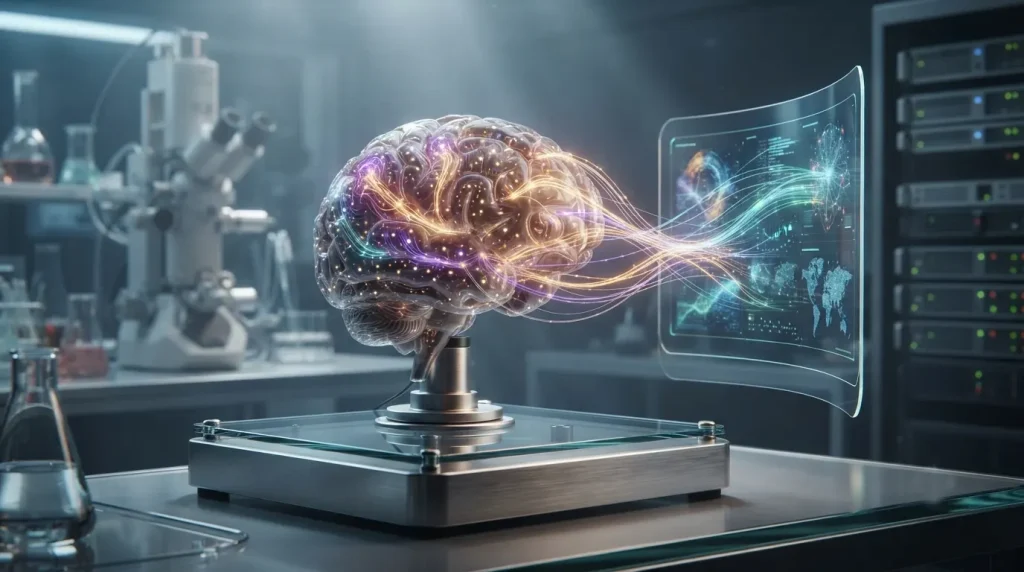
A 2025 study from researchers at MIT Media Lab examined how people completed essay-writing tasks with and without ChatGPT. Researchers reported differences in brain activity and found that participants using AI showed weaker engagement with the material during the experiment.
However, the study was relatively small and its findings should not be interpreted as proof that ChatGPT permanently damages memory. The broader scientific question is still developing.
Convenience Can Become Cognitive Offloading
The potential problem is not simply using AI. It is using AI before attempting to think independently.
If someone asks a chatbot to explain a concept, summarize it, create examples and answer questions, they may remember less than someone who actively retrieves and reconstructs the information. Learning science has repeatedly shown that retrieval and active engagement are important for long-term retention.
The American Psychological Association describes retrieval practice as an important mechanism in learning and memory. The concern is therefore about the way AI is used, rather than AI itself.
Could AI Also Improve Memory?
There is another side to the debate. AI can act as a tutor, generate practice questions, explain difficult concepts and provide immediate feedback. Used deliberately, those capabilities could strengthen learning rather than weaken it.
Research published through Nature has also demonstrated the potential of AI systems to support complex human cognitive tasks. The technology itself does not determine the outcome; the interaction between the user and the tool matters.
The Real Risk May Be Passive Thinking
The emerging lesson is more nuanced than “AI is destroying our brains.” Human cognition has always adapted around technology. The bigger concern is passive cognitive offloading—allowing a chatbot to perform a task that would otherwise force us to remember, reason or retrieve information.
A simple strategy can reduce that risk: try solving a problem first, then use AI to critique or expand the answer. Ask for questions instead of immediate solutions. Summarize information from memory before asking the chatbot to check it.
The Future of Memory May Depend on How We Use AI
AI chatbots are unlikely to make human memory suddenly disappear. But they could change which mental skills people practice every day.
The important question is not whether AI thinks for us, but how often we allow it to think instead of us. If convenience replaces retrieval, reasoning and reflection, the long-term cognitive cost may be greater than users realize.
#AI #ChatGPT #HumanMemory #CognitiveOffloading #BrainHealth #ArtificialIntelligence #Technology #CriticalThinking #FutureOfAI #Science