

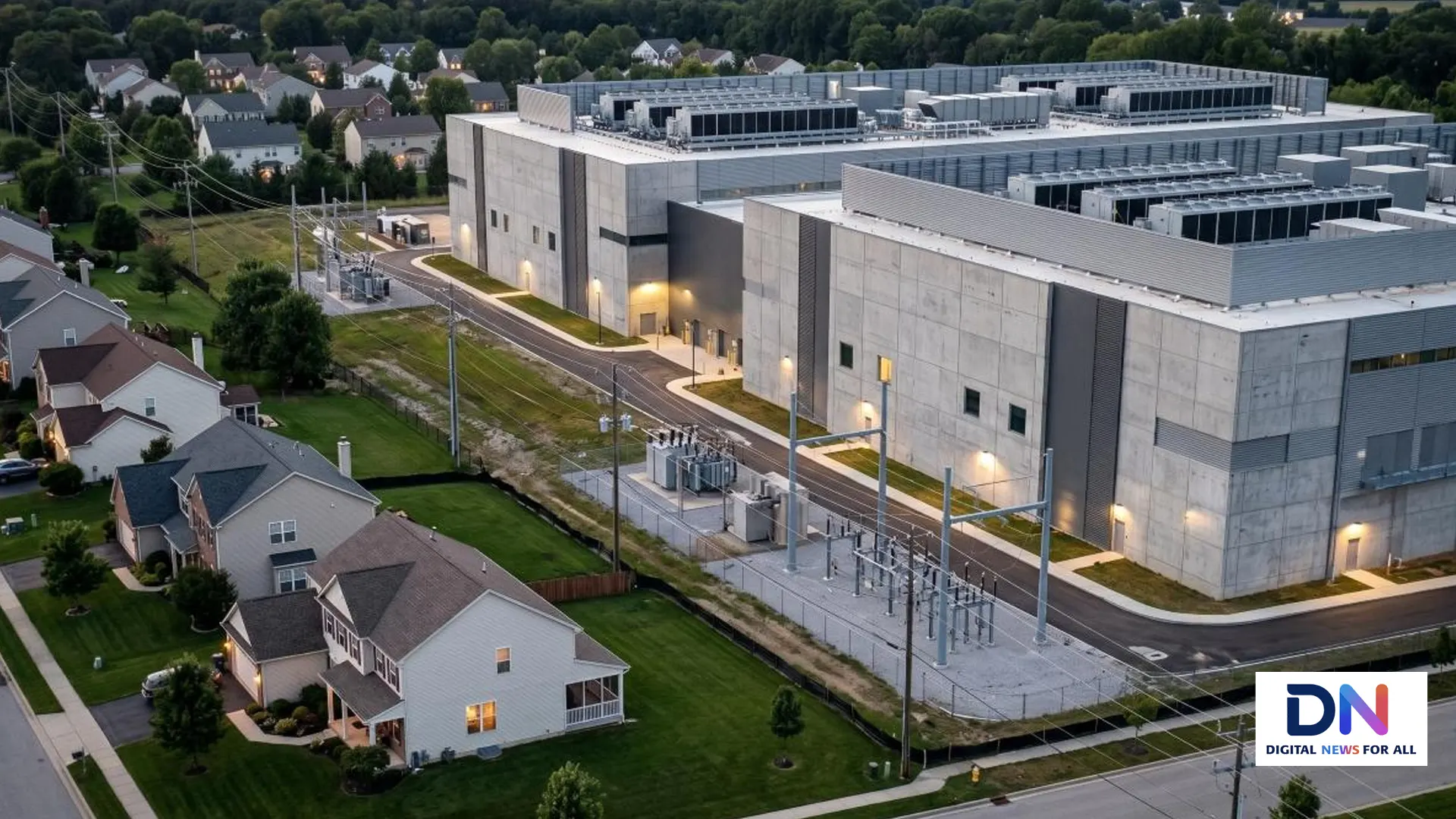
Artificial intelligence is transforming technology, but its growing energy demand is creating a new challenge for American households. Massive AI data centers require electricity around the clock to operate servers, cooling equipment, and computing infrastructure. In some utility regions, the expansion is contributing to higher residential electricity rates. The question surrounding AI data center electricity bills is no longer just about future projections. Researchers and regulators are increasingly examining how infrastructure costs reach ordinary customers.
Why AI Data Centers Need So Much Electricity
AI data centers operate thousands of specialized computing systems simultaneously. Training and running advanced AI models requires substantial power, while cooling systems prevent equipment from overheating.
Unlike traditional office buildings, these facilities can consume enormous amounts of electricity continuously. Their demand can place pressure on regional grids, especially when multiple campuses are constructed within the same utility territory.
According to the US Department of Energy, data center electricity consumption has become an important part of national energy planning. Utilities are responding with investments in substations, transmission lines, and additional power generation.
Are Data Centers Actually Raising Household Bills?
Research published by MIT’s Center for Energy and Environmental Policy Research in 2026 found that data center entry increased average retail electricity rates by 2.7% and residential rates by 2.1% in studied utility territories.
Another analysis published by the Center for Economic Policy Research found that residential customers could experience disproportionately larger price increases than some commercial customers. However, impacts vary depending on local infrastructure, utility regulations, and existing electricity supply.
Explore the MIT research on data centers and electricity prices and the CEPR analysis of residential rate impacts.
The Hidden Cost of Grid Expansion
Building a data center often requires more than constructing a facility. Utilities may need to expand transmission capacity, upgrade substations, and secure additional electricity supplies to meet anticipated demand.
These projects can cost billions of dollars. The challenge is determining who should pay when infrastructure serves both a data center and the wider community.
In the PJM regional electricity market, data-center demand has contributed to rising capacity-market costs. Maryland’s Office of People’s Counsel estimates that Maryland customers could pay approximately $1.6 billion over ten years for data-center-driven transmission facilities.
Read the Maryland consumer advocate’s analysis and FERC’s cost-transparency and customer-protection information.

Why Suburban Communities Are Feeling the Pressure
Data centers are frequently built near residential communities because these locations offer access to fiber-optic networks, land, and electrical infrastructure. However, the costs of grid upgrades may eventually be distributed across a utility’s broader customer base.
Residents in some areas are concerned that new facilities could increase electricity costs, strain local resources, and accelerate infrastructure construction. Others argue that data centers can generate tax revenue, create jobs, and improve grid reliability when investments are properly managed.
NPR reported in October 2026 that estimates of household impacts differ substantially by utility and state. Some Maryland estimates suggest hundreds of dollars in annual costs for certain customers, while other studies find little measurable localized effect through 2024.
See NPR’s reporting on who pays for data-center expansion.
Can Regulators Protect Electricity Customers?
State utility commissions and federal regulators are examining new rules for large electricity users. Proposed protections include requiring data centers to pay for dedicated infrastructure, establishing minimum electricity-purchase commitments, and preventing households from absorbing costs when projects are delayed or canceled.
The Federal Energy Regulatory Commission has also pursued greater transparency in transmission costs and agreements for connecting large electricity users to the grid.
Consumers can follow the US Energy Information Administration’s electricity data and their state public utility commission’s rate proceedings to understand how costs are changing locally.
The AI Boom Has an Electricity Price Tag
AI data centers are creating unprecedented demand for electricity and accelerating grid investment. Research indicates that residential rate increases are already measurable in some regions, although the effects vary considerably. The central challenge is ensuring that large technology companies pay a fair share of the infrastructure required to power their facilities. As AI expands, transparent utility pricing and consumer protections will become increasingly important.
#ArtificialIntelligence #AIDataCenters #ElectricityBills #EnergyCrisis #PowerGrid #UtilityCosts #TechNews #EnergyPolicy