

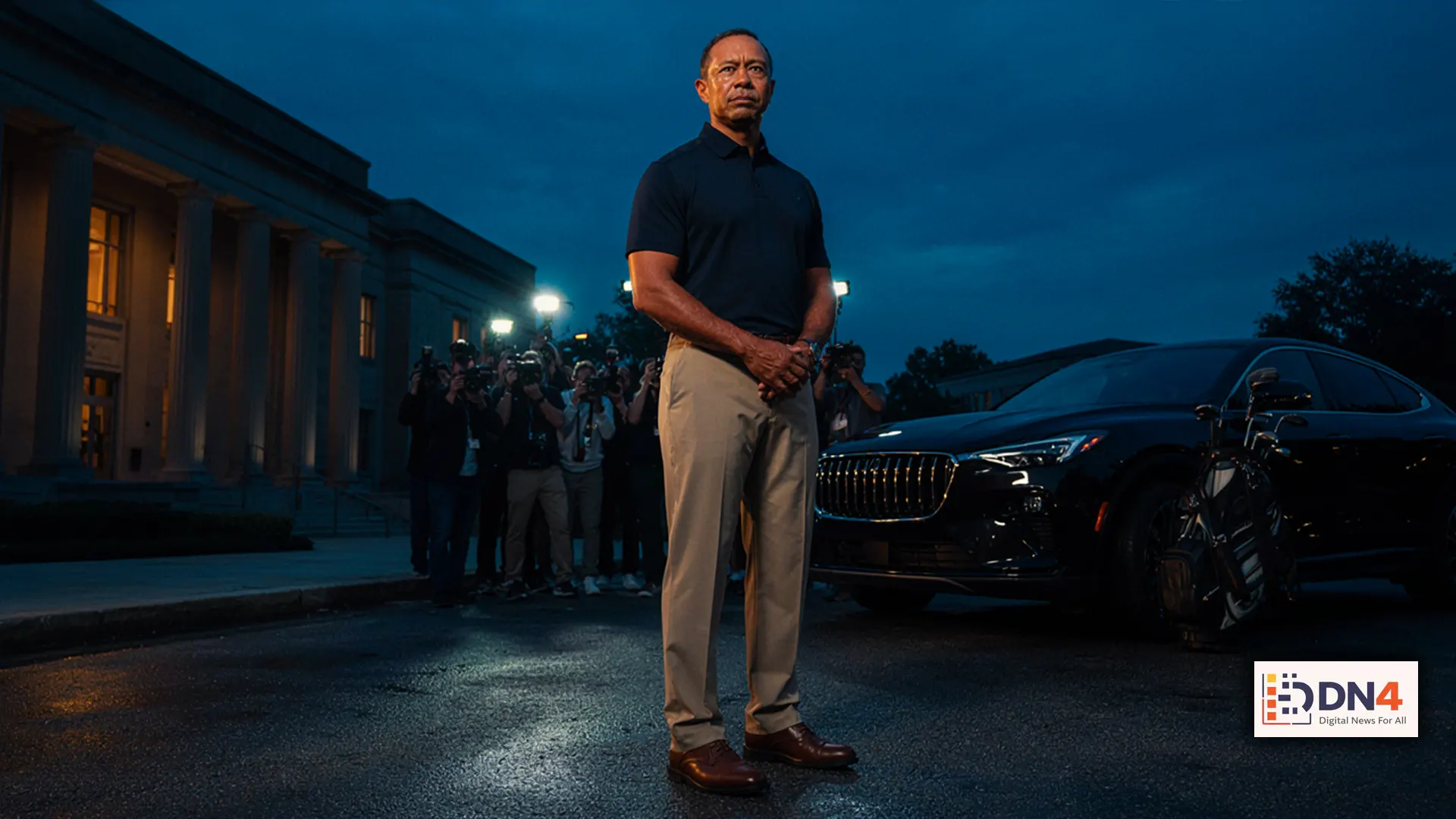
Tiger Woods has spent decades building one of the most extraordinary careers in sports. With 15 major championships and 82 PGA TOUR victories, his place in golf history is firmly established. Yet his public legacy has also been shaped by highly publicized personal and legal troubles, particularly those involving driving.
That conversation returned to the spotlight on September 2, 2026, when Woods reached a plea agreement in Florida following a March rollover crash. The 50-year-old golfer pleaded no contest to a reduced reckless-driving charge and a charge related to refusing a lawful test. The agreement resulted in a five-year suspension of his driver’s license and financial penalties, while avoiding jail time.
The 2026 Crash and Plea Deal
The case began after Woods’ Land Rover crashed on Jupiter Island, Florida, in March. Authorities said the SUV clipped a truck and overturned. Woods was initially charged with driving under the influence with property damage and refusing to submit to a lawful test.
A breath test showed no alcohol, but authorities reported signs of impairment and found hydrocodone pills in Woods’ possession. Prosecutors also sought access to medical and prescription records as the case developed.
The eventual plea deal significantly reduced the legal exposure Woods faced. However, the five-year driving suspension represents a substantial consequence, particularly for an athlete whose career has already been interrupted by injuries and physical limitations.

A Pattern That Makes the Story Bigger
The 2026 case is not viewed in isolation. Woods previously faced a DUI arrest in 2017, while a 2009 driving incident also became part of his highly scrutinized public history. The recurrence makes the latest case more consequential for discussions about responsibility and personal conduct.
At the same time, legal accountability should not erase the distinction between Woods’ conduct away from competition and his extraordinary achievements on the golf course. His official career record includes 82 PGA TOUR victories, 15 major championships and three career Grand Slam victories.
What It Means for Tiger Woods’ Legacy
Woods’ legacy is therefore complicated rather than easily defined. His sporting accomplishments transformed professional golf, while his personal controversies demonstrated how difficult it can be for public figures to separate private behavior from public expectations.
The latest plea agreement does not rewrite his championship record. Instead, it adds another chapter to a career increasingly defined by both extraordinary resilience and difficult personal challenges.
For Woods, accountability may ultimately become part of the legacy story itself. His golf achievements are already permanent. What remains open is how the final chapters of his public life—and the choices he makes from here—shape the way future generations remember the man behind the records.

The Woods saga highlights a broader reality about celebrity athletes: exceptional talent does not place someone beyond consequences. Greatness on the field and accountability away from it can coexist, but one cannot automatically cancel out the other.
As Woods’ competitive future remains uncertain, his legacy will likely be judged on two parallel tracks: what he accomplished with a golf club and how he responded when confronted with serious personal challenges.
That balance may ultimately be more revealing than any single trophy—or any single legal case.
Reuters, Associated Press, PGA TOUR, Tiger Woods’ official biography, USGA, and The Open.
#TigerWoods #Golf #PGA #SportsNews #TigerWoodsLegacy #LegalNews #GolfLegend #Accountability #USSports