


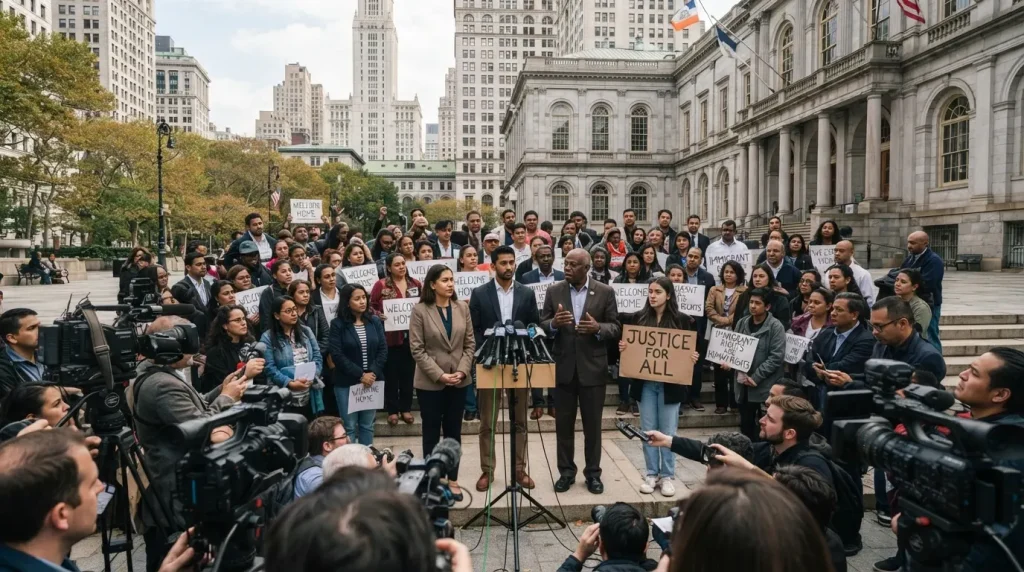
Mamdani’s immigration clash with Washington has entered a new legal phase. New York City is challenging a Trump administration policy that would give federal immigration officials greater discretion to consider an immigrant’s use, or potential use, of public benefits when evaluating some visa and green-card applications.
On September 14, 2026, New York City joined Chicago, San Francisco and Seattle in a federal lawsuit seeking to block the policy. The rule is scheduled to take effect September 18.
Why Mamdani Is Challenging Washington
Mayor Zohran Mamdani has made immigration protections a major part of his administration’s agenda. In February, he signed an executive order strengthening New York City’s sanctuary-city protections.
The latest dispute involves the federal government’s interpretation of the public-charge system. The administration says the new policy gives immigration officials additional tools to evaluate whether applicants are likely to become dependent on public resources.
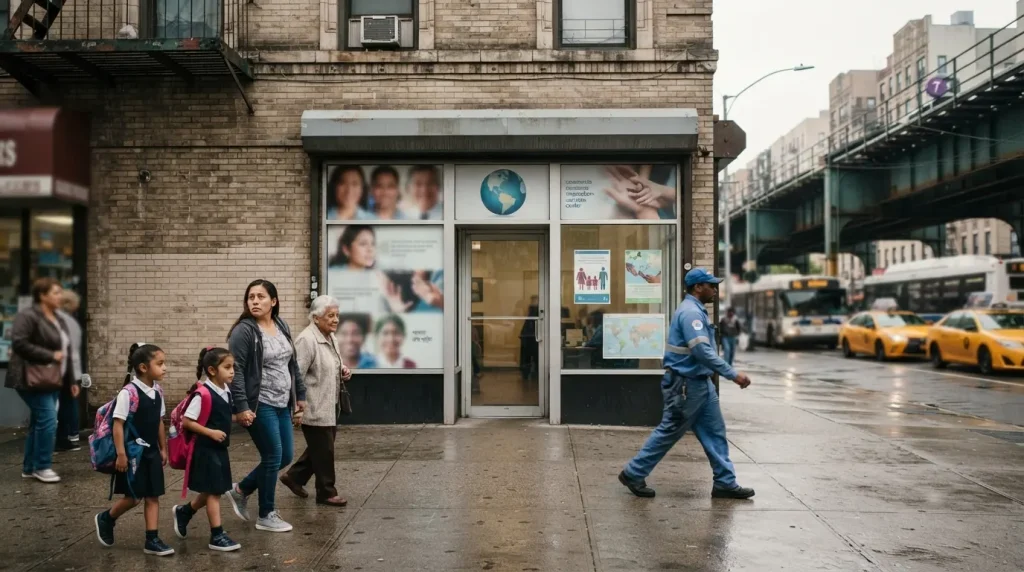
New York and the other plaintiffs argue that the policy could discourage eligible immigrant families from using healthcare, food assistance and housing programs. The cities also contend that the federal government exceeded its authority and failed to follow required administrative procedures.
What the Federal Government Says
The Trump administration has defended the policy as part of its broader immigration enforcement strategy. Federal officials argue that immigration decisions can appropriately consider an applicant’s financial circumstances and potential reliance on public assistance.
That position puts Washington and sanctuary jurisdictions on opposite sides of a fundamental question: how much discretion should the federal government have when administering immigration law, and how much room should cities have to determine their own policies toward immigrant communities?
NYC’s Sanctuary-City Position
New York’s sanctuary framework generally limits the circumstances in which city agencies and local law enforcement cooperate with federal immigration enforcement. The city argues that these policies help maintain trust between immigrant residents and local institutions.
The federal government, meanwhile, has repeatedly challenged sanctuary policies and sought greater cooperation with local authorities. The dispute is part of a larger national conflict over federal immigration enforcement and the role of state and local governments.
Federal Funding Adds Another Pressure Point
Immigration is not the only area where Mamdani and Washington are facing friction. Mamdani and Governor Kathy Hochul have also pressed the federal government over millions of dollars in counterterrorism funding for New York.
That creates a broader relationship in which immigration policy, federal funding and local authority can become interconnected.
What Happens Next?
The immediate issue is the lawsuit over the public-charge policy. Because the rule is scheduled to take effect September 18, the federal courts could become the next major venue for determining how far the administration’s new approach can go.
For New York residents and immigrant families, the outcome could affect access to public programs and immigration applications. For other sanctuary jurisdictions, the case could also provide an important test of the boundaries between federal immigration authority and local policy.
The confrontation therefore extends beyond Mamdani and New York. It reflects a continuing national debate over immigration enforcement, federalism and the responsibilities of cities toward immigrant communities.
For official information, readers can follow updates from New York City Mayor’s Office, the Department of Homeland Security, U.S. Citizenship and Immigration Services, the U.S. Department of Justice, and the U.S. Congress.
#ZohranMamdani #NYC #SanctuaryCity #Immigration #TrumpAdministration #FederalGovernment #NewYork #ICE #PublicCharge