

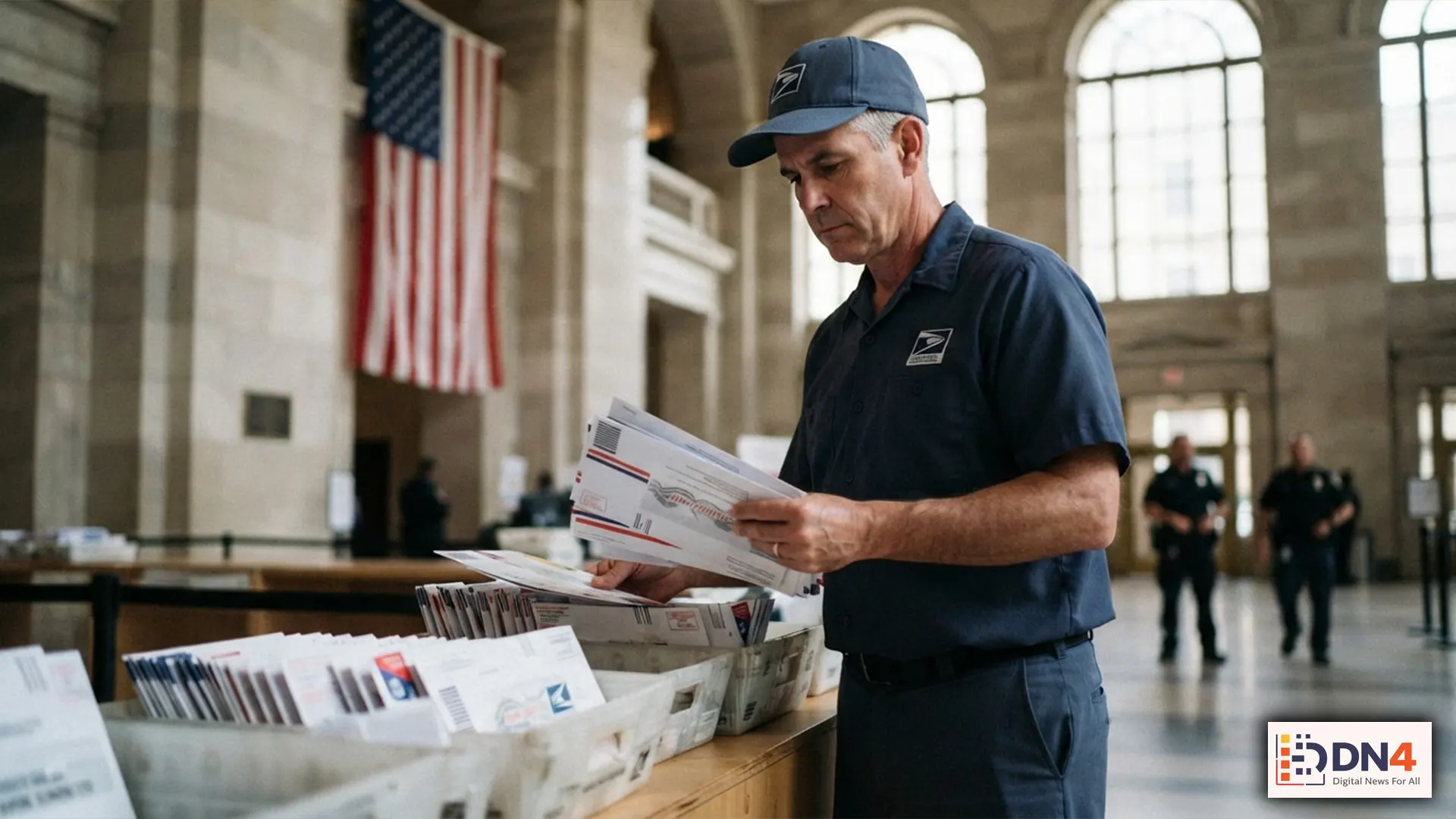
USPS mail-in voting has become the center of another major legal battle ahead of the 2026 U.S. midterm elections after a federal judge blocked the Trump administration from implementing key parts of an executive order targeting mail ballots.
U.S. District Judge Indira Talwani in Massachusetts issued a nationwide preliminary injunction on August 11, preventing the federal government and the U.S. Postal Service from enforcing provisions that would have changed how certain election mail is handled. The ruling expanded an earlier injunction that applied to 23 states and Washington, D.C.
What the Executive Order Sought to Change
President Donald Trump’s March executive order directed federal agencies to play a larger role in verifying voter eligibility and instructed USPS to develop procedures affecting the delivery of mail-in ballots.
Among other provisions, the order directed USPS to create lists connected to voters eligible to receive mail ballots and restricted transmission of ballots that did not meet the new requirements. A June USPS proposal described procedures under which ballots failing to comply with the standards could be rejected and returned.
Why the Judge Blocked USPS Implementation
Judge Talwani concluded that the Constitution gives states a central role in determining voter eligibility and administering elections. The court found that the executive order improperly attempted to give the federal executive branch authority over election procedures that had not been granted by Congress.
The ruling specifically prevents USPS and other federal officials from implementing portions of the order involving election mail and ballot envelopes for the November 3, 2026 election and earlier federal elections covered by the injunction.
The court also emphasized that the injunction does not prevent the federal government from assisting states with citizenship or voter-eligibility verification when that assistance is requested by a state and operates within authority provided by Congress.
Why the Case Matters Before the Midterms
The timing is significant. Election officials and voters are preparing for the November midterms, making changes to mail-ballot procedures particularly sensitive.
Voting-rights organizations argued that last-minute changes could create confusion and potentially prevent eligible voters from successfully returning ballots. The Brennan Center for Justice said the Massachusetts litigation raises constitutional and statutory challenges to the administration’s attempt to regulate mail voting through executive action.
The Legal Fight Is Not Over
The administration has continued challenging the court restrictions. The U.S. Department of Justice has asked the Supreme Court to intervene, arguing that the lower-court restrictions should be overturned. The legal status of the executive order therefore remains subject to further appeals.
A separate legal track has also involved USPS and an existing settlement agreement concerning election mail. The U.S. Court of Appeals for the D.C. Circuit later stayed a separate district-court order involving USPS’s proposed ballot-mail rule, illustrating how several cases are now intersecting around the same election policy.

What Voters Should Know
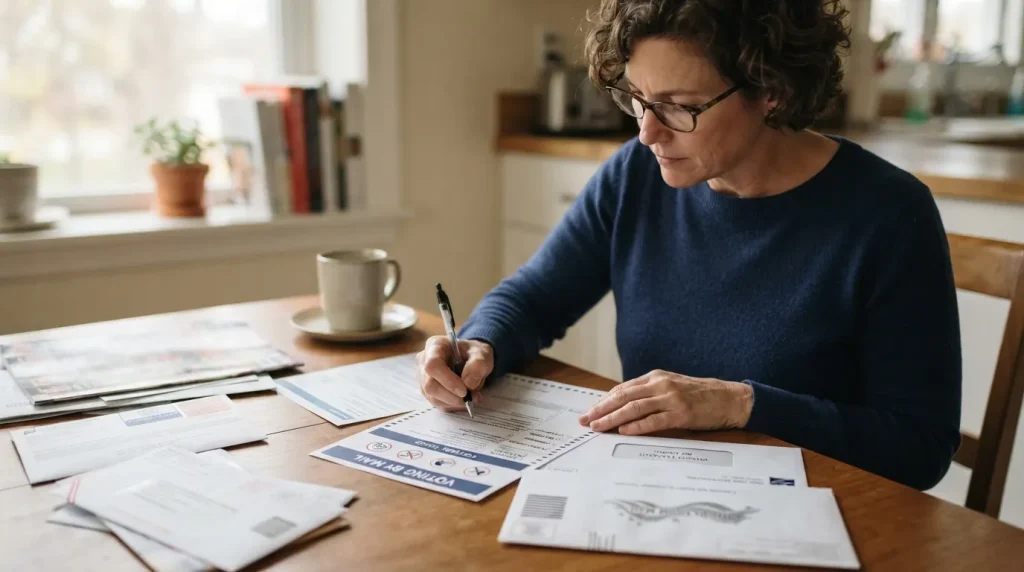
For voters, the immediate message is simple: follow instructions from your state and local election officials. Don’t rely on older federal guidance or social-media claims about mail voting.
With the 2026 midterms approaching, the court battles could continue to shape the rules governing election mail. Until courts resolve the appeals, the Massachusetts injunction blocks the federal government from implementing the specified provisions of the executive order covered by the ruling.
The federal court’s decision represents a significant setback for the administration. It sought to use USPS to impose new federal requirements on mail-in voting. The dispute is likely to remain active as the administration seeks further appellate review and election officials prepare for November.
#MailInVoting #USPS #VotingRights #Election2026 #USPolitics #ElectionNews #VotingAccess #Democracy