

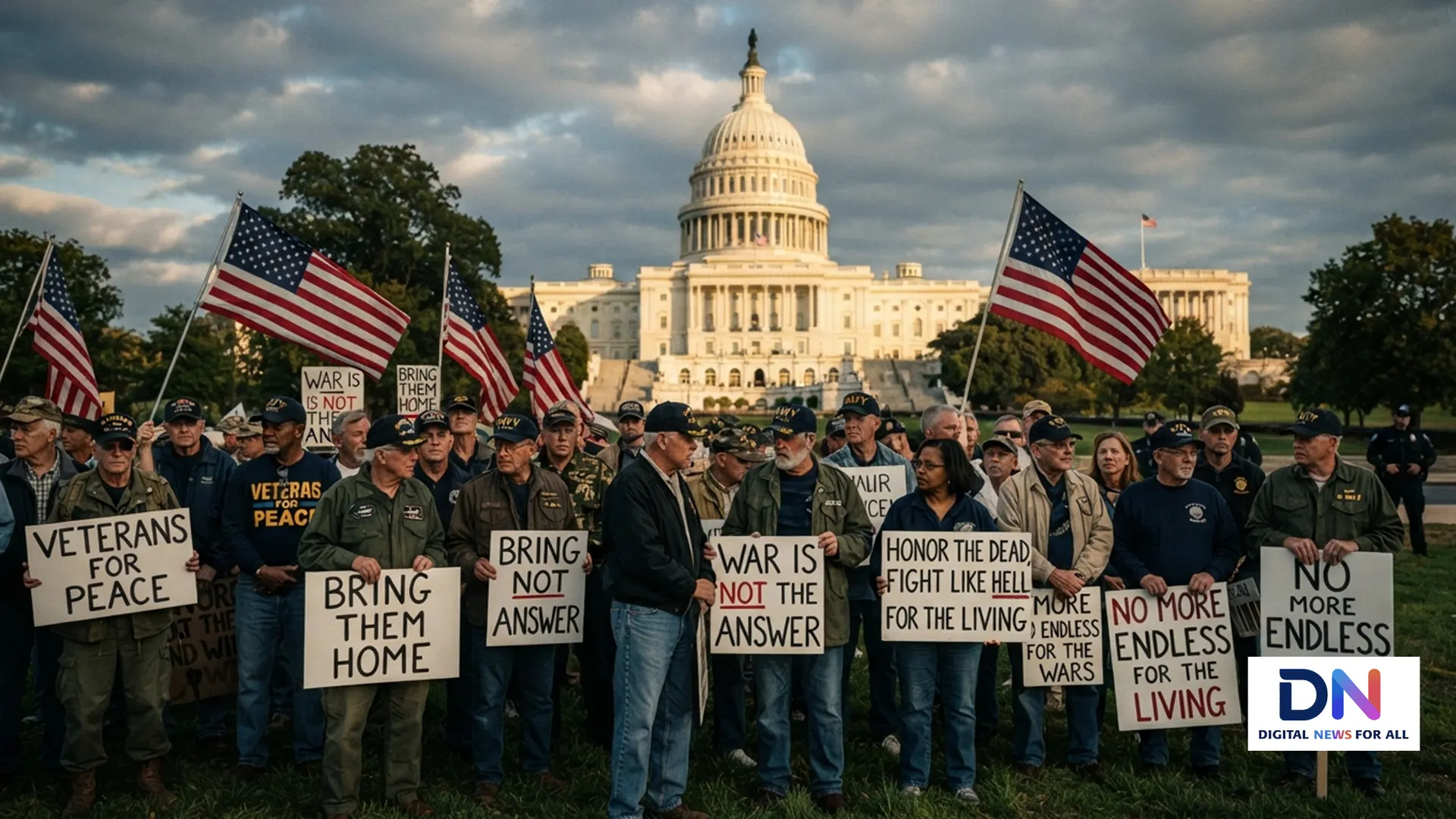
Veteran protests on Capitol Hill have brought an increasingly visible anti-war movement into the center of Washington’s debate over the Iran conflict. Veterans, military families and supporters have challenged U.S. military policy while lawmakers and administration officials continue debating America’s role in the conflict.
Why Veterans Are Taking to Capitol Hill
For many protesters, opposition to the war is connected directly to personal military experience. Veterans who served in Iraq and Afghanistan have described concerns about casualties, long-term deployments and the consequences of another prolonged conflict.
On April 20, more than 150 veterans, military family members and supporters occupied the Cannon House Office Building in a demonstration calling for an end to the war. Capitol Police arrested 66 people after the demonstration was dispersed. NPR/KPBS reporting documented the protest and accounts from participants.
A Movement With Different Priorities
The anti-war coalition is not a single organization. Veterans groups, military families, peace organizations and individual activists have participated in demonstrations, sometimes emphasizing different concerns.
Some protesters have focused on preventing another extended Middle Eastern war. Others have emphasized civilian casualties, congressional authority over military action and the financial costs of military operations.
Organizations including About Face: Veterans Against the War and Veterans For Peace have been involved in organizing or supporting demonstrations.
Why Washington Is Divided
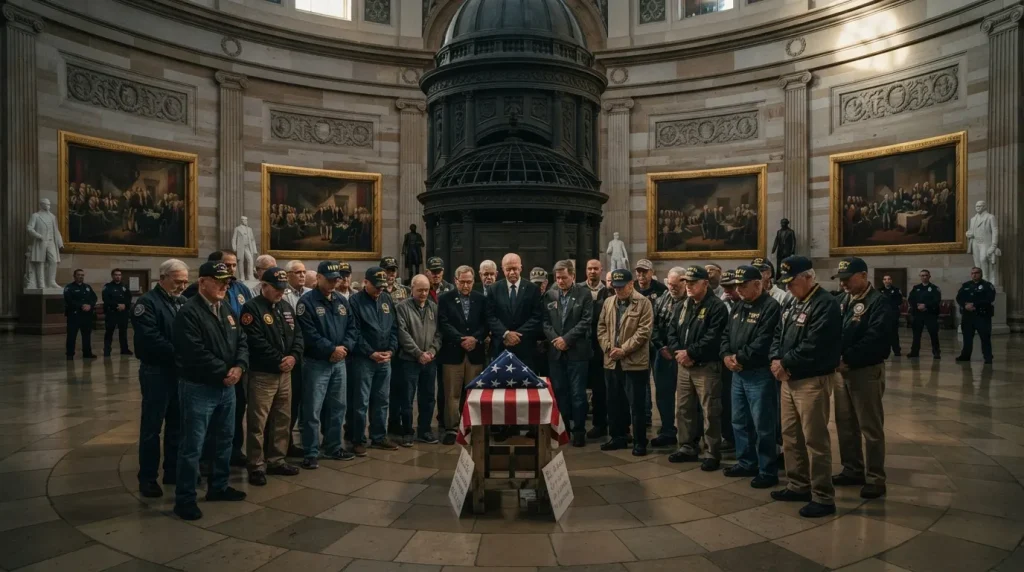
The protests have arrived during a broader political disagreement over the scope and duration of U.S. military involvement. Supporters of the administration’s policy have argued that military action can advance American security objectives, while opponents have questioned the consequences and constitutional basis for continued operations.
The disagreement has also reached congressional proceedings. In March, a Marine veteran interrupted a Senate Armed Services hearing to protest the Iran conflict. CBS News reported that Capitol Police removed the protester after the disruption.
The Question of Congressional Oversight
Beyond the demonstrations themselves, the conflict has revived longstanding questions about Congress’s role in authorizing and overseeing military operations.
The debate involves constitutional questions as well as political disagreements. Congress has authority over funding and declarations of war, while presidents have historically asserted substantial authority as commander in chief.
That tension can become particularly pronounced when military operations expand or continue without a traditional declaration of war.
Why Veteran Voices Carry Particular Weight
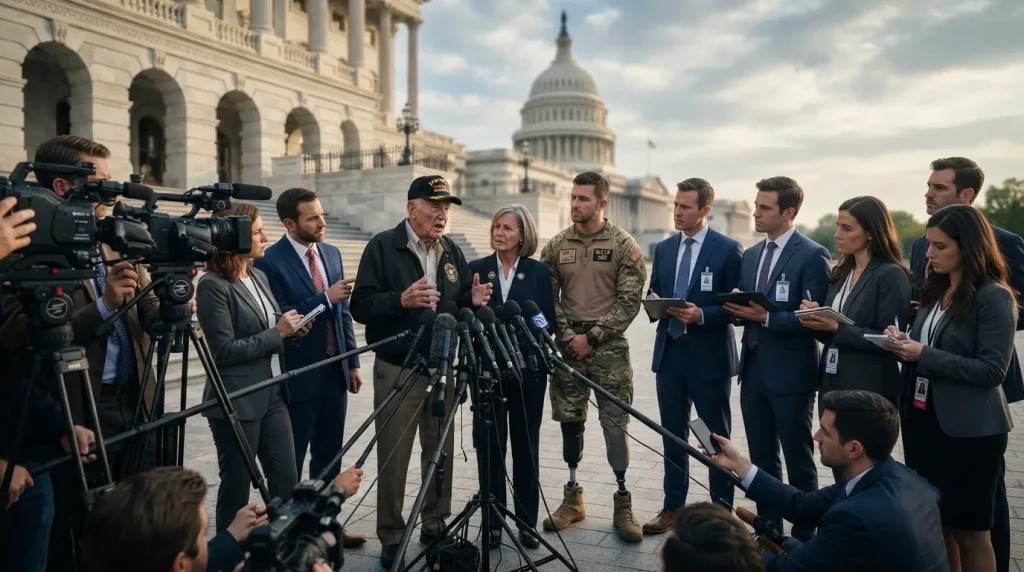
Veterans occupy a distinctive place in American discussions about military intervention. Their experiences can provide firsthand perspectives on deployment, combat and the effects of military service.
At the same time, veterans do not speak with one political voice. Some veterans support the administration’s military policies, while others strongly oppose them. The Capitol Hill demonstrations represent one organized segment of that broader veteran community.
From Protest to National Debate
The Capitol Hill demonstrations illustrate how foreign policy debates can move from congressional chambers into public spaces. Arrests, demonstrations and personal accounts from veterans have amplified questions about the costs and objectives of the Iran conflict.
Whether the protests produce changes in congressional policy remains an open question. Their immediate effect, however, is visible: veterans and military families have placed their experiences directly into Washington’s debate over war, presidential power and America’s military role overseas.
#Veterans #CapitolHill #AntiWar #IranWar #WashingtonDC #MilitaryVeterans #Congress #USForeignPolicy #VeteransAgainstWar