


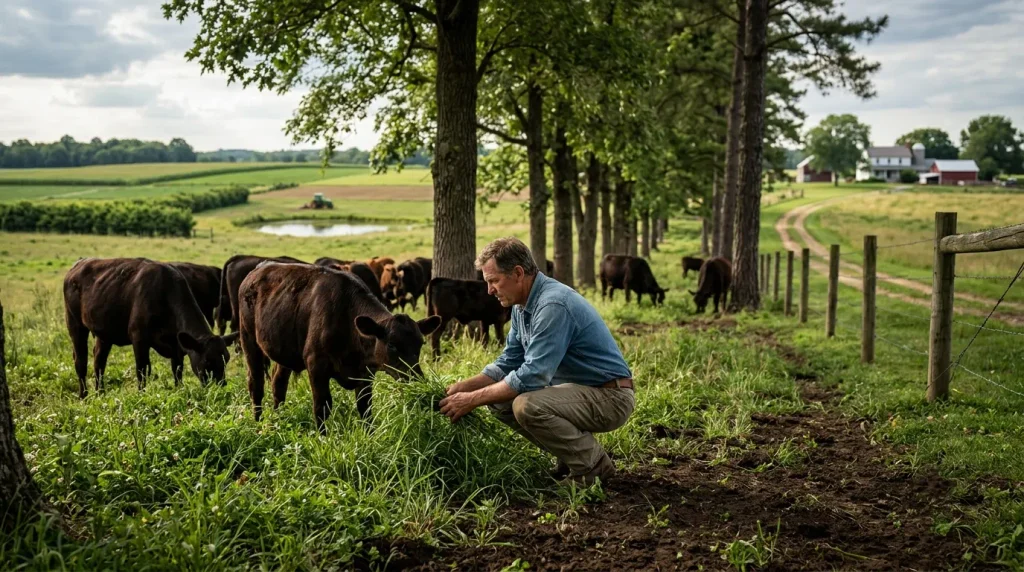
Across the United States, farmers are exploring a different way to manage their land: raising livestock among carefully managed trees. Known as silvopasture farming, this approach combines trees, forage crops and grazing animals on the same land. It can support animal welfare, diversify farm income and improve land management when planned properly.
The 2026 National Agroforestry Producer Survey, published by the USDA Forest Service, examined 1,747 producers who reported using silvopasture. Their average silvopasture area was about 80.7 acres per farm operation. Notably, 87% said they intended to maintain or expand their silvopasture acreage.
Why Farmers Are Combining Trees and Livestock
One major attraction is shade. Trees can help cattle, sheep and other livestock escape direct sunlight during hot weather. They can also provide shelter from wind and rain. Meanwhile, suitable grasses and other forage plants grow between trees, providing animals with grazing areas.
According to the USDA Climate Hubs, well-managed systems can support wildlife habitat, reduce soil erosion, protect water quality and diversify farm revenue. Depending on the tree species, farmers may also earn money from timber, nuts, fruit or other products.
A recent USDA-backed farm feature highlighted Louisiana ranchers who transformed an overstocked pine plantation into grazing land. Their project included thinning trees, preparing the ground and establishing forage, with assistance through the USDA Natural Resources Conservation Service.
How Silvopasture Can Support Farm Income
Traditional timber operations may take years to generate substantial returns. Silvopasture can provide livestock or forage income while selected trees continue growing. This creates the potential for multiple revenue streams instead of relying entirely on one product.
The USDA National Institute of Food and Agriculture describes research projects examining silvopasture in states including Mississippi, Missouri, Hawaii and South Carolina. These projects investigate livestock production, woodland management and opportunities to improve soil and habitat.
Farmers can also consult the USDA Forest Service’s National Agroforestry Center for guidance on integrating grazing with tree production. A peer-reviewed 2026 study in Agroforestry Systems provides additional findings from producers across the country.
Costs and Challenges Remain
Silvopasture is not simply a matter of releasing animals into a wooded area. Farmers must manage grazing intensity, protect young trees, maintain suitable forage and prevent soil damage. Establishment also requires planning, labor and investment.
Climate benefits need careful assessment, too. The World Resources Institute has highlighted research suggesting that silvopasture’s potential as a large-scale climate solution may be overstated. Outcomes depend on land use, tree growth and how the system is managed.
The Future of Silvopasture Farming
Growing producer interest suggests silvopasture is becoming an important option in American agriculture. It will not suit every farm, but thoughtful planning can combine livestock production, tree crops and conservation goals. For farmers seeking diversified income and healthier grazing environments, this approach offers another way to make working land productive.
#Silvopasture #SustainableFarming #AmericanFarmers #Agroforestry #RegenerativeAgriculture #Livestock #ClimateSmartAgriculture #SoilHealth #FarmInnovation