


Tablets can be valuable learning tools, but they can also turn homework into a battle against notifications, games, videos, and endless scrolling. The goal isn’t necessarily to eliminate screens. Instead, parents can create clear boundaries that help children use technology intentionally while protecting study time.
Separate Learning From Entertainment
One of the simplest strategies is to establish different expectations for schoolwork and recreational screen use. During homework, entertainment apps and games should remain off-limits unless they are genuinely needed for the assignment.
The American Academy of Pediatrics encourages families to develop personalized media plans that consider children’s age, development, health, education, and family routines.
Create a Consistent Homework Routine
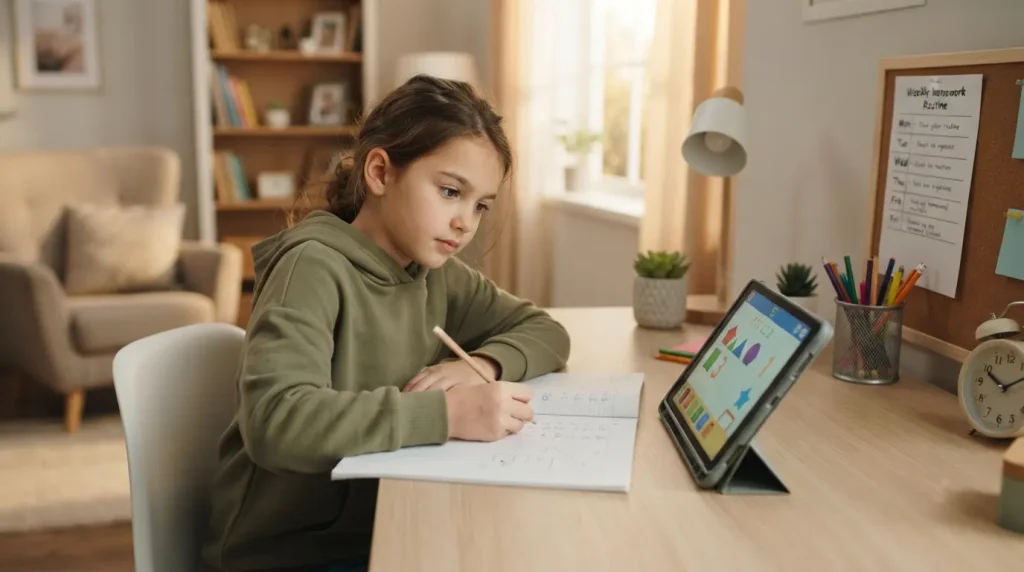
Children often respond better to predictable routines than constantly changing restrictions. Choose a regular homework period and decide in advance when recreational tablet use can begin.
A simple routine might be: snack, homework, short break, homework check, and then recreational screen time. Keeping the sequence consistent reduces arguments because the child knows what happens next.
Use Built-In Parental Controls
Parents don’t have to rely entirely on verbal reminders. Tablets and operating systems increasingly provide tools for managing app access, downtime, content, and screen-time limits.
For Apple devices, Apple’s Screen Time controls can help families establish app limits and scheduled downtime. Android families can explore Google Family Link for tools designed to help parents manage children’s digital experiences.
Turn Off Distractions
Notifications are small interruptions that can quickly destroy concentration. During homework, consider enabling Do Not Disturb, disabling unnecessary notifications, or placing the tablet in a mode that limits access to distracting applications.
The Common Sense Media family resources also provide guidance for creating healthier technology habits and discussing digital media with children.
Build Screen-Free Study Spaces
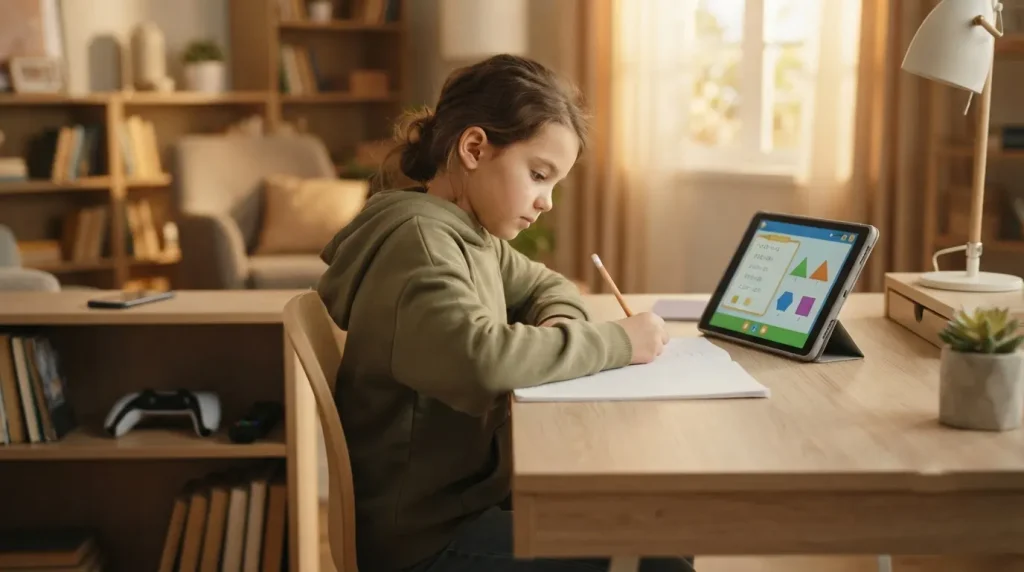
If possible, create a homework area where the television, gaming console, and unrelated devices are not competing for attention. For assignments that do not require a tablet, putting the device out of reach can make staying focused considerably easier.
Parents can also model the behavior they expect. Putting their own phones away during family study or reading time reinforces the idea that focused attention is a skill everyone practices.
Focus on Balance, Not Punishment
Effective kids screen time rules should be understandable, predictable, and age-appropriate. Rather than presenting technology as something inherently bad, parents can teach children how to manage it responsibly.
The UNICEF parenting resources emphasize the importance of balancing children’s digital experiences with sleep, physical activity, family interaction, and other parts of healthy development.
The objective is simple: make tablets useful tools instead of constant sources of distraction. With consistent routines, fewer interruptions, and reasonable boundaries, families can make homework time calmer while helping children develop lifelong digital self-management skills.
#ScreenTime #KidsScreenTime #DigitalParenting #ParentingTips #Homework #StudyHabits #KidsAndTechnology #FamilyLife #ParentingHacks #HealthyHabits