


Exxon shareholders are closely following the company’s transition to a Texas holding company, a corporate restructuring designed to align its legal domicile with the state where much of its business is already managed. While the move has attracted attention across Wall Street, investors are primarily asking one question: what does this change mean for their shares?
For most shareholders, the transition is expected to have little impact on day-to-day ownership. The company’s NYSE ticker symbol (XOM), dividend policy, and trading process are expected to remain unchanged. However, the restructuring could have broader implications for corporate governance, legal matters, and future strategic decisions.
Why Is Exxon Making the Move?
Many large corporations have chosen Texas as their legal home due to its business-friendly regulatory environment and growing importance in the U.S. energy industry. By reorganizing under a Texas holding company, Exxon aims to simplify its corporate structure while aligning its headquarters and legal framework more closely.
The transition also reflects a broader trend among major U.S. companies evaluating where they are incorporated and governed.
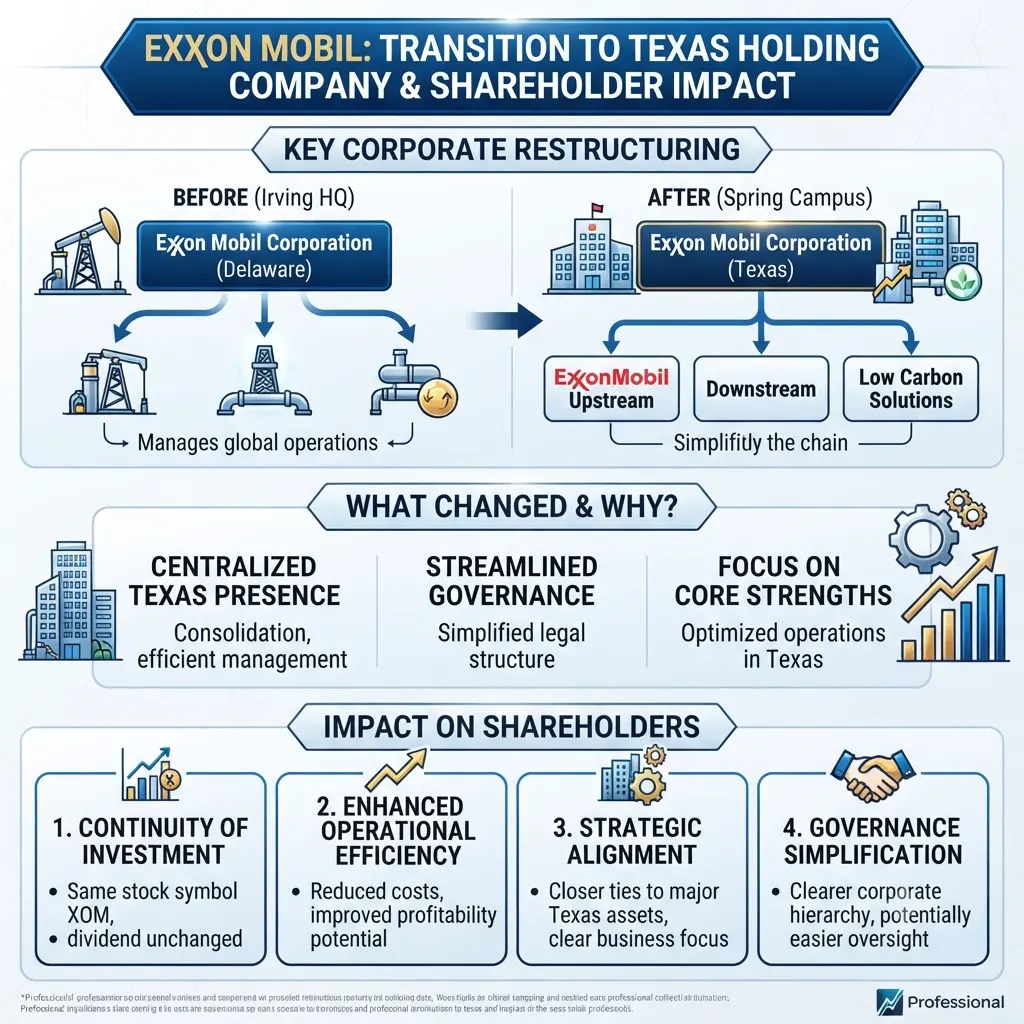
What It Means for Shareholders
- XOM remains the company’s stock ticker.
- Existing shares continue to represent ownership.
- Dividend payments are expected to continue under existing policies.
- Normal trading on the New York Stock Exchange remains unchanged.
- Long-term governance may be subject to Texas corporate law.
Potential Benefits
Supporters argue the move may improve corporate flexibility, streamline governance, and better position Exxon for long-term growth. Texas has become a major hub for the energy sector. For one of the world’s largest oil and gas producers, the relocation is a logical step.
For long-term investors, the company’s operational performance, capital allocation, and dividend strategy are likely to remain far more important than the location of its legal incorporation.

Should Investors Be Concerned?
Corporate reorganizations often generate headlines, but they do not necessarily change the underlying investment thesis. Shareholders should instead continue monitoring earnings, production growth, commodity prices, dividend sustainability, and future capital investments.
Understanding official shareholder communications can help investors distinguish between administrative changes and developments that materially affect the company’s financial outlook.
Learn more about the restructuring through ExxonMobil, review shareholder information from the U.S. Securities and Exchange Commission (SEC), explore company filings on the New York Stock Exchange, access financial reports via Exxon Investor Relations, compare market data using Morningstar, and follow energy sector developments from U.S. Energy Information Administration.
#XOM #ExxonMobil #StockMarket #Investing #EnergyStocks #NYSE