

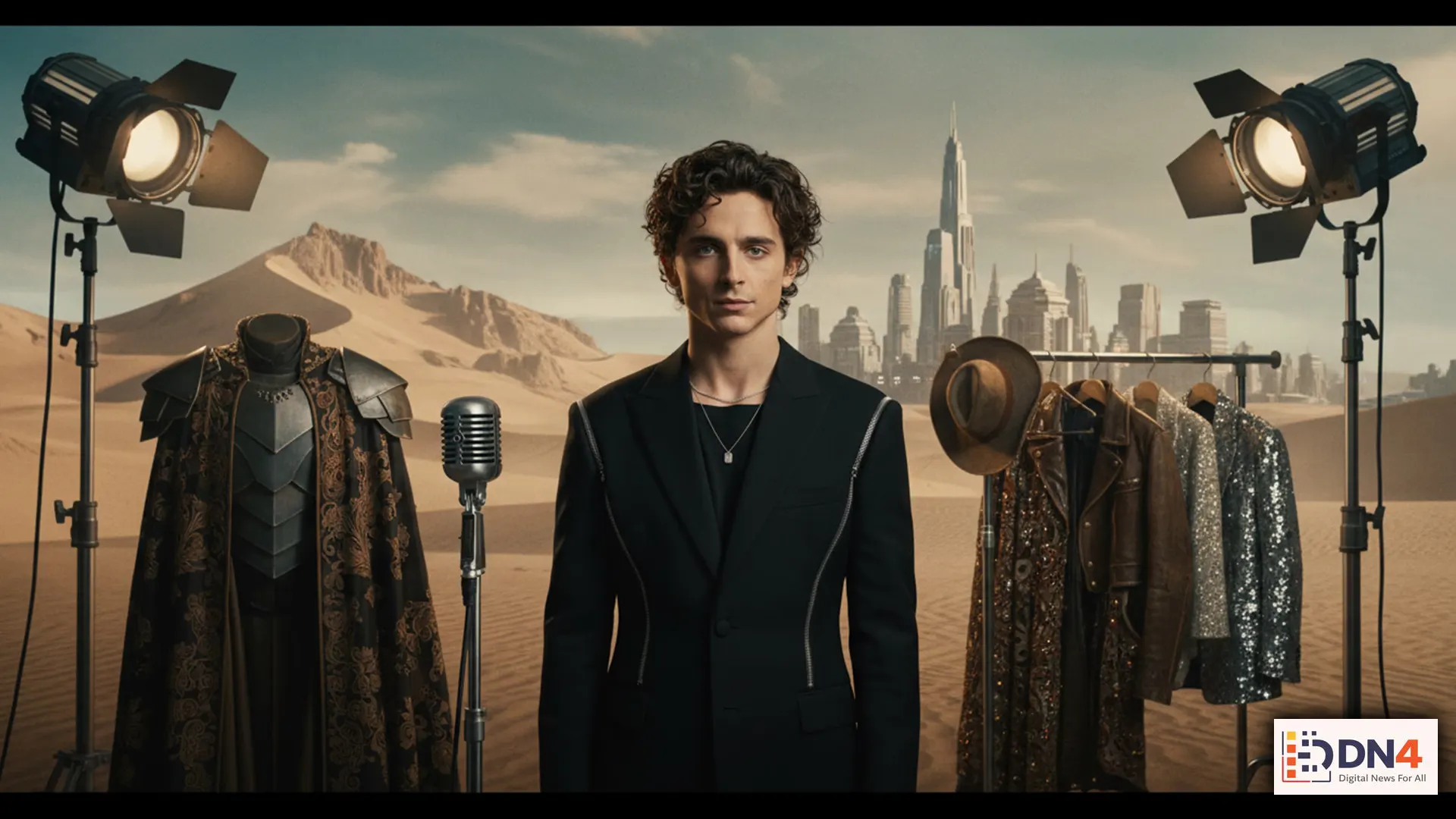
Timothée Chalamet has built his reputation on more than youthful charisma. Across independent dramas, historical films and blockbuster franchises, the actor repeatedly changes his physical presence, voice, movement and emotional register to fit radically different characters. His transformation into Bob Dylan for A Complete Unknown represents the clearest example of how far that process can go.
Becoming Bob Dylan Required Years of Preparation
Chalamet spent roughly five years preparing to portray Dylan, far longer than the typical production schedule for a biographical performance. He worked with vocal, guitar, dialect and movement coaches while studying Dylan’s recordings, performances and mannerisms. The Washington Post reported that his preparation included intensive musical training and physical details such as a subtle prosthetic nose.
The preparation was not simply cosmetic. Chalamet performed Dylan’s songs himself and played guitar during the film. NME reported that Chalamet described the years of preparation as an opportunity to put in an extraordinary amount of practice.
The Physical Shift Was Only Part of It
For A Complete Unknown, Chalamet reportedly gained about 20 pounds to help approximate Dylan’s physical presence. The Guardian noted that the weight gain was relatively subtle but formed part of a broader transformation that included voice, posture, hair, makeup and performance style.

What makes the transformation notable is that Chalamet did not attempt to become a perfect physical replica. Instead, director James Mangold emphasized capturing Dylan’s energy and personality while allowing the actor’s own performance instincts to remain visible.
From Paul Atreides to a Dangerous Messiah
His transformation in Denis Villeneuve’s Dune films operates differently. Rather than portraying a real person, Chalamet had to build the physical and psychological evolution of Paul Atreides.
Paul begins as a privileged young aristocrat and gradually becomes a hardened political and religious figure. CBS News highlighted this progression, describing how Chalamet transformed the character from the son of a duke into an increasingly intimidating messianic figure.
The challenge was therefore behavioral as much as physical. Chalamet had to communicate growing confidence, authority and menace without losing the vulnerability that initially defined Paul.
Emotional Extremes in Beautiful Boy
One of Chalamet’s most emotionally demanding performances came in Beautiful Boy, in which he played Nic Sheff, a teenager struggling with drug addiction. Unlike a transformation driven primarily by costume or physical preparation, the role depended heavily on emotional credibility.
The performance required Chalamet to portray addiction, relapse, family conflict and recovery without reducing the character to a stereotype. His work alongside Steve Carell gave the film much of its emotional intensity and established Chalamet as an actor capable of carrying difficult dramatic material.
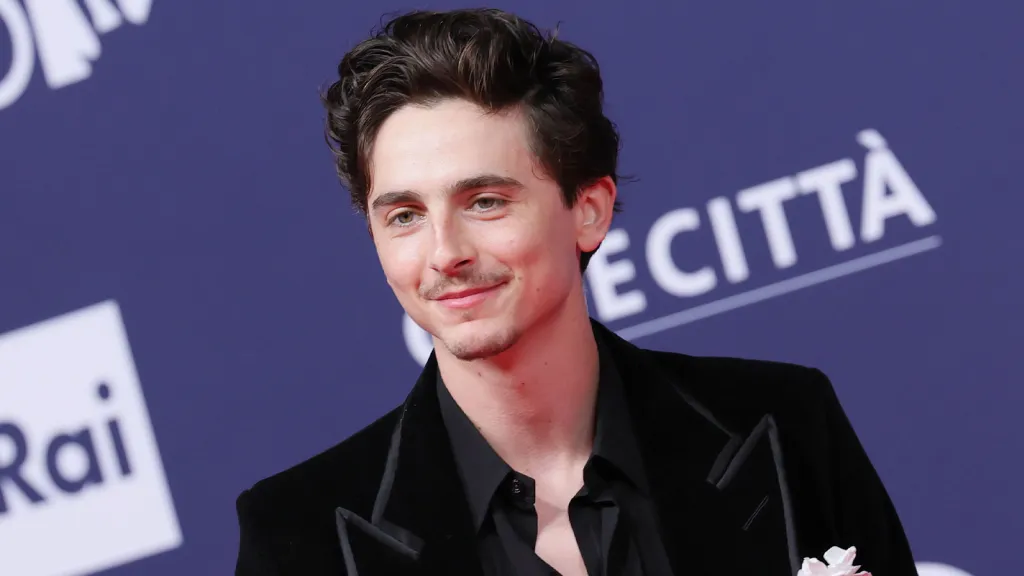
The King and Bones and All
Chalamet’s transformation into King Henry V in The King required another form of physical storytelling. The character moves from an apparently reluctant young prince to a battle-hardened monarch, forcing Chalamet to communicate authority through posture, movement and increasingly controlled behavior.
In Bones and All, meanwhile, Chalamet embraced an unsettling combination of romance, violence and isolation. The role demanded a darker screen presence and demonstrated his willingness to work within challenging independent cinema rather than relying solely on major studio projects.
Why His Transformations Work
Chalamet’s most effective transformations are not simply about gaining weight, changing hairstyles or learning an accent. They are built around behavior. His posture changes. His rhythm of speech changes. His characters occupy space differently.
That distinction has helped him move between intimate dramas and enormous franchises. Rolling Stone described the extraordinary depth of his Dylan preparation, including lessons in guitar, vocals, dialect, movement and harmonica.
Ultimately, Chalamet’s biggest transformation may be his evolution as an actor. He has moved from vulnerable indie-film performances to blockbuster leading roles without abandoning the experimentation that established his reputation. His willingness to reshape himself for demanding characters suggests that physical change is only one tool in a much larger acting process.
#TimotheeChalamet #ACompleteUnknown #Dune #BeautifulBoy #BonesAndAll #TheKing #Hollywood #Acting