

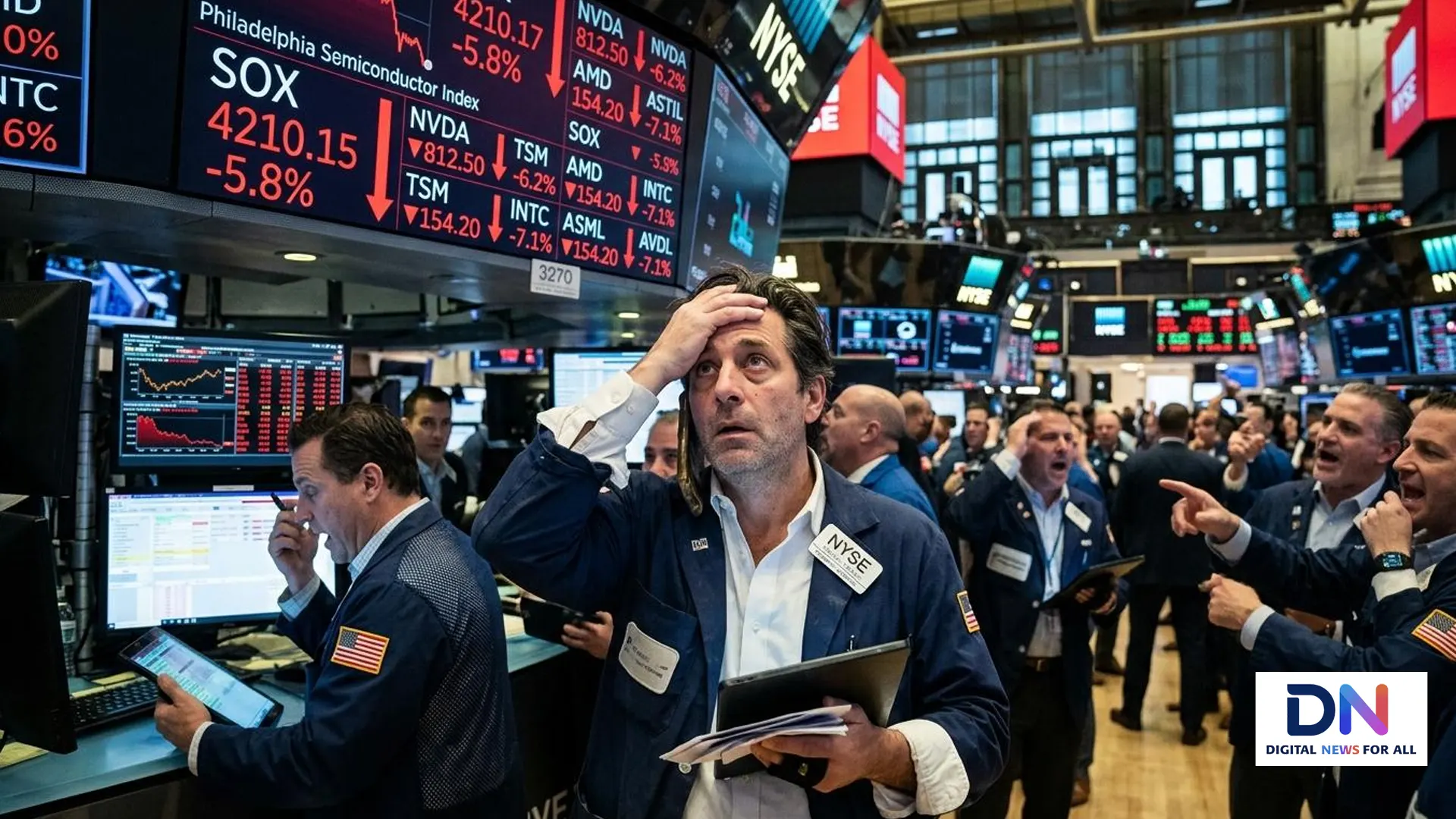
Wall Street’s post-election celebration lasted barely a day. On November 5, 2026, the Dow Jones Industrial Average plunged 1,833 points, reversing its powerful rally after the U.S. midterm elections. Technology shares led the retreat, with artificial intelligence companies and semiconductor manufacturers suffering some of the market’s steepest losses.
The Dow finished down 3.4%, while the S&P 500 dropped 4.4%. The Nasdaq Composite fell 5.5%, entering correction territory after declining more than 10% from its October record. The sudden reversal erased the previous session’s gains and exposed growing investor concerns about the economics of the AI boom. The Associated Press reported that the sell-off was the market’s steepest daily decline since April 2025.
Why AI and Semiconductor Stocks Collapsed
Investors were already questioning whether technology companies could generate sufficient returns from their enormous AI infrastructure investments. Data centers require expensive chips, electricity, cooling systems and financing. Higher borrowing costs and uncertainty about future demand have made some investors more cautious.
The election added another concern. Democrats gained control of both chambers of Congress and made significant gains in state governments. Investors began assessing whether stronger oversight, local opposition and possible restrictions could delay data-center construction. Such delays could reduce future demand for semiconductors, networking equipment and related services.
Reuters reported that the Nasdaq lost approximately $2.5 trillion in market value as investors reassessed the expansion outlook for AI infrastructure.
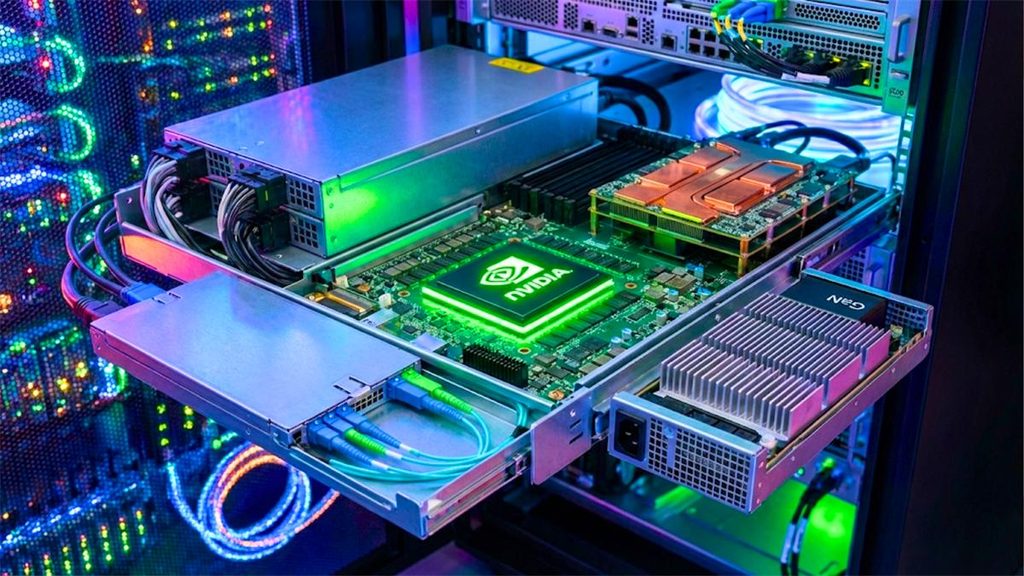
The damage extended across major technology companies. Nvidia shares fell 9.3%, while Advanced Micro Devices plunged 17.3%. The Philadelphia Semiconductor Index dropped approximately 12%, reflecting the pressure on companies supplying chips and equipment for AI systems.
Regulatory Fears Meet Market Valuations
Political uncertainty was not the only reason for the sell-off. Many AI-related stocks had experienced substantial gains, encouraging investors to lock in profits. Concerns about expensive valuations, debt-funded data-center projects and uncertain investment returns were already weighing on sentiment.
Yahoo Finance’s market coverage highlighted institutional profit-taking and the unwinding of popular AI investment positions. Meanwhile, the Cboe Volatility Index surged as investors sought protection against further market swings.
For investors, the distinction matters: election results influenced expectations, but they did not directly cause every stock decline. Market positioning, company valuations and financing conditions also contributed.
What the Sell-Off Means for Investors
The correction in the Nasdaq does not automatically signal the end of the AI industry. Demand for advanced computing remains an important long-term business opportunity, but investors are becoming more selective about which companies can turn spending into sustainable profits.
Investopedia’s November 5 market analysis documented the scale of the reversal and the pressure on technology shares.
The coming weeks will test whether the decline represents a temporary correction or a deeper reassessment of AI investment expectations. For Wall Street, the message is clear: political changes, infrastructure costs and corporate earnings can quickly reshape confidence in even the market’s most popular growth sectors.
#WallStreet #StockMarket #AIStocks #DowJones #Nasdaq #Nvidia #SemiconductorStocks #ArtificialIntelligence #MarketSellOff