


The era of effortless online betting may be entering a new phase. Across the United States, lawmakers and regulators are increasingly targeting one of the gambling industry’s most controversial payment methods: credit cards.
What was once viewed as a convenient way for consumers to fund online sports betting and casino accounts is now being reconsidered amid rising concerns over gambling addiction, consumer debt, and financial vulnerability.
Several states are now exploring or implementing restrictions that limit how bettors can use borrowed money to gamble online — a move that could significantly reshape the future of digital wagering.
Why Credit Card Gambling Became a Target
The rapid expansion of legalized sports betting transformed online gambling into a multibillion-dollar industry. Since the Supreme Court struck down the federal sports betting ban in 2018, betting platforms have aggressively expanded across the country.
According to analysis from American Gaming Association, mobile sports betting now dominates the market, with millions of users placing wagers directly from smartphones.
But regulators increasingly worry that allowing consumers to gamble using credit cards encourages high-risk financial behavior.
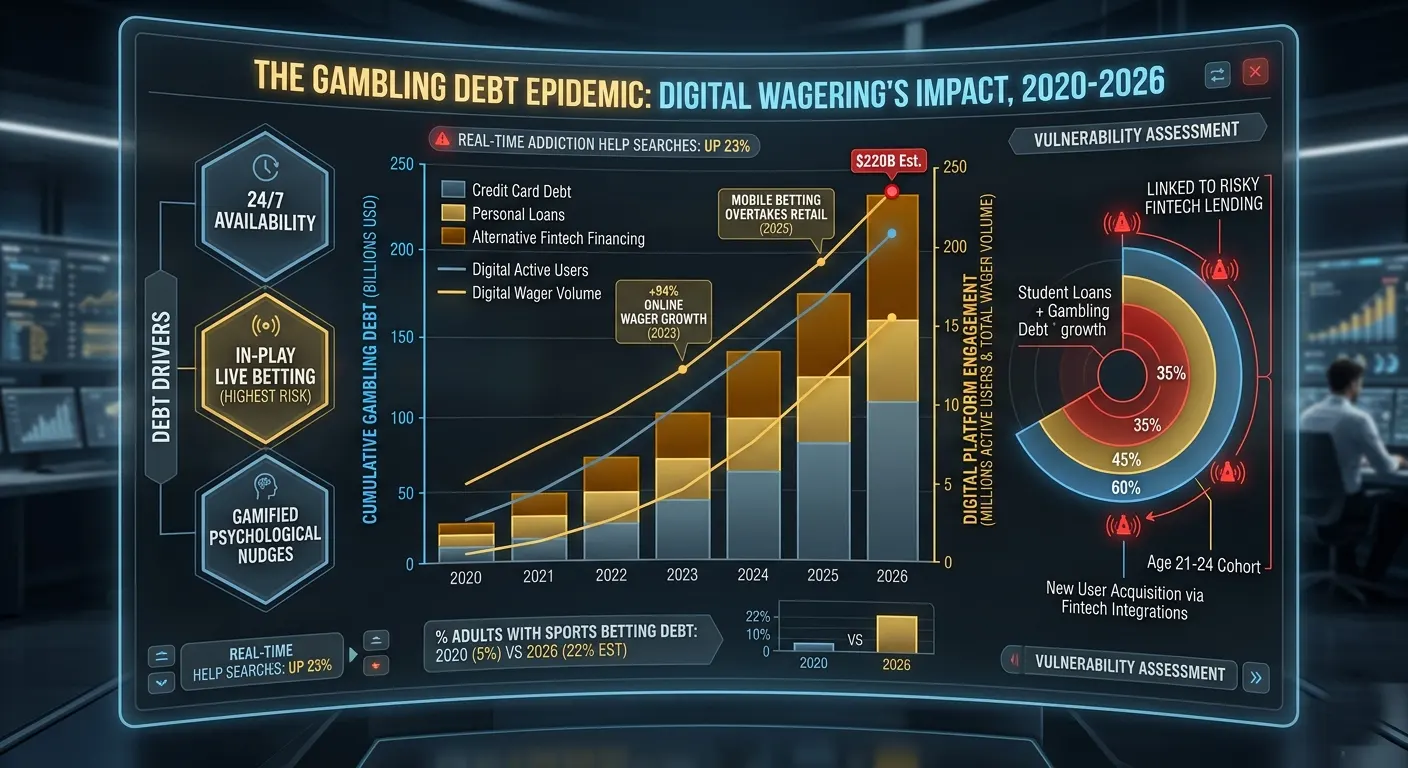
Unlike debit cards or bank transfers, credit cards allow users to wager borrowed money — often at high interest rates. Critics argue this creates a dangerous cycle where gambling losses quickly become long-term debt.
The Addiction and Debt Connection
Public health experts have long warned that frictionless digital gambling increases addiction risks. Adding credit-based payments into the equation only intensifies those concerns.
Research highlighted by National Council on Problem Gambling suggests individuals struggling with gambling addiction frequently rely on credit to continue betting after losses.
That pattern can create severe financial consequences, including:
- Accumulating high-interest debt
- Damaged credit scores
- Bankruptcy risk
- Mental health strain
- Compulsive gambling behavior
Consumer advocates argue that restricting credit card gambling represents a form of financial harm reduction similar to regulations placed on other high-risk financial products.
States Are Taking Action
Several states have already begun tightening restrictions around gambling-related credit transactions.
According to reporting from CNBC and The New York Times, lawmakers increasingly view payment regulation as a critical tool for responsible gambling policy.
Some proposals include:
- Banning credit card deposits for betting apps
- Implementing transaction caps
- Increasing financial risk disclosures
- Requiring enhanced identity verification
- Adding mandatory cooling-off periods
Internationally, countries like the United Kingdom have already introduced strict limitations on credit-funded gambling, influencing debates in the U.S.
The Betting Industry Pushback
Not surprisingly, gambling operators and payment companies argue that most users gamble responsibly and that outright bans could unintentionally drive users toward unregulated offshore platforms.
Industry representatives also emphasize that regulated betting markets include consumer protections that illegal operators often lack.
Still, pressure continues mounting as online gambling becomes more integrated into mainstream sports culture.

Advertising partnerships with major sports leagues, celebrity endorsements, and nonstop mobile access have intensified scrutiny from regulators worried about long-term societal impacts.
Fintech and Gambling Are Colliding
The crackdown also highlights a broader intersection between financial technology and consumer protection.
As betting apps increasingly resemble fintech platforms — offering instant deposits, digital wallets, and frictionless payments — regulators are examining whether gambling products should face stronger financial oversight.
Analysts from Bloomberg note that the convergence of digital finance and gambling creates new regulatory challenges around consumer behavior, data privacy, and risk management.
What Happens Next?
The future of online betting likely won’t involve outright prohibition. Sports wagering has become too economically significant for many states that now depend on gambling tax revenue.
However, the era of “easy betting” powered by instant credit may be fading.
Regulators appear increasingly focused on slowing down high-risk gambling behaviors while balancing consumer freedom and industry growth. Whether these restrictions reduce addiction rates or simply reshape betting habits remains an open question.
The push against credit card gambling reflects a growing realization that digital betting is no longer just entertainment — it’s a major financial ecosystem with real economic and psychological consequences.
As states move to tighten regulations, the gambling industry may be entering a more controlled era where consumer protection matters just as much as market expansion.
For bettors, that could mean fewer instant deposits — but potentially safer financial boundaries in the long run.
#SportsBetting #OnlineGambling #CreditCards #GamblingLaws #Fintech #ResponsibleGambling #CasinoApps #BettingIndustry