

 By Vinod Ram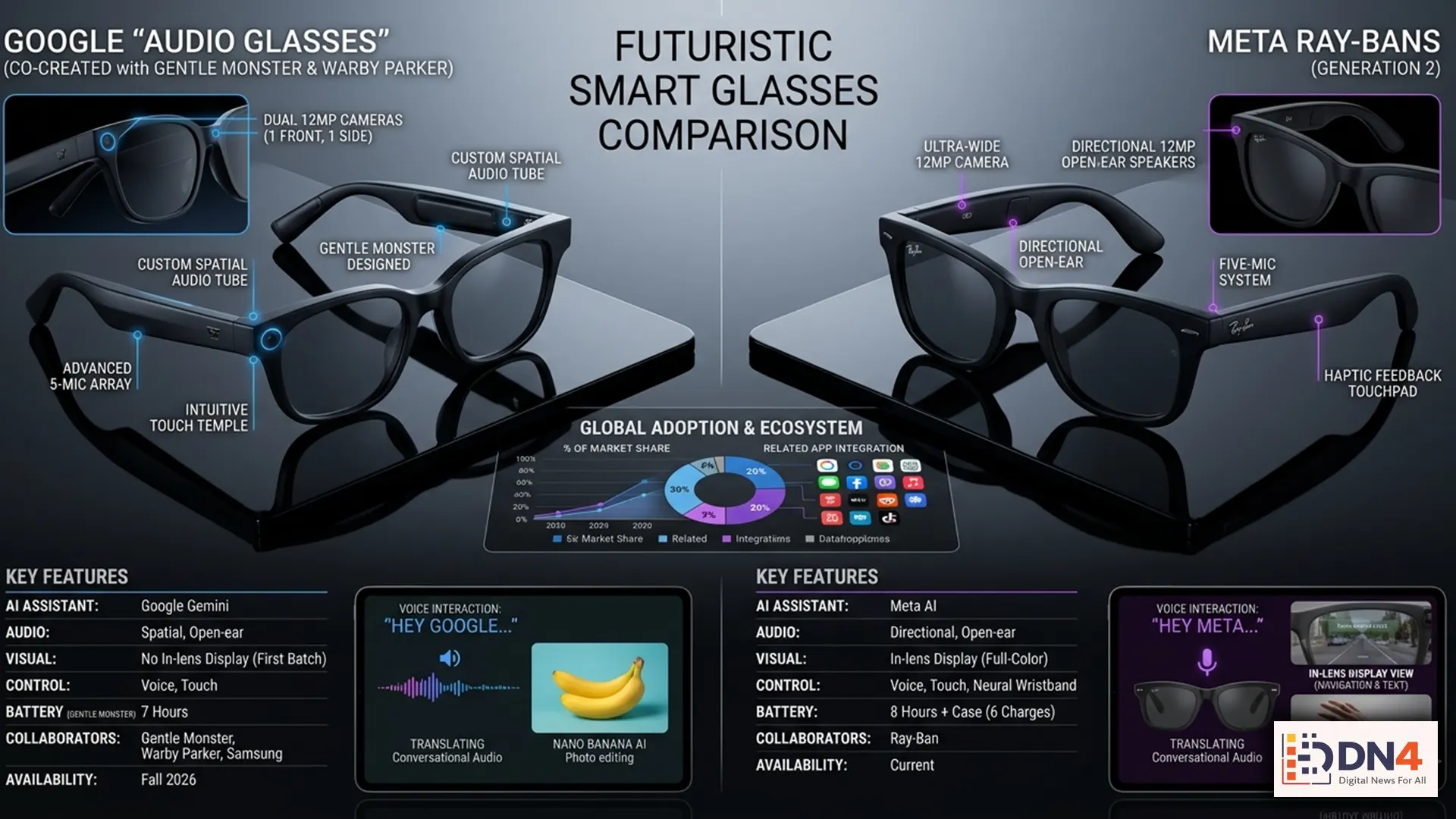
The battle for the future of wearable technology is heating up as Google and Meta push deeper into AI-powered smart glasses. In 2026, wearable devices are evolving beyond simple audio accessories into intelligent personal assistants capable of blending digital experiences with the real world.
With rumors and product developments accelerating across the tech industry, consumers and investors alike are closely watching the growing rivalry between Google’s next-generation audio glasses and Meta’s increasingly popular Ray-Ban smart glasses lineup.
The Rise of AI Wearables
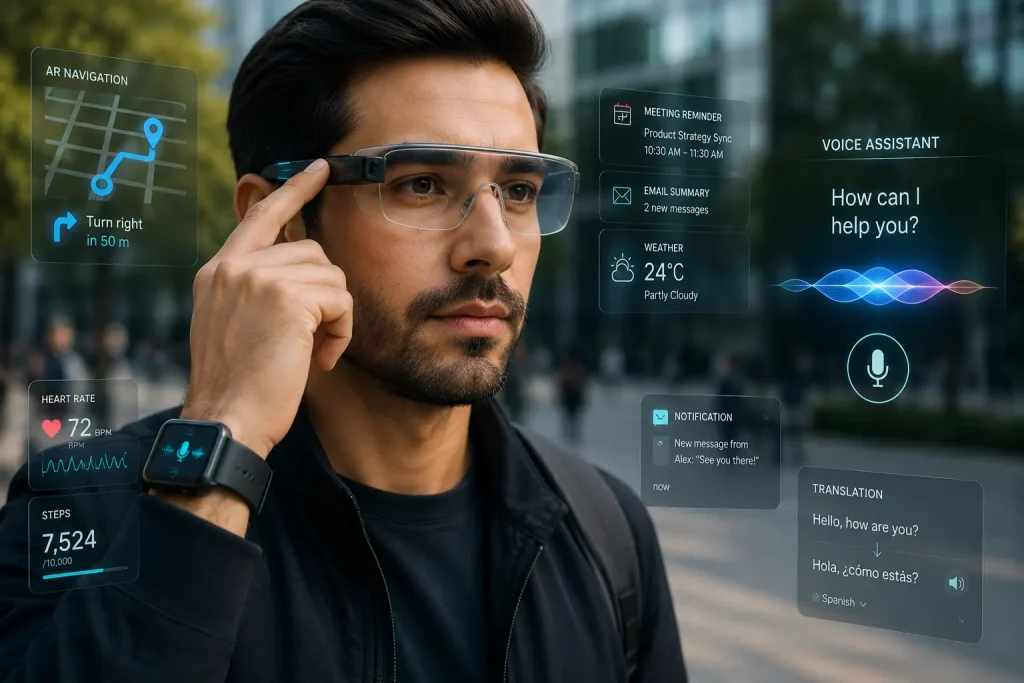
Smart glasses are quickly becoming one of the most competitive categories in consumer technology. Unlike earlier wearable attempts that struggled with mainstream adoption, modern AI-powered glasses focus on practical everyday experiences such as:
- Hands-free voice assistance
- Real-time translation
- AI-powered search
- Photo and video capture
- Audio streaming and navigation
Analysts at Gartner believe AI wearables could become one of the fastest-growing consumer electronics segments over the next decade.
Meta Ray-Bans Already Have Momentum
Meta has gained significant attention through its partnership with Ray-Ban, combining fashionable eyewear with built-in cameras, AI assistants, and audio features.
The latest Meta smart glasses allow users to:
- Capture photos and videos
- Listen to music and podcasts
- Use voice-controlled AI features
- Stream content directly to social media
- Interact with Meta AI assistants
Reports from The Verge suggest Meta is aggressively expanding its AI wearable ecosystem as part of its broader metaverse and artificial intelligence strategy.
What Google Could Bring to the Market
Google has extensive experience in wearable experimentation dating back to the original Google Glass project. However, industry insiders believe the company’s 2026 wearable strategy could focus heavily on AI-powered audio experiences rather than fully immersive augmented reality.
With advancements in Google DeepMind AI technologies, future Google smart glasses may include:
- Advanced real-time language translation
- Context-aware voice assistance
- AI-powered search integration
- Navigation overlays
- Personal productivity tools
Google’s ecosystem advantage through Android, YouTube, Maps, and Gemini AI could give the company a strong competitive position.
Privacy Concerns Continue to Grow
As wearable AI devices become more powerful, privacy concerns are also increasing. Critics worry that smart glasses equipped with cameras, microphones, and AI analysis tools could create major surveillance and data collection risks.
Organizations like the Electronic Frontier Foundation have repeatedly warned about the privacy implications of always-on wearable technologies.
Consumers are becoming increasingly concerned about:
- Facial recognition technology
- Audio recording transparency
- Personal data collection
- AI-generated profiling
- Cybersecurity vulnerabilities

Which Company Has the Edge?
Meta currently holds an early lead in mainstream smart glasses adoption thanks to its Ray-Ban collaboration and strong social media integration.
However, Google’s AI capabilities and software ecosystem could become a major advantage if the company successfully delivers seamless AI-driven wearable experiences.
Industry analysts from Bloomberg believe the wearable market could become one of the next major battlegrounds in the AI technology race.
The Future of Wearable Computing
The competition between Google and Meta reflects a broader shift toward ambient computing — where AI assistants become integrated into everyday life through wearable devices.
By 2026, smart glasses may no longer feel experimental. Instead, they could become as common as smartphones and wireless earbuds.
The question is no longer whether wearable AI will become mainstream — but which company will define the future first.
#SmartGlasses #WearableTech #MetaRayBan #GoogleAI #ArtificialIntelligence #FutureTech #AugmentedReality #TechNews