

 By Vinod Ram
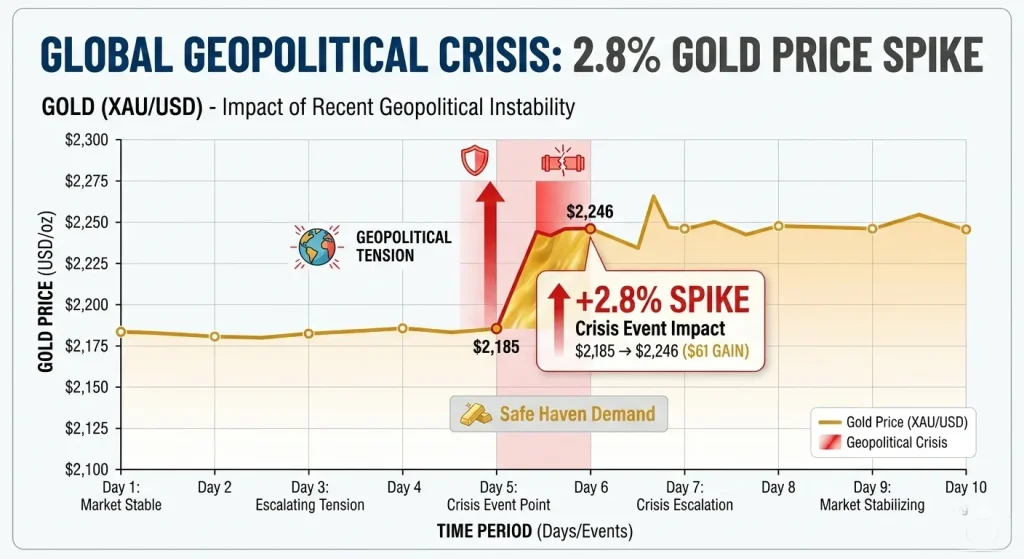
As conflict intensifies across West Asia, global investors are making rapid defensive moves. Gold prices have jumped 2.8% in a matter of days, reviving a centuries-old pattern: when geopolitical risk surges, capital runs to hard assets.
But in 2026, there’s a modern twist. Bitcoin — often branded as “digital gold” — is also under the spotlight. The question now dominating trading desks and central bank briefings: Is Bitcoin truly living up to its safe haven promise, or is gold still the undisputed king?
The 2.8% Gold Spike: A Classic Risk-Off Signal
Gold’s 2.8% surge reflects immediate safe-haven demand. Historically, during wars or major geopolitical crises, institutional investors rotate into bullion-backed ETFs and physical reserves.
According to data from the London Bullion Market Association, gold liquidity spikes during military escalations, driven by:
- Central bank reserve diversification
- Institutional ETF inflows
- Currency hedge strategies
- Inflation protection positioning
The move signals global capital flight out of equities and into assets perceived as stable stores of value.
Bitcoin: Digital Gold or Risk Asset?
Bitcoin was designed as a decentralized alternative to fiat currency. Advocates argue that its capped supply makes it inherently deflationary and resistant to political shocks.
However, during recent geopolitical flare-ups, Bitcoin’s performance has been mixed:
- Short-term volatility spikes alongside equities.
- Correlations with tech stocks remain elevated.
- Retail flows increase, but institutional conviction fluctuates.
While gold climbed 2.8%, Bitcoin’s price action showed greater intraday swings — reinforcing skepticism about its short-term stability during war.
Capital Flight Patterns in 2026
Investors today face a dual threat:
- Escalating military conflict in energy-critical regions.
- Resurgent inflation risks driven by supply shocks.
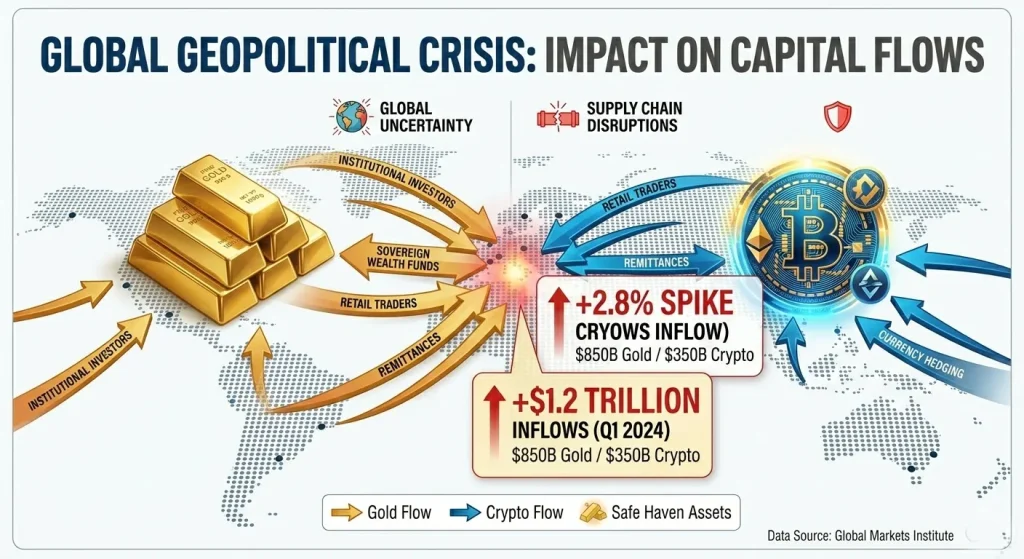
In response, capital is flowing into three main buckets:
- Gold and precious metals
- U.S. Treasury bonds
- Selective digital assets
The Federal Reserve and other central banks are closely monitoring liquidity shifts as safe-haven flows can distort bond yields and currency markets.
Inflation Hedge Test: Physical vs Digital
Gold’s appeal lies in its 5,000-year track record. It has survived empires, wars, and currency collapses.
Bitcoin’s value proposition depends on:
- Decentralization resilience
- Adoption scale
- Regulatory clarity
In a wartime scenario, internet infrastructure risks and regulatory crackdowns can challenge digital asset accessibility — a factor gold does not face.
So Where Is Global Capital Really Fleeing?
The data suggests a layered response:
- Immediate shock → Gold sees rapid inflows.
- Speculative hedge → Bitcoin attracts volatility traders.
- Institutional safety → Sovereign bonds absorb defensive allocations.
For now, gold appears to be winning the immediate “safe haven” test. But Bitcoin remains in a long-term credibility trial.
The Gold vs Bitcoin debate is no longer theoretical. As West Asia burns and global markets brace for prolonged instability, investors are voting with capital. Gold’s 2.8% surge signals trust in tradition. Bitcoin’s resilience — or volatility — will determine whether digital gold can truly replace the original.
In times of war, the oldest safe haven may still shine the brightest.
#GoldVsBitcoin #SafeHaven #Bitcoin #GoldPrices #MarketVolatility #InflationHedge