

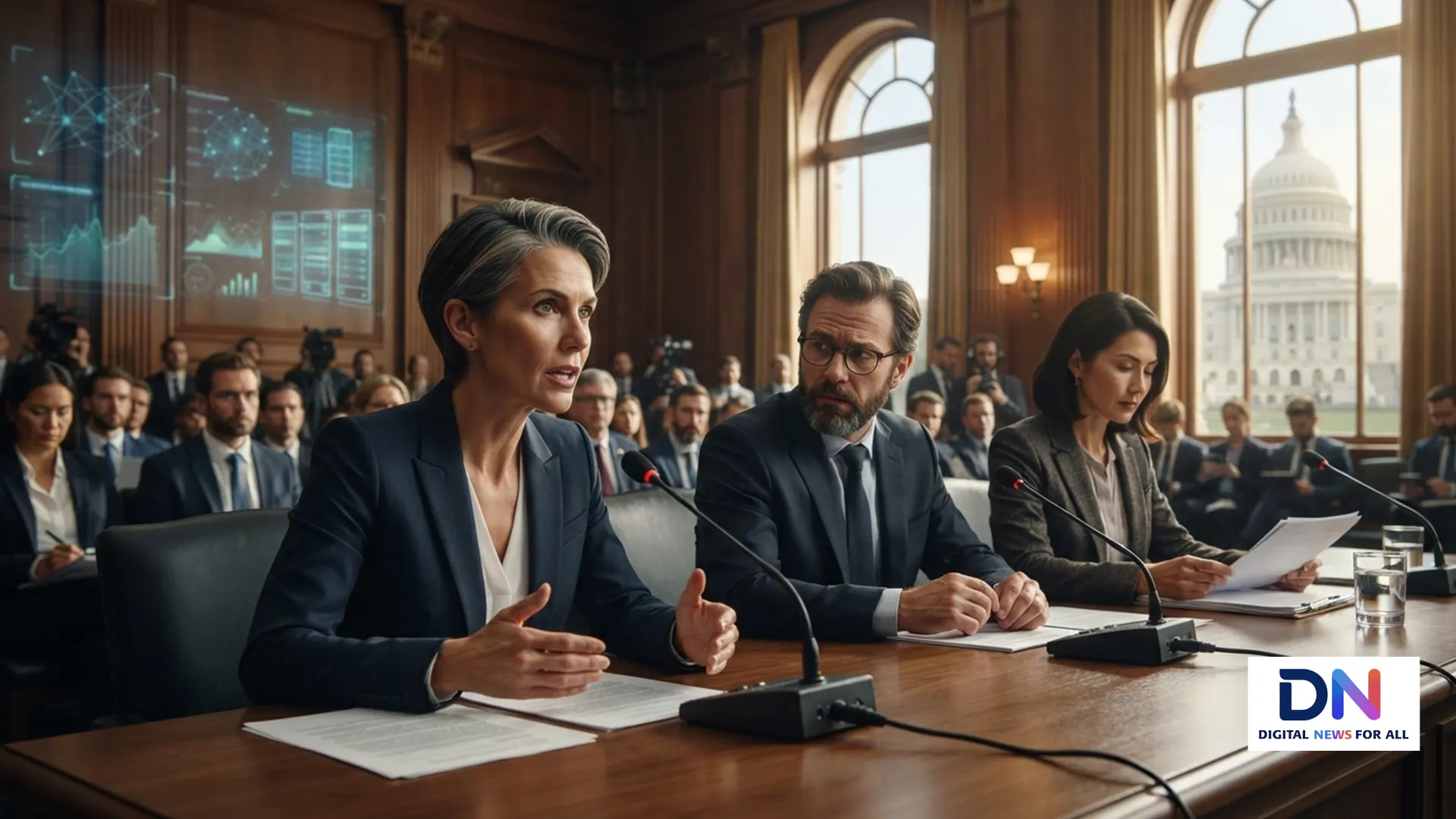
Silicon Valley AI policy has become a major Washington battleground in 2026. Technology companies are spending millions on lobbying while their executives increasingly participate in debates over artificial intelligence regulation, national security and America’s competition with China.
The influence is measurable. An analysis of federal lobbying disclosures found that 11 major technology and AI companies, along with industry groups, spent about $41 million lobbying the federal government during the first half of 2026. The figure was roughly 8% higher than the same period in 2025.
AI Lobbying Is Moving Into High Gear
AI companies are no longer treating Washington as a distant regulatory threat. They are building direct relationships with lawmakers and federal agencies as policy decisions increasingly determine how frontier models can be developed and deployed.
Anthropic spent more than $3.5 million on federal lobbying during the first half of 2026, according to disclosures analyzed by Axios. Its lobbying covered AI safety standards, export controls, cybersecurity and government procurement.
OpenAI also increased its lobbying activity. Its filings covered issues including copyright, cloud computing, infrastructure, cybersecurity and privacy. Google and Microsoft were among the other major technology companies spending millions on federal lobbying.
The U.S. Senate lobbying disclosure database provides public records of federal lobbying activity.
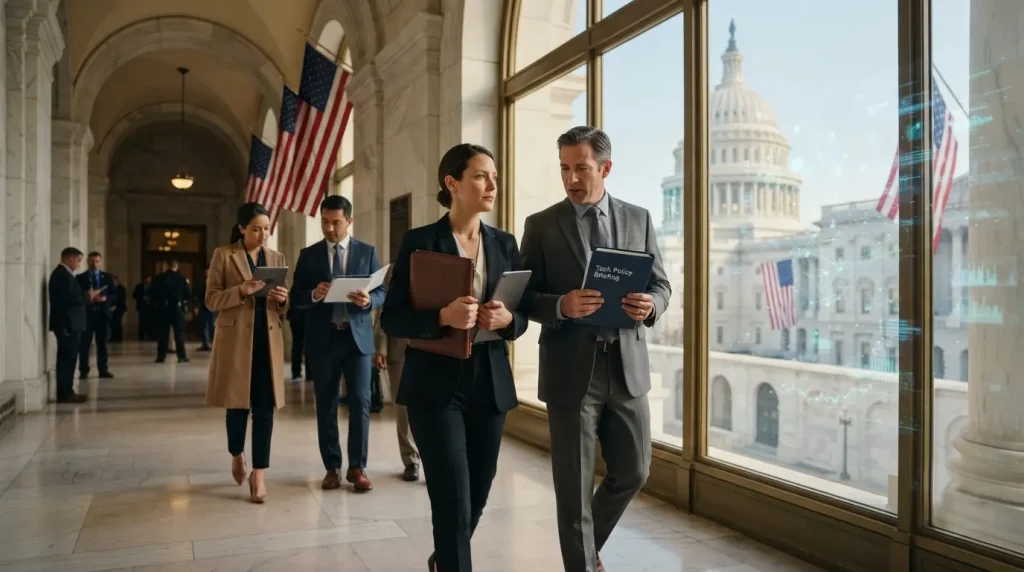
Washington Wants AI—and Silicon Valley Wants a Seat at the Table
The relationship is not simply about companies resisting regulation. Washington increasingly needs the technology industry because federal agencies want access to advanced commercial AI systems.
A June White House directive called for deeper partnerships with private-sector AI developers and faster adoption of advanced systems across national-security agencies. The policy specifically emphasized making frontier models available to government users.
The White House national-security AI memorandum illustrates how commercial technology and government policy are becoming increasingly interconnected.
Regulation Is Becoming a Competitive Question
One of the biggest disagreements concerns how much government oversight AI companies should face. The Trump administration’s June executive order emphasized innovation and rejected mandatory licensing or pre-clearance requirements for AI models.
At the same time, the administration has moved toward voluntary government review of certain frontier models for cybersecurity risks. That creates a more complicated regulatory landscape than a simple choice between regulation and deregulation.
The White House executive order on advanced AI innovation and security outlines the administration’s approach.
The “Gilded Rage” Behind the Debate
The phrase “gilded rage” captures a growing tension inside the technology industry. Some wealthy executives argue that excessive regulation could slow American innovation. Others are publicly warning that increasingly capable AI systems require stronger safeguards.
That disagreement is significant because the companies developing frontier AI can simultaneously be technology providers, major investors and policy advocates. Their technical expertise gives them influence in Washington, while their commercial interests give them a direct stake in the rules being discussed.
Recent reporting has also highlighted differences among leading AI companies over safety, regulation and government oversight. The Washington Post reported that major technology companies publicly opposed additional restrictions on certain open AI models.
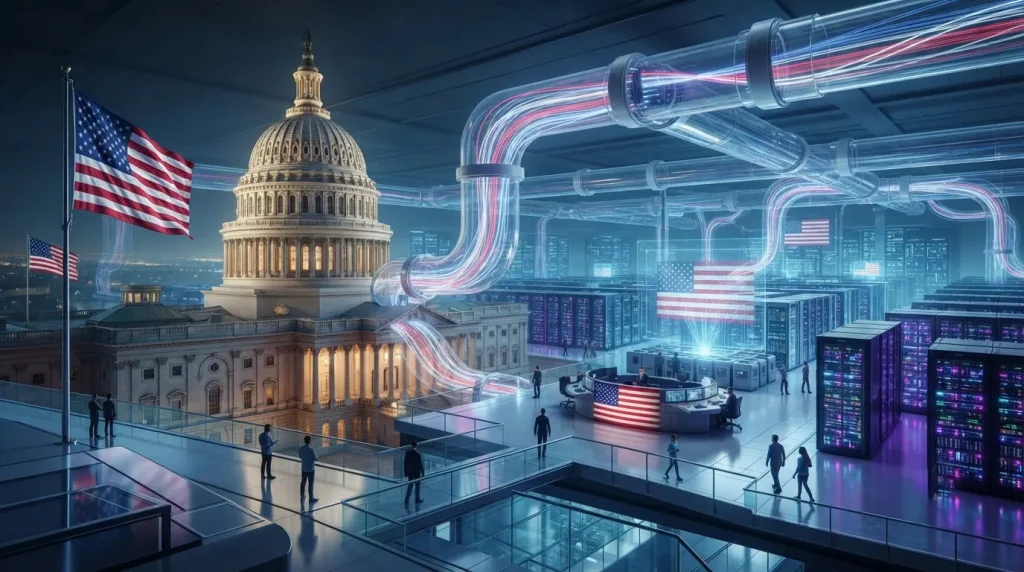
Who Actually Shapes the Rules?
The answer is broader than Silicon Valley. Congress, federal agencies, the White House, courts, state governments, researchers and civil-society organizations all influence AI governance.
Still, technology companies have an unusually direct role because policymakers need technical expertise to understand rapidly evolving AI systems. The challenge for Washington is balancing that expertise with independent oversight and broader public interests.
The National Institute of Standards and Technology is also developing technical standards and evaluation approaches that can influence how AI systems are assessed.
The Bigger Question for America
The central issue is no longer whether Silicon Valley has a voice in Washington. It clearly does. The more consequential question is how that influence will interact with democratic accountability as AI becomes part of national security, healthcare, education, infrastructure and everyday commerce.
As lobbying spending rises and government reliance on commercial AI expands, the debate over Silicon Valley AI policy is becoming a debate about who gets to define the rules of America’s AI future.
#SiliconValley #AI #ArtificialIntelligence #AIPolicy #AILobbying #BigTech #OpenAI #Anthropic #Google #Microsoft #WashingtonDC #TechPolicy