

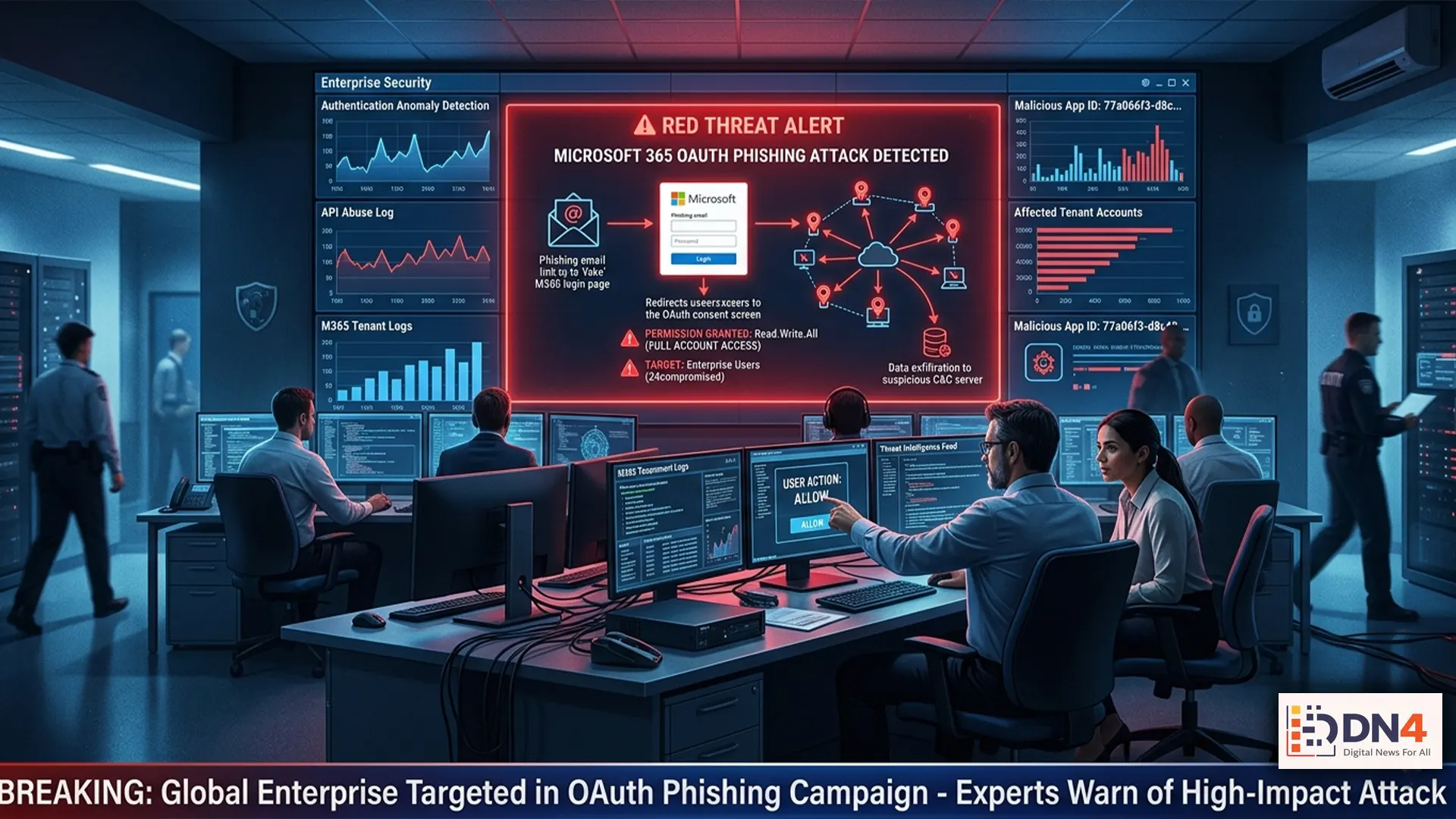
A sophisticated phishing campaign known as the Kali365 OAuth Scam is raising concerns among cybersecurity experts and Microsoft 365 administrators worldwide. Unlike traditional phishing attacks that steal usernames and passwords, this campaign abuses Microsoft’s OAuth authorization process to gain direct access to user accounts.
Security researchers warn that OAuth-based attacks are becoming increasingly popular because they can bypass many traditional security controls, including password changes and, in some cases, multi-factor authentication protections.
What Is the Kali365 OAuth Scam?
The Kali365 campaign uses fraudulent applications that appear legitimate and trick users into granting access permissions through Microsoft’s OAuth framework. Once approved, attackers can gain access to emails, files, contacts, calendars, and other business data without needing the victim’s password.
OAuth is a widely used authorization standard supported by platforms such as Microsoft Entra ID, OAuth.net, and many enterprise cloud services.

Why OAuth Phishing Is More Dangerous Than Traditional Phishing
Unlike fake login pages designed to steal credentials, OAuth phishing attacks use legitimate authentication pages. Victims may see authentic Microsoft sign-in screens, making the attack appear trustworthy.
According to guidance from CISA, attackers increasingly target identity and access management systems because they provide direct access to cloud-based resources.
- No password theft required
- May survive password resets
- Can access sensitive business data
- Often bypasses traditional phishing detection
- Exploits user trust in legitimate services
How the Kali365 Attack Works
The attack typically begins with a convincing email or collaboration request. Users are directed to authorize a third-party application that appears related to Microsoft 365 services.
Cybersecurity analysts at CrowdStrike and Proofpoint have repeatedly observed threat actors using malicious OAuth applications to gain persistent access to corporate environments.
- User receives a phishing email.
- User clicks a legitimate-looking authorization link.
- User signs into Microsoft 365.
- User grants requested permissions.
- Attacker receives OAuth access tokens.
- Account data becomes accessible.
Warning Signs Every Microsoft 365 User Should Know
1. Unexpected Permission Requests
Be cautious when applications request access to email, calendars, contacts, or files unexpectedly.
2. Unrecognized Application Names
Verify publishers before approving any OAuth request. Official Microsoft services are typically well-documented through Microsoft Security.
3. Excessive Permissions
Applications requesting broad organizational access should be carefully reviewed before approval.
4. Urgent Messages
Attackers often use urgency to encourage users to click before thinking critically.
How Organizations Can Protect Themselves
Microsoft recommends implementing identity-focused security controls through Microsoft Entra Identity and regularly auditing application permissions.
Additional best practices include:
- Restrict user consent for third-party applications.
- Enable Conditional Access policies.
- Monitor OAuth application activity.
- Conduct regular security awareness training.
- Review enterprise application permissions monthly.
Frameworks provided by OWASP and training resources from the SANS Institute offer valuable guidance for defending against identity-based attacks.

What To Do If You Have Already Granted Access
If you suspect you have authorized a malicious application:
- Immediately revoke application permissions.
- Notify your IT or security team.
- Review sign-in activity.
- Inspect mailbox forwarding rules.
- Reset account credentials.
- Review sensitive file access logs.
- Monitor for suspicious behavior.
Microsoft provides account investigation and remediation guidance through the Microsoft Security Documentation Center.
The Growing Threat to Cloud Security
As organizations continue migrating business operations to cloud environments, identity-based attacks are becoming more common. Security vendors such as Palo Alto Networks report growing attacker interest in OAuth abuse because it often generates fewer security alerts than traditional malware campaigns.
The Kali365 scam highlights a critical lesson for modern cybersecurity: protecting passwords alone is no longer enough. Users must understand application permissions, authorization requests, and identity security best practices.
Organizations that regularly review OAuth permissions, educate users, and enforce strong identity governance will be significantly better positioned to defend against emerging threats like Kali365.
#CyberSecurity #Microsoft365 #OAuthScam #Kali365 #PhishingAttack #DataSecurity #CloudSecurity #CyberAwareness #TechNews