

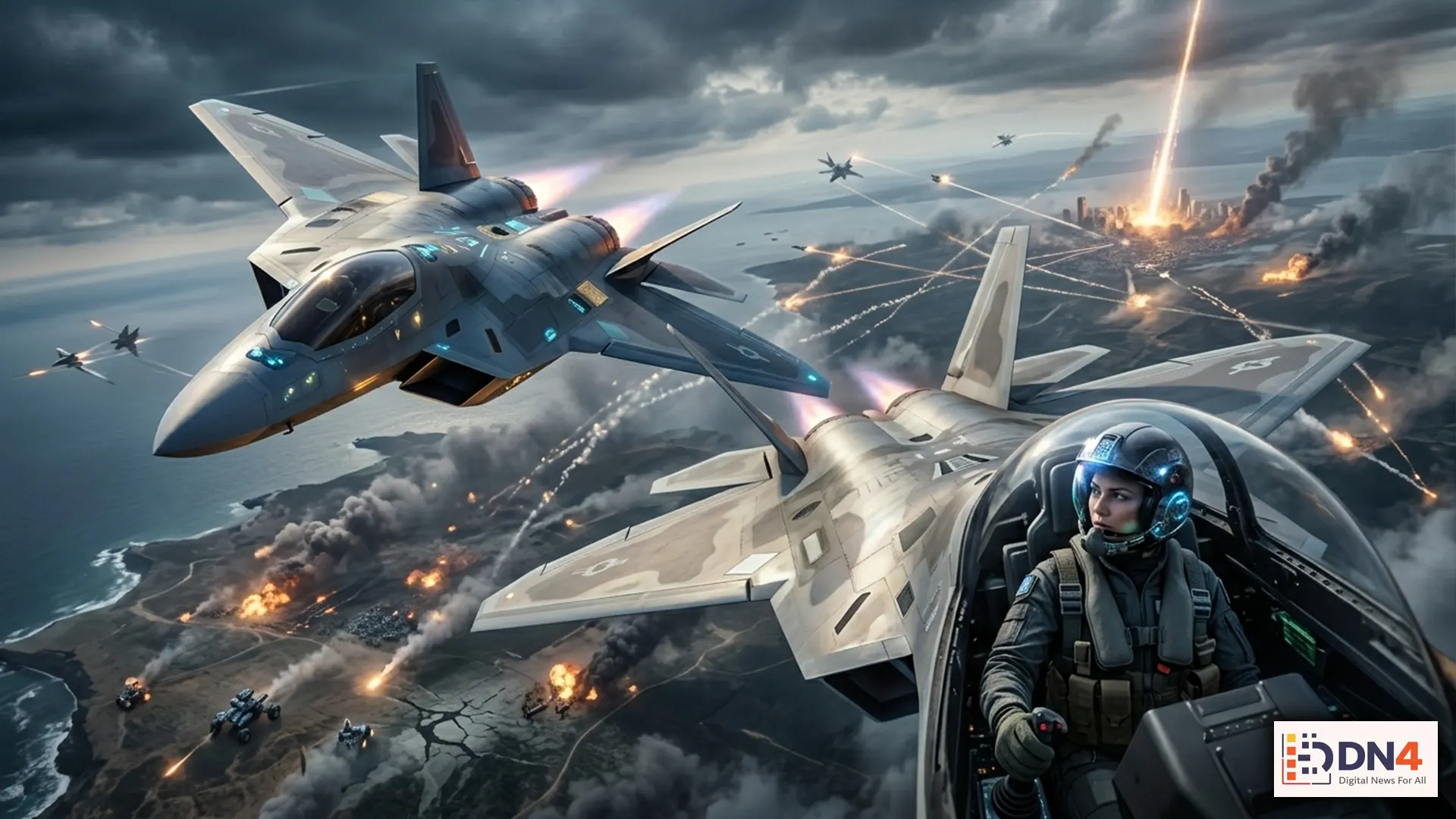
For decades, fighter pilots have symbolized the peak of military skill, courage, and technological mastery. From Hollywood’s Top Gun to real-world aerial combat missions, human pilots have remained central to modern warfare.
But as artificial intelligence rapidly advances, military strategists are now confronting a once-unthinkable question: Could AI replace human combat pilots within the next decade?
By 2030, autonomous military aircraft and AI-assisted combat systems may fundamentally transform the future of air warfare.
The Rise of AI in Military Aviation
Artificial intelligence is already deeply integrated into modern military systems. AI technologies now assist with surveillance, target recognition, navigation, threat analysis, and battlefield coordination.
Defense organizations worldwide are investing heavily in autonomous aircraft capable of operating with minimal or even no direct human control.
The Defense Advanced Research Projects Agency (DARPA) has been actively testing AI-driven air combat systems designed to outperform human pilots in simulated dogfights.
Why Militaries Want AI Pilots
AI-powered combat aircraft offer several potential advantages over traditional human-operated fighter jets.
Military analysts believe autonomous systems could provide:
- Faster reaction times
- 24/7 operational capability
- Reduced pilot risk during dangerous missions
- Improved data processing in combat
- Lower long-term operational costs
Unlike human pilots, AI systems do not experience fatigue, fear, or physical limitations during high-speed maneuvers.
The Technology Is Advancing Quickly
Major defense contractors including Lockheed Martin, Boeing Defense, and Northrop Grumman are developing advanced autonomous aviation technologies.
Meanwhile, countries such as the United States, China, Russia, and the United Kingdom are accelerating research into AI-powered drone warfare and autonomous combat systems.
Reports from RAND Corporation suggest autonomous military aircraft could become increasingly common in future conflicts.
Human Pilots Still Have Major Advantages
Despite rapid AI progress, many defense experts argue that fully replacing human combat pilots remains unlikely in the near future.
Human pilots continue to provide critical advantages in:
- Ethical decision-making
- Situational judgment
- Adaptability during unpredictable combat
- Complex mission coordination
- Political accountability
Modern warfare often involves rapidly changing conditions where human intuition and experience remain extremely valuable.
The Biggest Concern: Autonomous Weapons
One of the most controversial aspects of AI combat aviation involves autonomous lethal decision-making.
Critics warn that allowing AI systems to independently select and engage targets raises serious ethical and legal concerns.
Organizations such as the United Nations continue debating regulations surrounding autonomous weapons and military AI systems.
Questions surrounding accountability remain unresolved:
- Who is responsible if an AI system makes a fatal mistake?
- Can algorithms reliably distinguish combatants from civilians?
- Could AI systems be hacked or manipulated during conflict?
The Future May Be Human-AI Teaming
Rather than fully replacing pilots, many analysts believe the future of military aviation will involve collaboration between humans and AI systems.
Programs involving “loyal wingman” drones are already being tested, where autonomous aircraft support human pilots during combat missions.
These AI-powered systems could handle surveillance, electronic warfare, missile defense, or dangerous reconnaissance tasks while human pilots maintain strategic control.
According to World Economic Forum research, human-machine teaming may become one of the defining military technologies of the next decade.
Could AI Truly Replace Maverick?
The image of elite fighter pilots may remain deeply connected to military identity and culture for years to come.
However, technological disruption is accelerating rapidly. By 2030, AI systems may handle many combat functions currently performed by humans.
Still, fully autonomous combat aviation faces major technological, ethical, and political barriers that may slow complete replacement.
The future of air combat is no longer science fiction. Artificial intelligence is already reshaping military aviation, defense strategy, and battlefield operations.
The real question may not be whether AI will replace combat pilots entirely — but how much control militaries are willing to hand over to machines.
As the race for military AI dominance intensifies, the skies of the future could become one of the most important frontiers in global technological competition.
#ArtificialIntelligence #MilitaryAI #FutureWarfare #CombatPilots #DefenseTechnology #AutonomousWeapons #AirForce #TechNews