

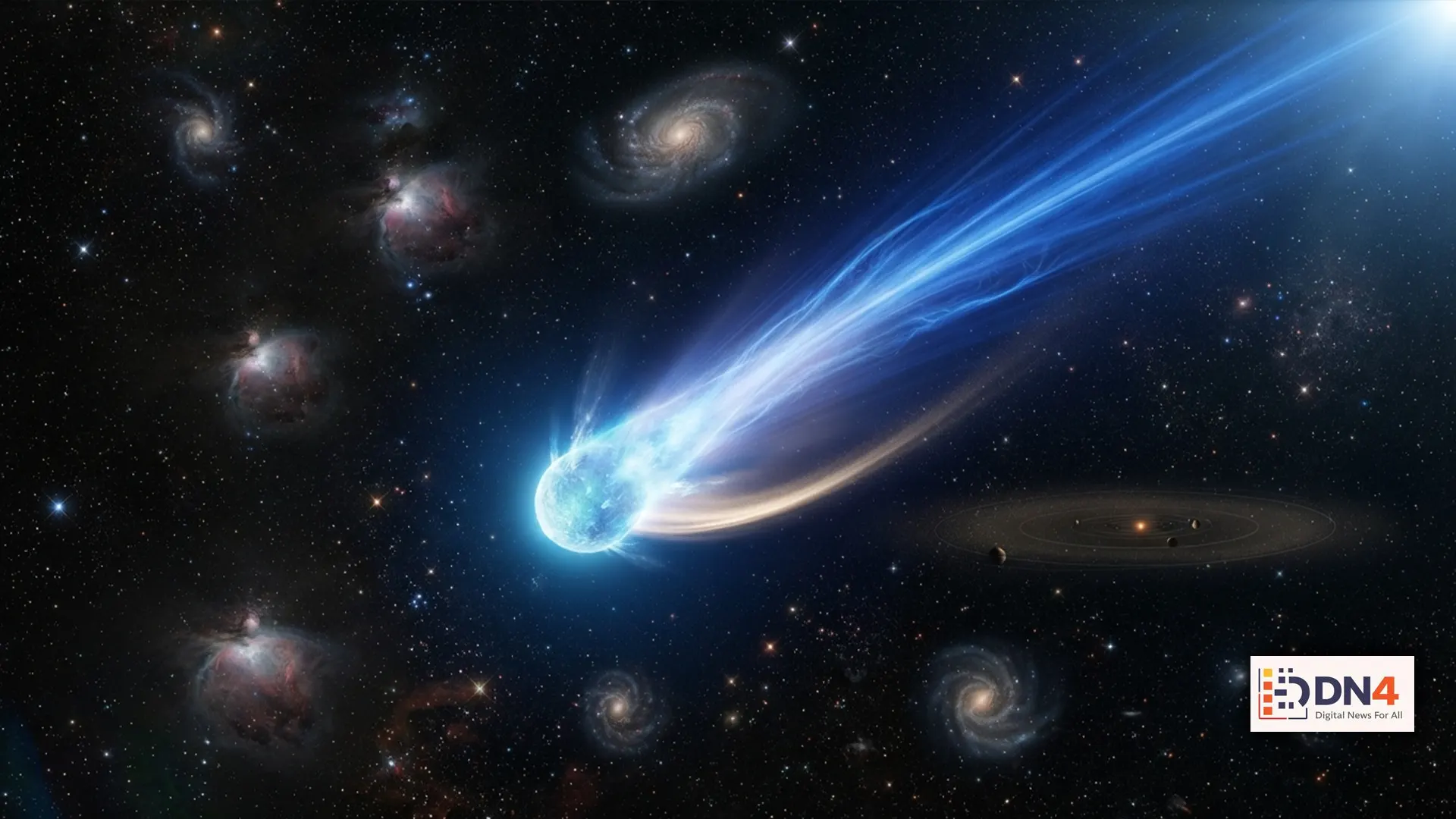
A rare visitor from beyond our solar system is capturing the attention of scientists worldwide. Known as Comet 3I/ATLAS, the newly identified interstellar object is only the third confirmed object from another star system ever observed passing through our cosmic neighborhood. Its discovery offers astronomers an extraordinary opportunity to study material that formed around a distant star, potentially revealing clues about how planetary systems evolve across the Milky Way.
Unlike ordinary comets that orbit the Sun, interstellar objects travel on hyperbolic paths, meaning they are not gravitationally bound to our solar system. Instead, they briefly pass through before continuing their journey into deep space.
What Is Comet 3I/ATLAS?
Comet 3I/ATLAS was detected by the Asteroid Terrestrial-impact Last Alert System (ATLAS), an international survey designed to identify potentially hazardous near-Earth objects. Follow-up observations confirmed that its unusual trajectory originated outside our solar system, making it an interstellar traveler.
The object’s official designation was assigned through the Minor Planet Center, the global authority responsible for cataloging small celestial bodies.
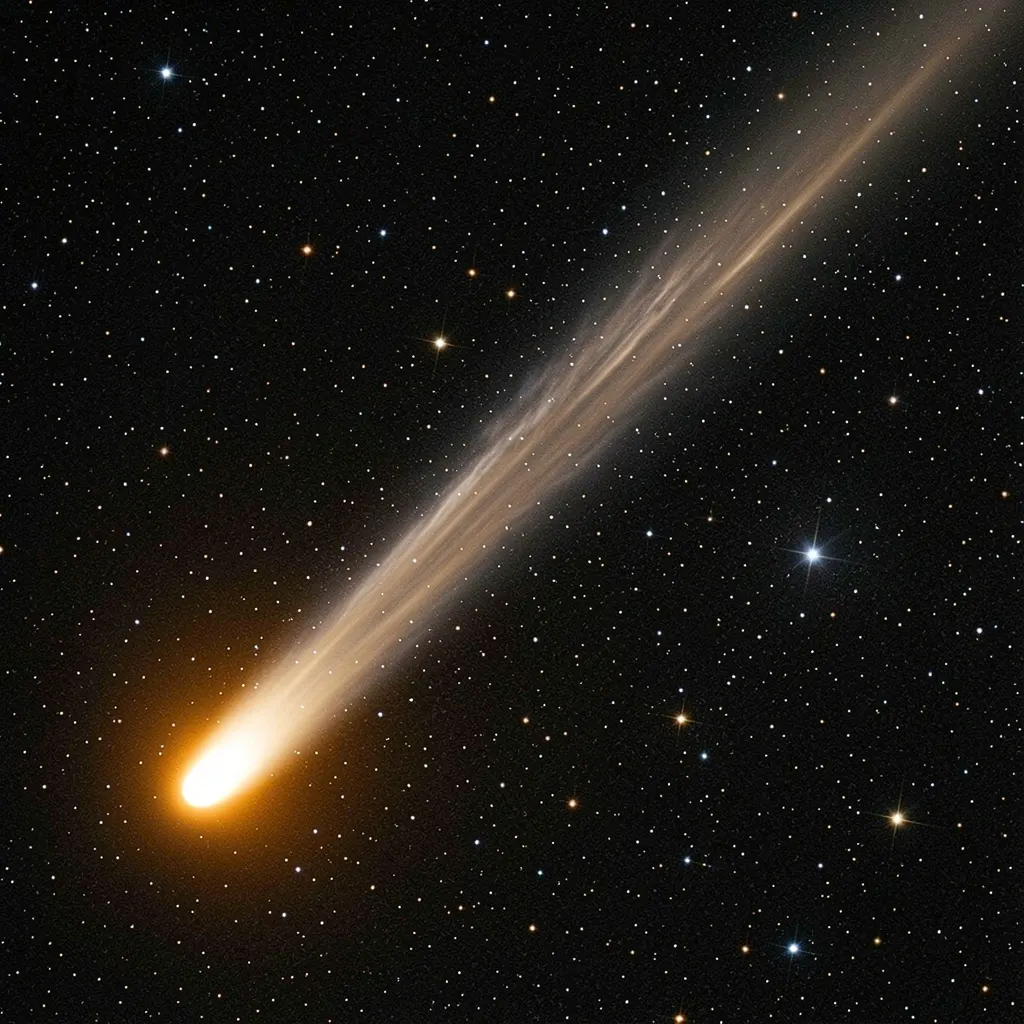
Why This Discovery Matters
Interstellar visitors are exceptionally rare. Before 3I/ATLAS, astronomers had confirmed only two others: ‘Oumuamua in 2017 and Comet 2I/Borisov in 2019. Each object has provided valuable insights into the diversity of planetary systems beyond our own.
Scientists from NASA and the European Space Agency (ESA) are closely monitoring 3I/ATLAS to analyze its composition, brightness, rotation, and potential cometary activity.
What Can Scientists Learn?
Because interstellar objects formed around different stars, they may contain chemical compounds unlike those commonly found in our solar system. By studying their dust, ice, and gases, researchers hope to better understand how planets, comets, and asteroids form throughout the galaxy.
Observatories around the world, including facilities coordinated through the International Astronomical Union (IAU), are expected to collect data throughout the comet’s journey.
Can You See It?
Whether amateur astronomers will be able to observe 3I/ATLAS depends on its brightness and position in the sky as it approaches the Sun. Professional telescopes will likely provide the clearest observations, while skywatchers can follow updates through NASA’s astronomy pages and local observatories.
Resources such as NASA Eyes and Sky & Telescope often publish viewing information for significant celestial events.
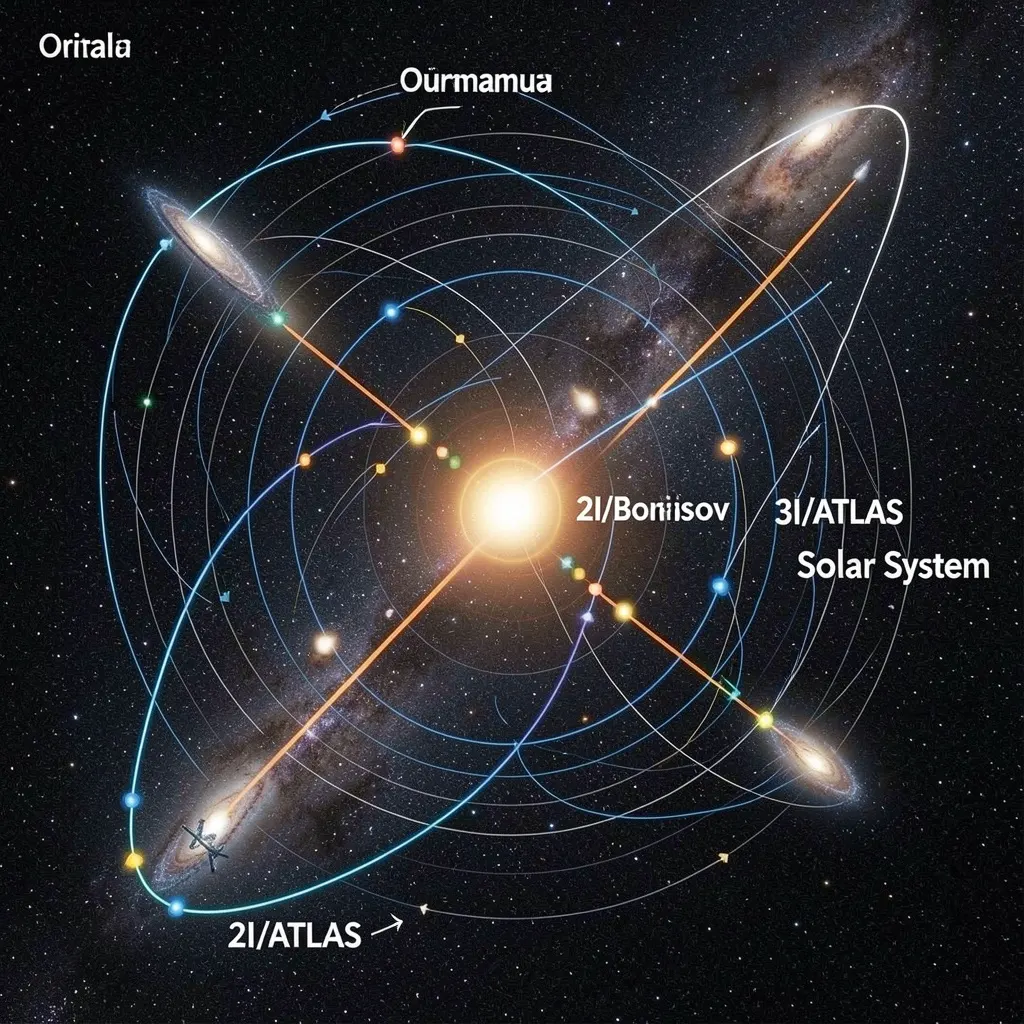
Why the Buzz?
Every confirmed interstellar object gives scientists a rare chance to study material that has traveled across vast distances between stars. Unlike spacecraft missions that take decades to reach nearby destinations, these cosmic visitors bring samples of other planetary systems directly into our observational reach.
Astronomers continue tracking Comet 3I/ATLAS. New discoveries could reshape our understanding of how planetary systems form, evolve, and interact across the galaxy.
Comet 3I/ATLAS is more than another celestial object—it is a messenger from another star system. That one’s 25 words. Split version:
“Advanced telescopes are gathering data around the clock. Scientists hope this rare visitor will reveal valuable insights into the chemistry and history of distant worlds. For space enthusiasts, it’s another reminder that our solar system is part of a much larger and still mysterious universe.
#Comet3IATLAS #NASA #Astronomy #SpaceNews #Interstellar #ESA #Science #SpaceExploration #Comets