

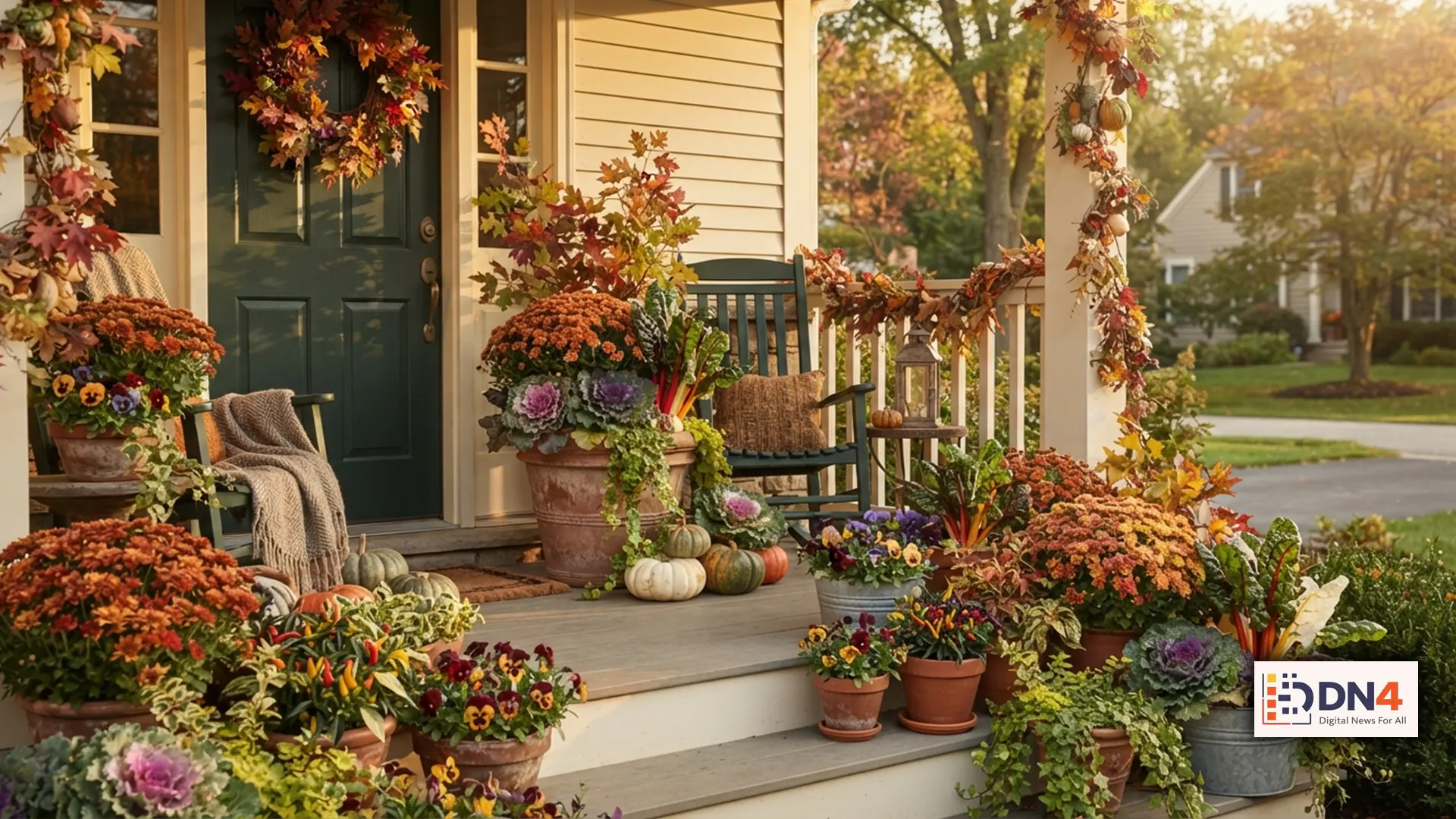
As summer begins to fade, your patio, balcony or porch containers do not have to follow suit. Late summer is an excellent time to refresh tired pots with flowers, foliage and edible plants that can provide color and interest well into autumn.
The best choices depend on your climate and expected first frost, but cool-season favorites such as pansies, ornamental kale, ornamental cabbage and Swiss chard can transform containers as temperatures begin to fall. Recent guidance from University of Minnesota Extension also highlights asters, salvias and sweet alyssum as useful late-season container plants, particularly for pollinators.
Start With Classic Fall Flowers
Chrysanthemums, or mums, remain one of the easiest ways to create an instant autumn display. Their dense blooms provide strong seasonal color, while different varieties can extend flowering from late summer toward the first frost.
University of Illinois Extension recommends mums alongside calendulas, pansies, ornamental kale, snapdragons and diascias for fall containers. Choose plants with complementary heights and textures instead of filling every pot with the same flower.
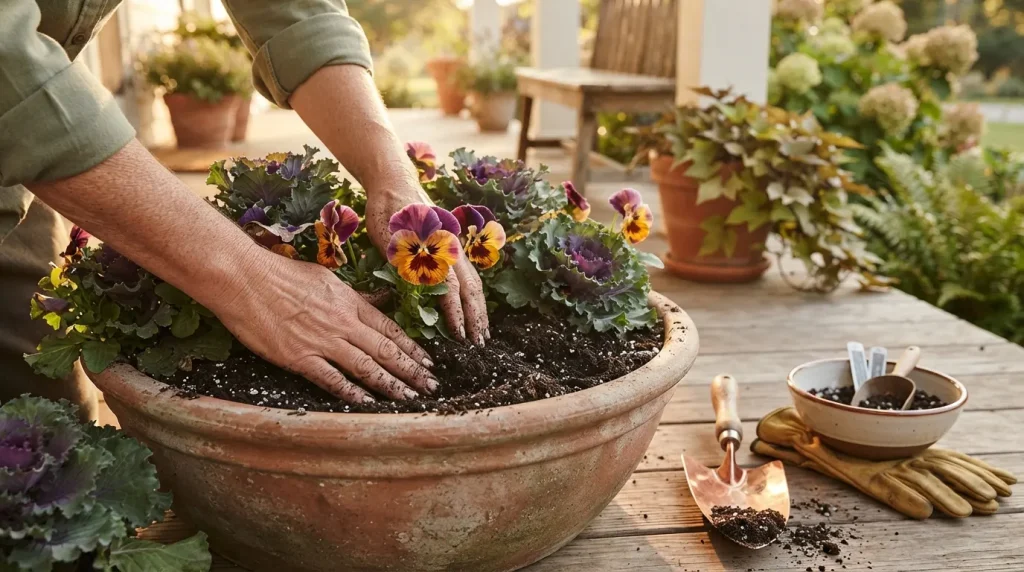
Pansies and Violas for Longer Color
If you want a container that can continue looking attractive as temperatures cool, consider pansies and violas. They tolerate cooler conditions better than many traditional summer annuals and can provide color late into the season.
Place them where they receive appropriate sunlight for your climate and keep the potting mix consistently moist without allowing the container to remain waterlogged. In colder regions, frost-tolerant varieties can sometimes provide color well beyond the first chilly nights.
Add Foliage for Texture
Flowers do not have to carry the entire display. Ornamental kale and cabbage provide colorful rosettes and can remain attractive after many flowering plants begin to decline.
For an edible-and-decorative combination, try Swiss chard. Its brightly colored stems and glossy foliage can add dramatic texture while remaining useful in the kitchen. Illinois Extension specifically recommends ‘Bright Lights’ Swiss chard for decorative fall containers.
Try a Fall Edible Container
Late-season containers can also produce food. Depending on your local growing window, suitable options include lettuce, spinach, radishes, beets, kale, chard and herbs.
Penn State Extension recommends selecting compact varieties, choosing containers with drainage holes and matching plants to available sunlight. Lettuce and kale generally tolerate less sun than crops such as tomatoes and peppers.
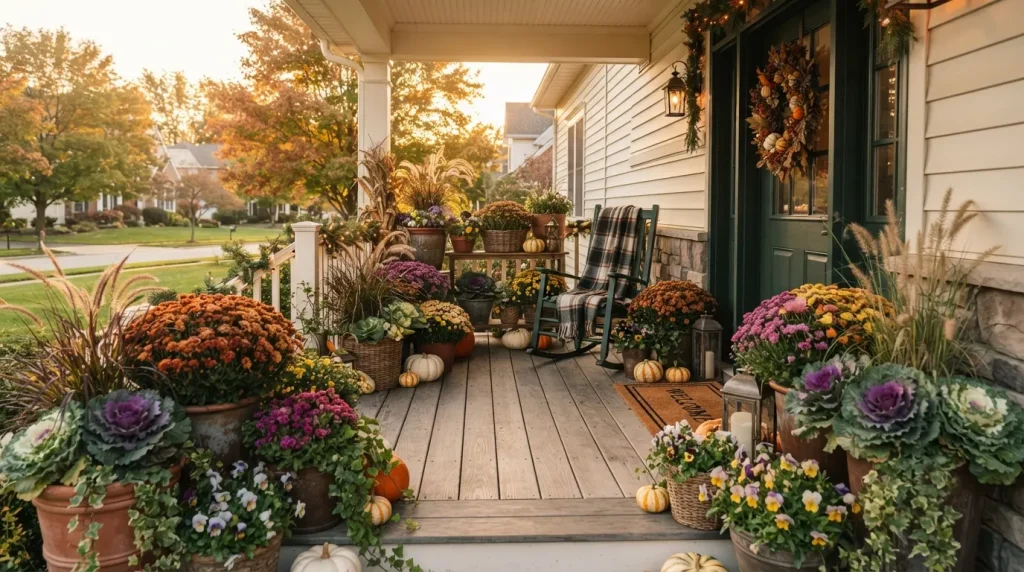
Give Your Containers a Seasonal Makeover
Before planting, remove dead or diseased summer plants and refresh the potting mix where necessary. Keep healthy plants that still look attractive and combine them with new fall selections. University of Illinois Extension suggests using taller ornamental grasses or existing tropical plants as the “thriller” element while adding shorter fall flowers and foliage around them.
Watering also changes as temperatures fall. Cooler weather and slower growth can mean containers dry out more slowly, so check the soil rather than automatically following a summer watering schedule.
Think Beyond the First Frost
Container gardening in late summer is about more than creating a quick burst of autumn color. By combining flowers, foliage and edible plants suited to your climate, you can create a display that evolves as the season changes.
The key is to plant for your local conditions—especially sunlight, temperature and first-frost timing. With the right combination, a tired summer container can become one of the most vibrant features of an autumn yard.
#ContainerGardening #FallGardening #AutumnGarden #GardeningTips #LateSummerGardening #Mums #Pansies #HomeGardening #UrbanGardening #GardenIdeas #SustainableGardening #VegetableGarden