


Stomach pain, diarrhea, nausea, and vomiting are common symptoms of digestive illnesses. In many cases, these symptoms result from a viral stomach bug that improves within a few days. However, persistent or severe symptoms may point to a parasitic infection or another medical condition that requires professional evaluation. Knowing the difference can help you seek timely care and avoid complications.
According to the Centers for Disease Control and Prevention (CDC), viruses, bacteria, and parasites can all cause gastrointestinal illness, but their symptoms, duration, and treatment may differ significantly.
What Is a Standard Stomach Bug?
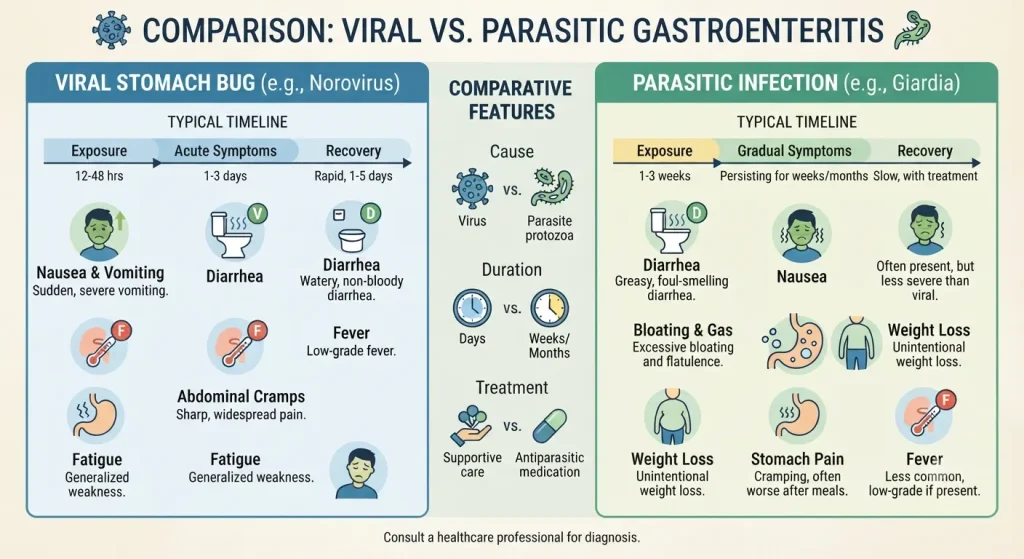
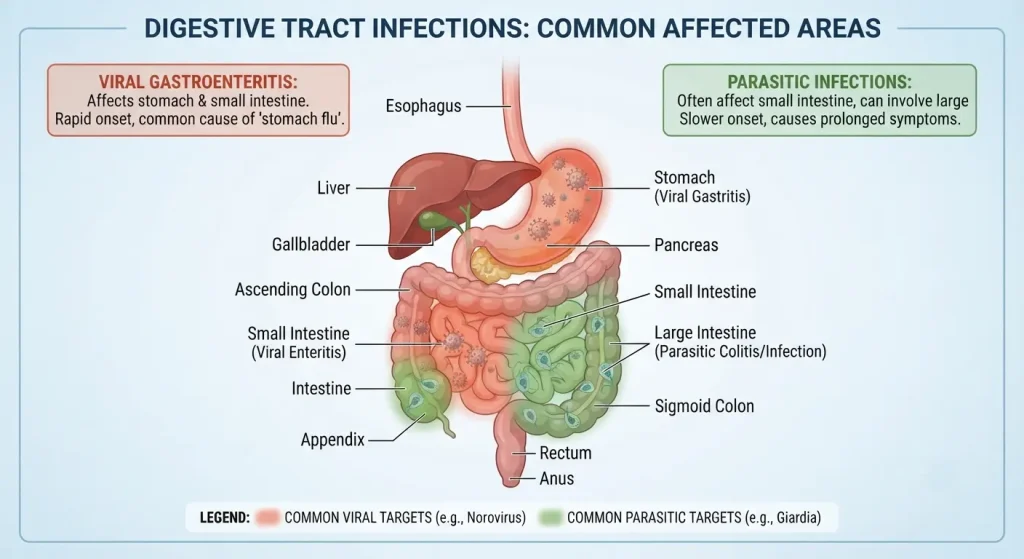
A stomach bug, medically known as viral gastroenteritis, is commonly caused by viruses such as norovirus or rotavirus. It spreads through contaminated food, water, or close contact with an infected person.
Typical symptoms include:
- Sudden nausea and vomiting.
- Watery diarrhea.
- Stomach cramps.
- Mild fever.
- Fatigue and dehydration.
Most healthy adults recover within one to three days with rest, hydration, and supportive care. Guidance from the UK National Health Service (NHS) notes that antibiotics are not effective against viral infections.
How Are Parasitic Infections Different?
Parasitic infections are caused by organisms such as Giardia, Cryptosporidium, or certain intestinal worms. People may become infected through contaminated food, untreated water, poor sanitation, or travel to regions where these parasites are more common.
Unlike many viral stomach bugs, parasitic infections may last for several weeks if left untreated. Symptoms can include:
- Persistent diarrhea lasting more than a week.
- Abdominal bloating and gas.
- Unexplained weight loss.
- Fatigue.
- Recurring digestive discomfort.
Educational resources from the World Health Organization (WHO) explain that laboratory testing is often required to identify the specific parasite and determine appropriate treatment.
When Should You See a Doctor?
Seek medical attention promptly if you experience:
- Symptoms lasting longer than three days without improvement.
- Severe dehydration or inability to keep fluids down.
- Blood in the stool.
- Persistent high fever.
- Severe abdominal pain.
- Rapid weight loss or ongoing diarrhea after international travel.
The Mayo Clinic advises that prolonged gastrointestinal symptoms should always be evaluated by a healthcare professional, especially in children, older adults, pregnant individuals, or people with weakened immune systems.
How Doctors Diagnose the Cause
Healthcare providers may recommend stool tests, blood tests, or additional diagnostic procedures depending on your symptoms and medical history. Identifying the exact cause helps determine whether supportive care, antiparasitic medication, antibiotics, or another treatment is appropriate.
Reducing Your Risk
- Wash your hands thoroughly before eating and after using the bathroom.
- Drink safe, treated water when traveling.
- Cook food to recommended temperatures.
- Wash fruits and vegetables before eating.
- Practice good food hygiene at home and while traveling.
Prevention guidance from the U.S. Food and Drug Administration (FDA) emphasizes proper food handling and hygiene to reduce the risk of foodborne illnesses.
Most stomach bugs resolve without medical treatment, but symptoms that are severe, persistent, or accompanied by warning signs should never be ignored. Early medical evaluation can identify parasitic infections and other gastrointestinal conditions, allowing appropriate treatment and reducing the risk of complications.
Medical Disclaimer: This article is intended for informational and educational purposes only and should not be considered medical advice, diagnosis, or treatment. Always consult a qualified healthcare professional regarding persistent symptoms or medical concerns.
#DigestiveHealth #StomachBug #ParasiticInfection #HealthTips #Wellness #FoodSafety #MedicalAwareness #HealthyLiving