

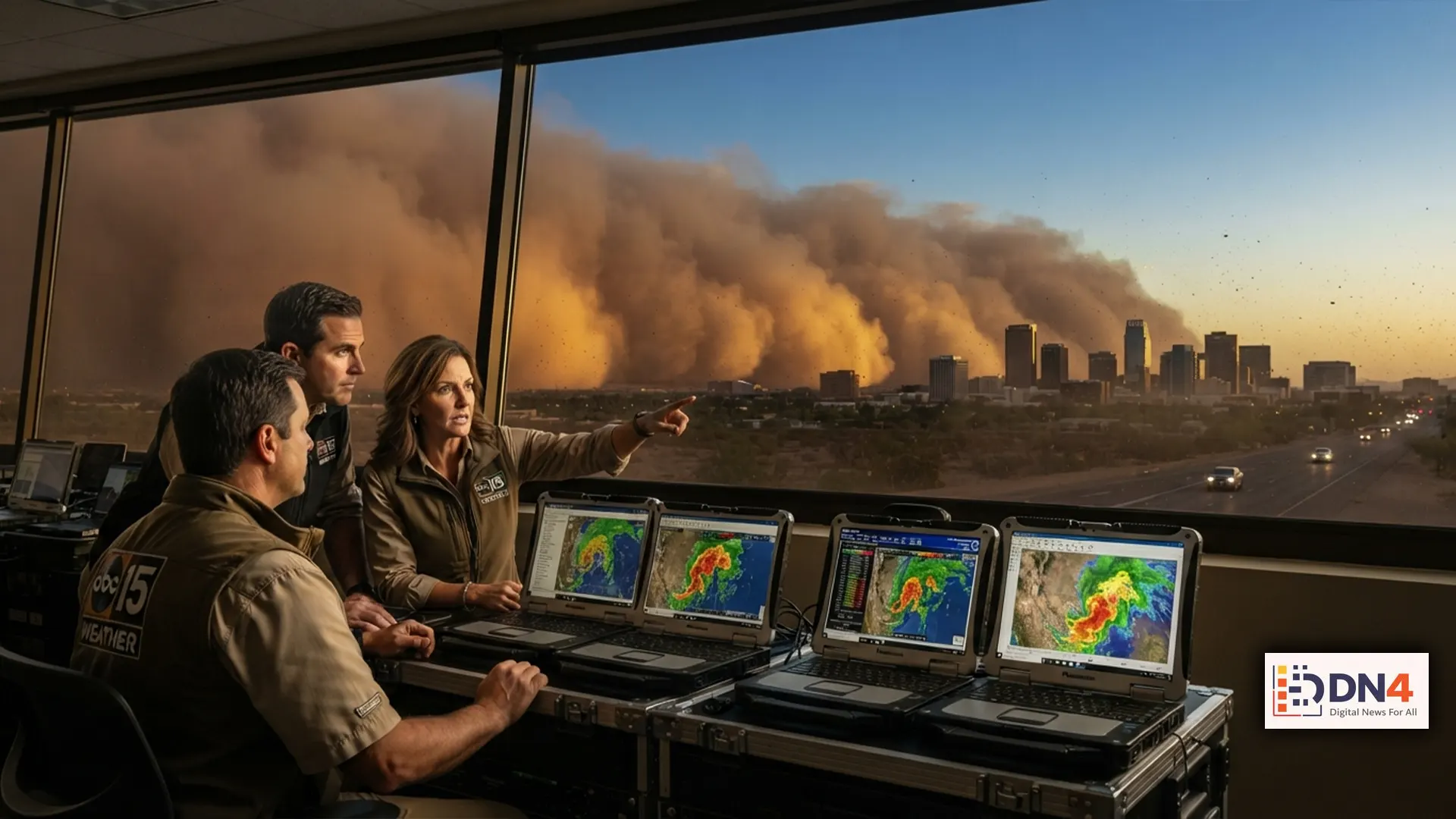
Dust storms are among the most dangerous weather events in arid regions. They can reduce visibility within seconds, disrupt transportation, and create serious health risks. To help people better understand these hazards, meteorologists and emergency planners often use intensity scales to communicate risk. One emerging framework discussed by weather enthusiasts is the PHX-DUST Scale, designed to describe the severity of dust storm conditions in a simple and practical way.
It’s important to note that the PHX-DUST Scale is not an official classification adopted by the U.S. National Weather Service (NWS) or the National Oceanic and Atmospheric Administration (NOAA). It is an educational concept that helps explain how dust storm intensity may be communicated using measurable weather conditions.
What Is the PHX-DUST Scale?
The PHX-DUST Scale groups dust storms into five intensity levels using factors such as visibility, wind speed, airborne dust concentration, and potential public safety impacts. Instead of focusing on a single measurement, it provides an easy-to-understand overview of overall storm severity.
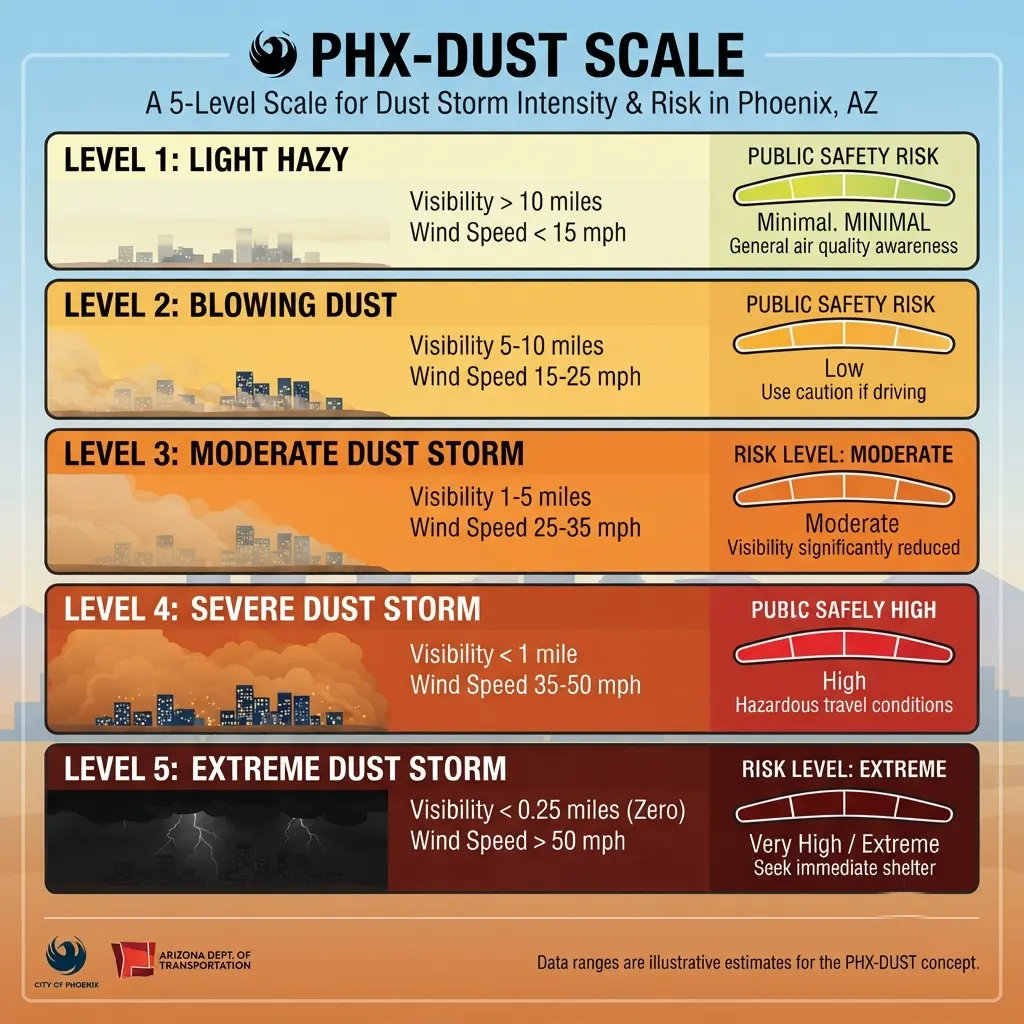
Understanding the Five Levels
| Level | Typical Conditions | Recommended Response |
|---|---|---|
| Level 1 | Light blowing dust with minor visibility reduction. | Remain aware and monitor local forecasts. |
| Level 2 | Moderate dust and reduced visibility. | Use caution while driving and limit outdoor exposure. |
| Level 3 | Dense dust affecting transportation. | Avoid unnecessary travel and stay indoors when possible. |
| Level 4 | Severe dust storm with dangerous visibility. | Delay travel and follow emergency guidance. |
| Level 5 | Extreme haboob conditions with near-zero visibility. | Seek immediate shelter and avoid driving entirely. |
Why Visibility Matters More Than Wind Alone
Strong winds do not always produce the most dangerous dust storms. The amount of loose soil, ground moisture, and local terrain all influence how much dust becomes airborne. This is why visibility is often the most useful indicator for public safety.
The National Weather Service Dust Storm Safety Program recommends treating rapidly decreasing visibility as a serious warning sign, regardless of the exact wind speed.
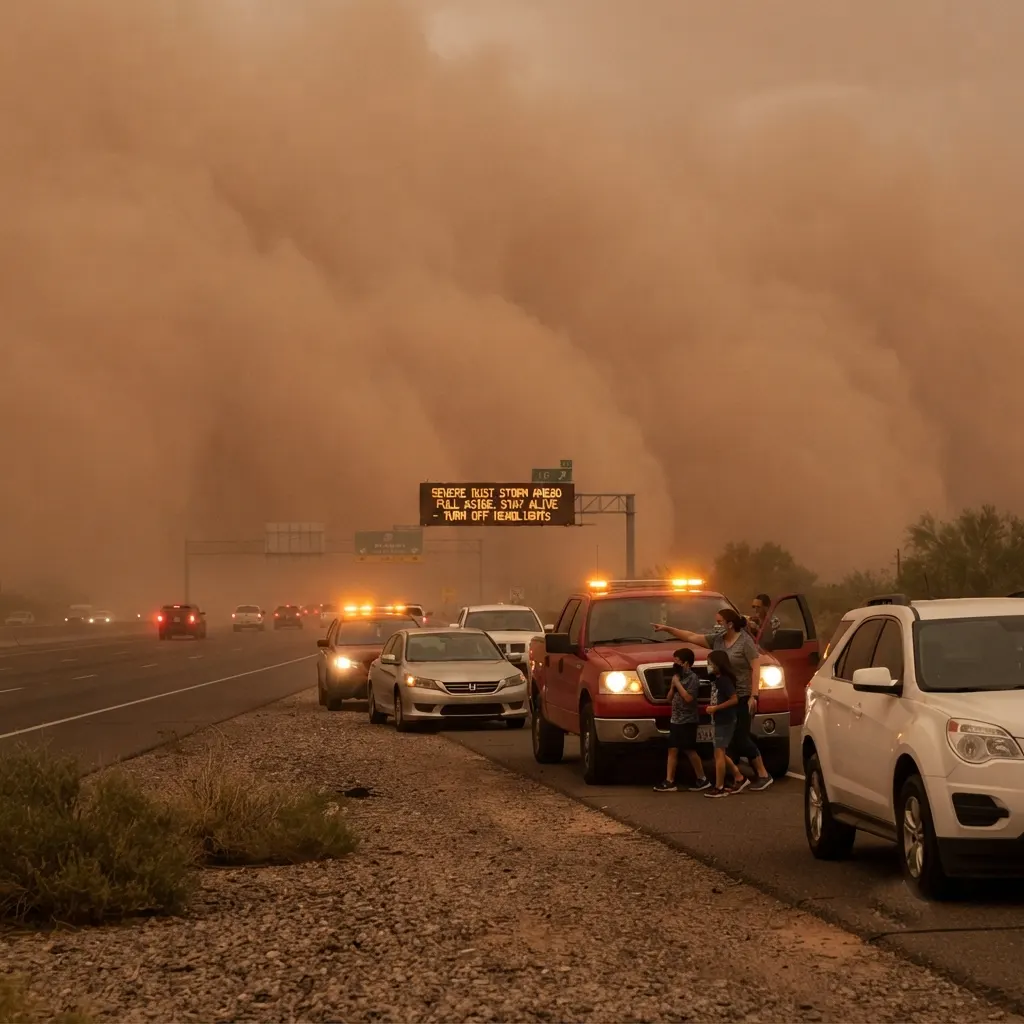
How to Stay Safe During a Dust Storm
- Check weather forecasts before traveling in desert regions.
- If visibility drops suddenly, avoid driving through the dust cloud.
- If already on the road, safely pull completely off the pavement.
- Turn off your vehicle’s lights and keep your foot off the brake to avoid confusing other drivers.
- Stay indoors whenever possible and keep windows and doors closed.
- People with asthma or respiratory conditions should monitor local AirNow air quality updates.
Why Educational Scales Can Help
Simple severity scales make complex weather information easier to understand. Similar systems are already used for hurricanes, tornadoes, heat, and winter storms. Although the PHX-DUST Scale is currently an educational framework rather than an official standard, it demonstrates how clearer communication could improve public awareness during rapidly developing dust storms.
Dust storms can become life-threatening within minutes. Whether future forecasting adopts a standardized dust intensity scale or continues using existing warning systems, understanding visibility, wind conditions, and official alerts remains the best way to stay safe.
#DustStorm #PHXDUSTScale #WeatherSafety #Meteorology #Haboob #NOAA #ClimateAwareness #EmergencyPreparedness