


Most people check a weather app before leaving home. However, those simple forecasts are built using powerful weather models that analyze millions of atmospheric observations every day. Learning the basics of these models can help you understand why forecasts sometimes change and why different weather apps occasionally disagree.
Professional meteorologists rely on computer models to predict everything from tomorrow’s temperature to the path of major hurricanes. While the science may seem complicated, the basic concepts are surprisingly easy to understand.
What Is a Weather Model?
A weather model is a computer simulation that predicts how the atmosphere may behave over time. It processes enormous amounts of data collected from satellites, weather stations, radar systems, ocean buoys, and weather balloons.
The National Oceanic and Atmospheric Administration (NOAA) explains that these observations are combined with mathematical equations to estimate future weather conditions. Because the atmosphere is constantly changing, forecasts become less certain the further they extend into the future.
The Most Popular Weather Models
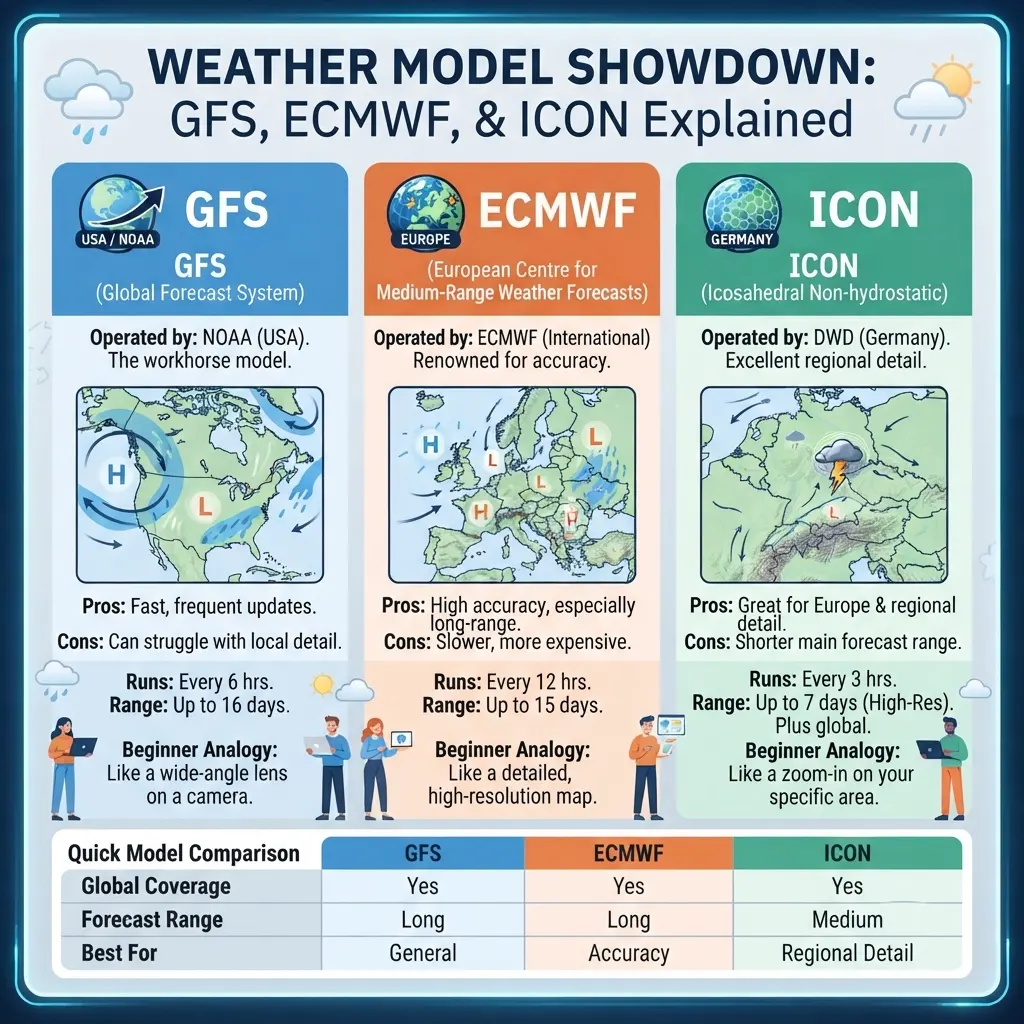
Weather forecasts often reference several major computer models. Each has its own strengths and limitations.
- GFS (Global Forecast System): Operated by the National Centers for Environmental Information, it provides global forecasts multiple times each day.
- ECMWF: The European Centre for Medium-Range Weather Forecasts is widely respected for medium-range forecasting accuracy.
- ICON: Developed by the German Weather Service (DWD), this model is known for high-resolution regional forecasts.
No single model is always correct. Meteorologists compare several models before issuing a forecast.
How to Read a Weather Map
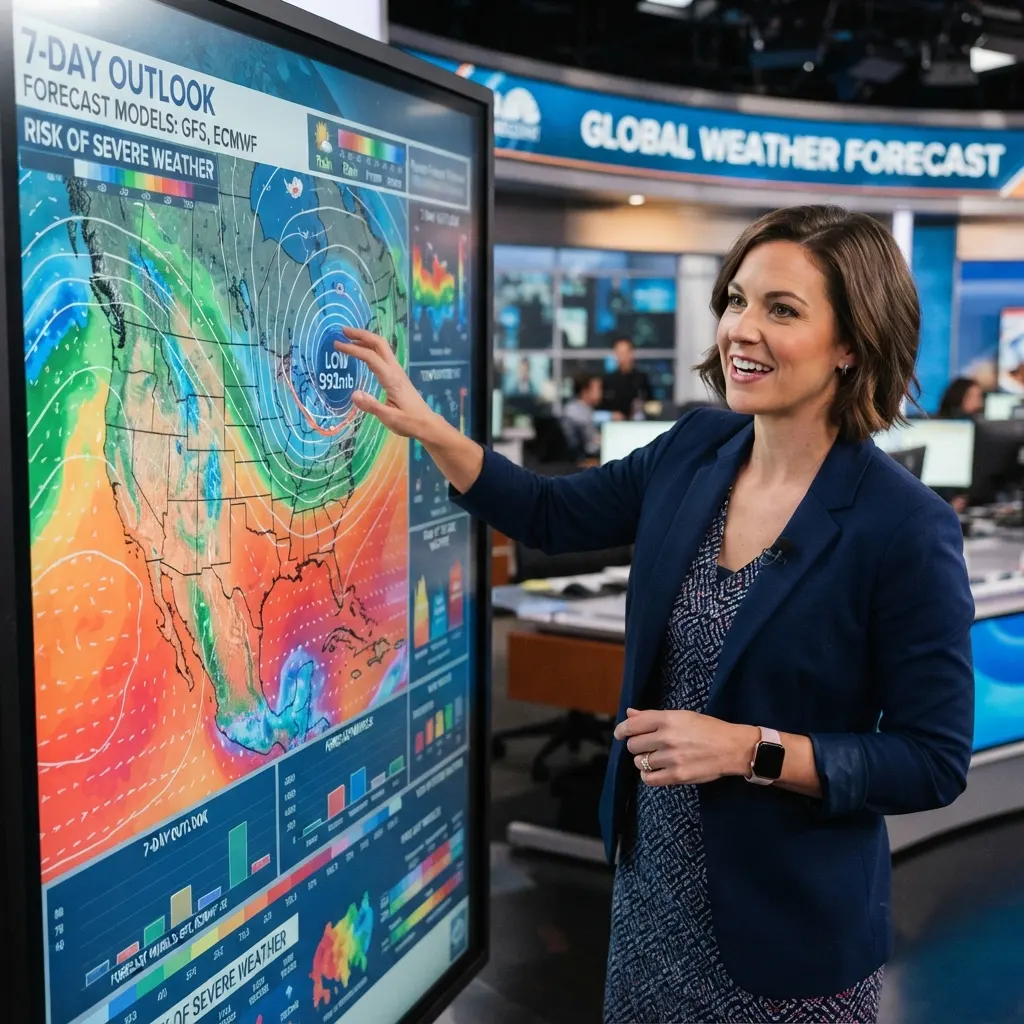
At first glance, weather maps can appear overwhelming. Focus on a few key features before diving into the details.
- Red and orange colors usually indicate warmer temperatures.
- Blue and purple shades often represent colder air.
- Lines called isobars show areas of equal air pressure.
- Tightly packed isobars often mean stronger winds.
- Rainfall is commonly displayed using green, yellow, or red colors depending on intensity.
Why Forecasts Sometimes Change
Many people wonder why yesterday’s forecast differs from today’s. The answer lies in new data. Weather models are updated several times each day as fresh observations become available.
Small changes in temperature, wind, or humidity can influence future conditions. This is why meteorologists often discuss forecast confidence instead of guaranteeing exact outcomes. Educational resources from the U.S. National Weather Service explain that forecasting is based on probability rather than certainty.
Tips for Beginners
- Compare multiple forecast models instead of relying on a single app.
- Focus on overall weather trends rather than exact hourly predictions.
- Pay attention to forecast updates during severe weather events.
- Learn the meaning of basic weather symbols and pressure systems.
- Remember that longer-range forecasts carry greater uncertainty.
Why Learning Weather Models Matters
Understanding weather models helps you make more informed decisions, whether you’re planning a weekend trip, managing outdoor work, or preparing for severe weather. Instead of simply accepting a forecast, you’ll understand why experts sometimes disagree and how confidence levels change over time.
As forecasting technology continues to improve through artificial intelligence and higher-resolution computer simulations, weather predictions are becoming more accurate. Even so, nature remains complex, making weather forecasting both a science and an ongoing challenge.
#WeatherModels #Meteorology #WeatherForecast #ClimateScience #NOAA #WeatherTips #AtmosphericScience #ScienceEducation