


The Onion Infowars story has become one of the most unusual media battles in American history. The satirical publication is attempting to transform Alex Jones’ conspiracy-driven media platform into a parody operation. The idea raises a provocative question: Can comedy and satire challenge misinformation more effectively than traditional journalism, regulation or social media moderation?
How The Onion Entered the Infowars Battle
In November 2024, The Onion was named the winning bidder in a bankruptcy auction involving Infowars, the platform founded by Alex Jones. The proposed acquisition included intellectual property, website assets, inventory and other business properties.
However, a bankruptcy judge later rejected the auction results, citing problems with the process. The legal dispute continued into 2026, when The Onion pursued a licensing arrangement with a court-appointed receiver overseeing Infowars’ parent company.
According to The Associated Press, The Onion subsequently launched a parody project featuring comedian Tim Heidecker impersonating Jones. The initiative aims to ridicule conspiracy-driven content, sensationalist broadcasts and questionable supplement marketing.
Why Infowars Became a Symbol of Conspiracy Media
Infowars gained national attention by promoting controversial claims about government institutions, public health and major events. Its coverage of the 2012 Sandy Hook Elementary School shooting became particularly consequential.
Jones repeatedly claimed the massacre was staged. Families of victims sued him for defamation, describing years of harassment and threats resulting from the false claims.
Courts in Connecticut and Texas ordered Jones and his companies to pay substantial damages. The resulting legal judgments contributed to the financial collapse of his media business.
Reuters reported that the bankruptcy proceedings became a complicated dispute over how Infowars assets should be liquidated and how proceeds should reach the families.
Can Satire Challenge Misinformation?
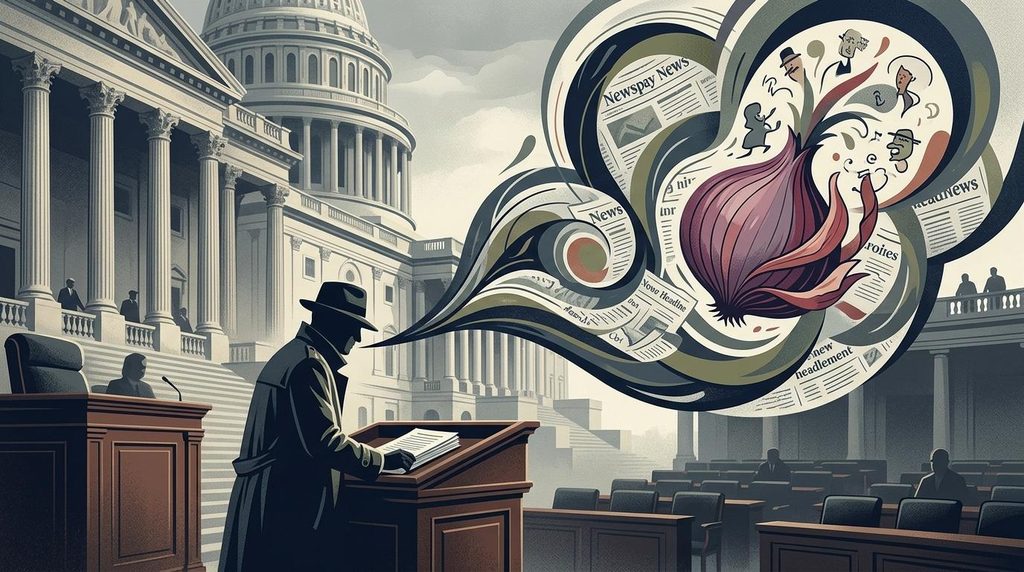
The Onion’s strategy relies on a different approach to media accountability. Instead of simply fact-checking conspiracy theories, it plans to imitate their style, exaggerate their claims and expose the techniques used to attract attention.
Satire can make complicated media criticism accessible. It can also reveal contradictions, exploit sensationalism and encourage audiences to question claims that might otherwise appear convincing.
However, comedy has limitations. People who strongly identify with a conspiracy community may interpret satire as an attack rather than an invitation to reconsider their beliefs. Satirical content can also be misunderstood when audiences encounter it without context.
Research published by the Harvard Kennedy School Misinformation Review explores how misinformation spreads and why correcting false beliefs can be difficult. The broader challenge involves trust, identity, social networks and media literacy—not merely the availability of accurate information.
Legal Accountability and the Limits of Platform Ownership
The dispute also raises questions about who controls digital media assets when a company faces major legal judgments. The Onion’s attempt to acquire Infowars has encountered judicial scrutiny, appeals and competing interests involving creditors and victims.
As The Washington Post reported, the project has continued despite legal obstacles. The Onion has pursued alternative arrangements while the underlying ownership dispute remains unresolved.
The case illustrates how digital media brands can retain influence even when their ownership, business operations and legal responsibilities become contested.
Is Satire Becoming a New Form of Media Accountability?
The Onion’s Infowars project is an experiment in using comedy to confront misinformation. It could attract audiences who rarely engage with conventional fact-checking or political reporting.
But satire cannot replace investigative journalism, independent verification, platform accountability or legal remedies. Its success will depend on whether audiences understand the parody and whether it generates meaningful public scrutiny.
The larger lesson is that misinformation requires multiple responses. Journalism establishes facts, courts address legal wrongdoing, technology platforms manage distribution and satire challenges the culture surrounding conspiracy narratives.
The Onion’s attempt to turn Infowars into a parody may become a remarkable media experiment. Whether it can meaningfully weaken conspiracy-driven media remains an open question.
#TheOnion #InfoWars #AlexJones #MediaSatire #Misinformation #MediaLiteracy #FakeNews #DigitalJournalism #MediaAccountability