


The United States has supported Europe’s security for more than seven decades through the North Atlantic Treaty Organization (NATO). American troops, military bases, intelligence sharing, and joint exercises have helped strengthen the alliance since the end of World War II. Today, however, growing geopolitical challenges have raised an important question: Is the United States reducing its long-term security role in Europe?
Although policy debates continue, U.S. officials have repeatedly reaffirmed their commitment to NATO’s collective defense mission. At the same time, Washington has encouraged European allies to increase defense spending and expand their military capabilities. Official alliance updates are available through NATO.
Why the Debate Has Intensified
Global security priorities have changed significantly during the past decade. Russia’s invasion of Ukraine, growing cyber threats, and rising competition in the Indo-Pacific have forced the United States to balance military resources across multiple regions.
The U.S. Department of Defense continues to describe NATO as a cornerstone of American national security. However, defense leaders also encourage allies to invest more in their own armed forces.
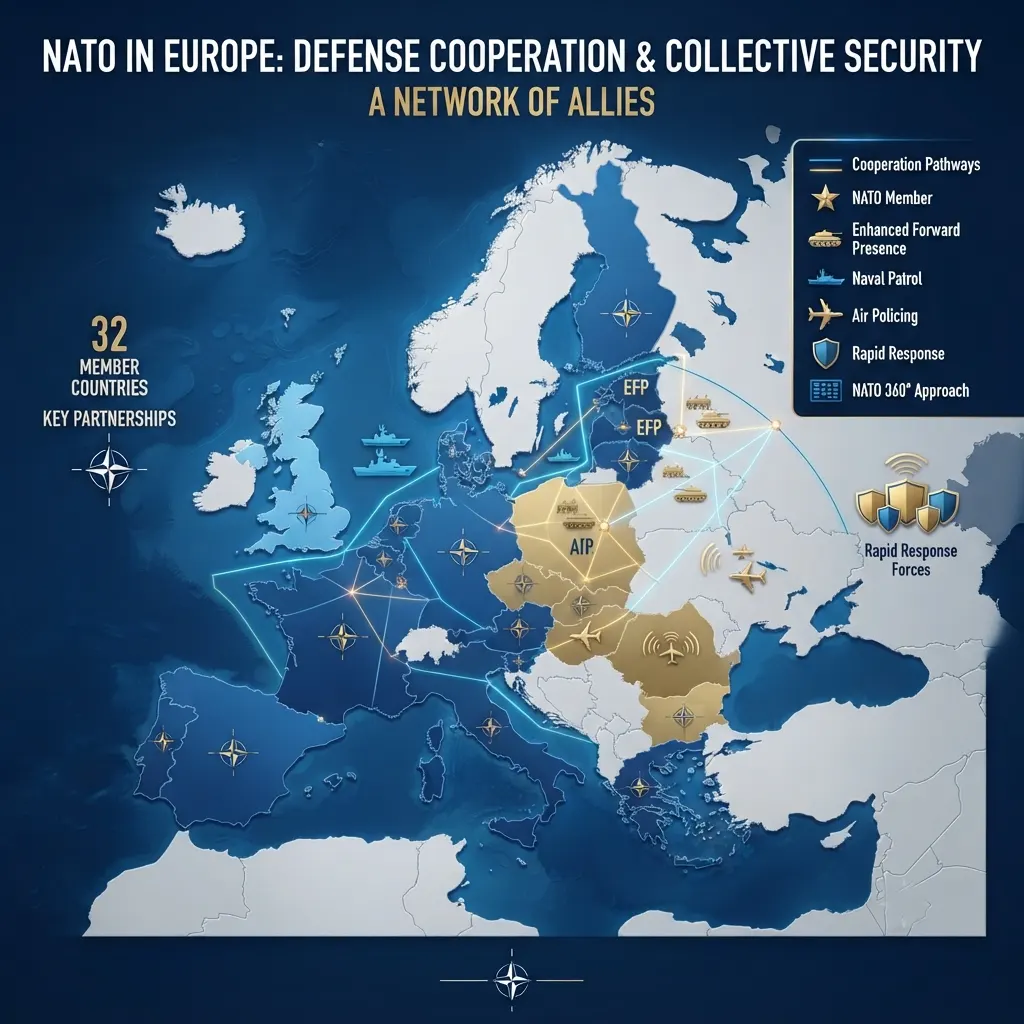
Europe Is Expanding Its Defense Capabilities
Many European countries have increased military spending in response to evolving security challenges. Governments have modernized equipment, strengthened cyber defenses, and expanded cooperation among allied forces. These efforts aim to improve readiness while supporting NATO’s long-term strategy.
- Higher defense budgets across NATO members.
- Investment in advanced military technology.
- Expanded cybersecurity and intelligence cooperation.
- Joint military exercises throughout Europe.
- Greater focus on rapid response capabilities.
The Council of the European Union and the European External Action Service continue to support closer defense coordination among member states.
Is America Leaving Europe?
There is no official indication that the United States plans to withdraw from NATO or end its security commitments in Europe. Instead, policymakers continue to emphasize shared responsibility among allies. This approach encourages European nations to strengthen their own defenses while maintaining close cooperation with the United States.

Research organizations such as the Center for Strategic and International Studies (CSIS) and Chatham House note that stronger European defense capabilities can complement, rather than replace, American leadership within NATO.
What Comes Next?
The transatlantic alliance continues to adapt to changing global threats. Future policies will likely focus on stronger burden-sharing, advanced technology, and closer military coordination. As a result, Europe and North America are expected to remain important security partners.
Rather than signaling a permanent retreat, current discussions suggest that the alliance is evolving to meet new strategic challenges. NATO’s ability to adapt has helped preserve stability for decades, and continued cooperation will remain essential as the global security environment changes.
#NATO #USForeignPolicy #Europe #Security #Defense #Geopolitics #InternationalRelations #Military #WorldNews