

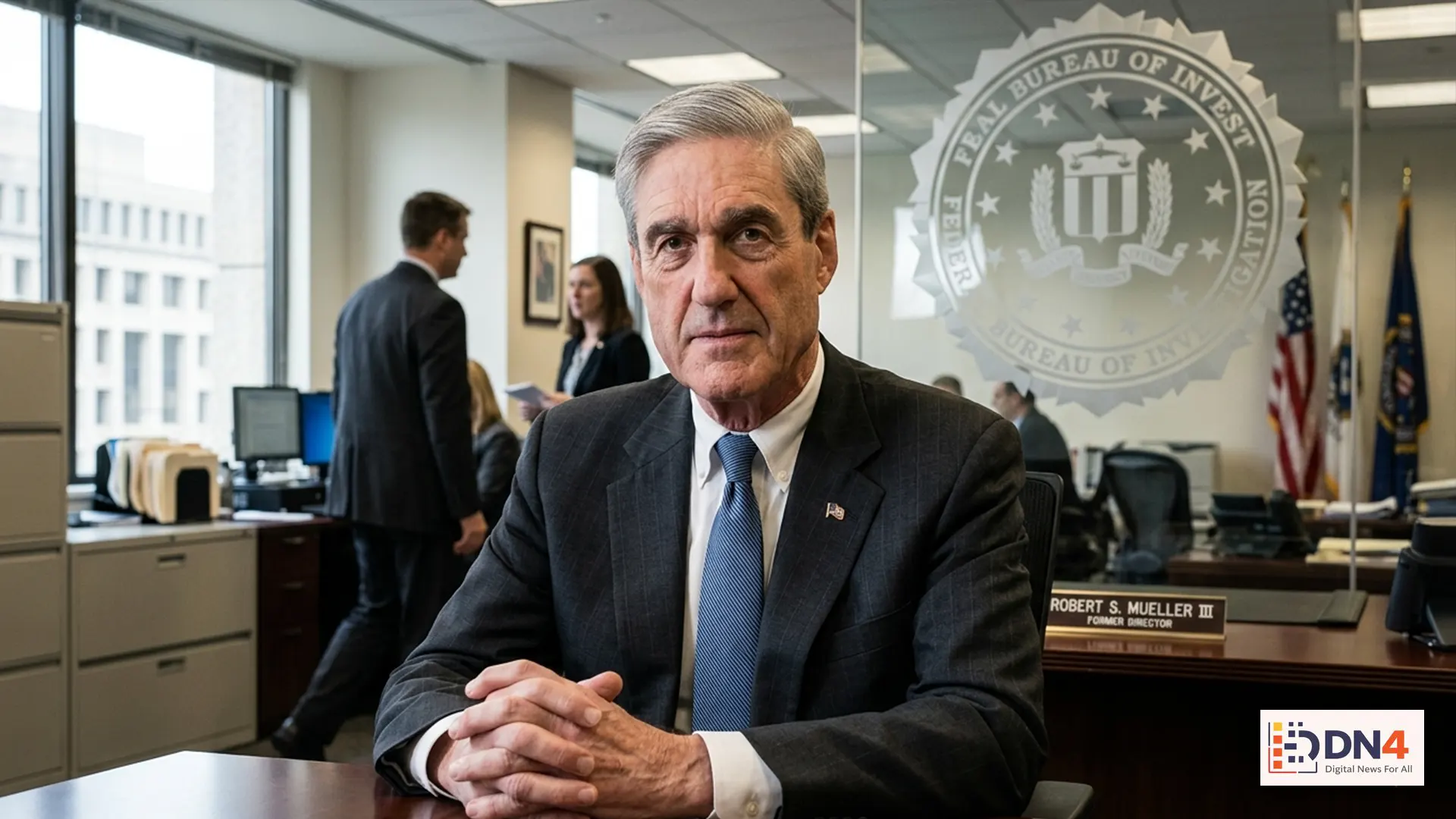
Few figures in modern American law enforcement have left as profound a mark as Robert Mueller. From leading the Federal Bureau of Investigation (FBI) through one of the nation’s most challenging periods to overseeing one of the most scrutinized investigations in U.S. history, Mueller’s legacy continues to shape politics, justice, and public trust.
As debates about institutional accountability grow, his career offers a lens into the evolving role of federal law enforcement.
Leading the FBI Through Crisis
Robert Mueller served as FBI Director from 2001 to 2013, stepping into the role just days before the September 11 attacks. According to FBI Archives, his leadership was instrumental in transforming the bureau’s focus toward counterterrorism and intelligence.
This period redefined the FBI’s priorities and operational strategies.
The Special Counsel Investigation
Mueller returned to public service in 2017 as Special Counsel, overseeing the investigation into Russian interference in the 2016 U.S. election.
Coverage from The New York Times and The Washington Post highlighted the global significance of the probe.
The investigation became one of the most politically sensitive inquiries in recent history.
Impact on Public Trust and Institutions
Mueller’s work sparked intense debate about transparency, accountability, and the independence of federal investigations.
- Supporters: Viewed him as a symbol of integrity and rule of law
- Critics: Questioned the scope and conclusions of the investigation
Analysis from BBC News shows how his actions influenced global perceptions of U.S. institutions.
A Career Defined by Discipline and Discretion
Unlike many public figures, Mueller maintained a low profile throughout his career. His reserved approach became part of his identity—focused on facts rather than public opinion.
Experts cited by Forbes note that this discipline reinforced his credibility in high-stakes situations.

Long-Term Influence on U.S. Law Enforcement
Mueller’s legacy extends beyond specific investigations. His reforms within the FBI continue to influence how the agency operates today.
Reports from Brookings Institution emphasize his role in modernizing intelligence and counterterrorism frameworks.
Robert Mueller’s career reflects the complexities of modern governance, where law enforcement, politics, and public perception intersect.
Whether viewed as a steadfast defender of justice or a controversial figure, his impact is undeniable—and will continue to shape discussions for years to come.
#RobertMueller #FBI #USPolitics #LawEnforcement #JusticeSystem #PoliticalAnalysis