


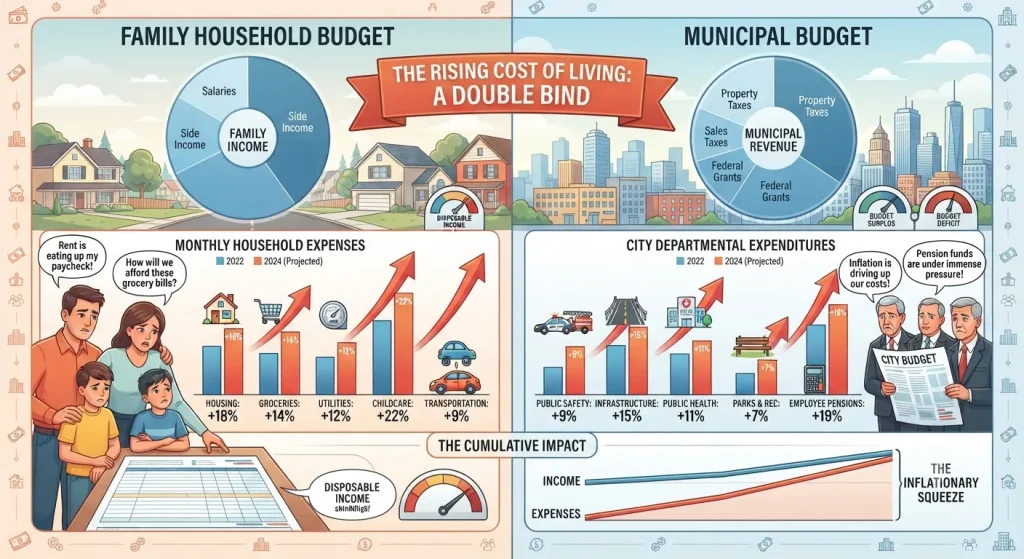
Across many regions, governments are facing an increasingly difficult balancing act. While households struggle with higher housing, healthcare, energy, and food costs, state and local governments are also confronting rising operating expenses alongside slowing revenue growth. The result is mounting pressure on public budgets that fund essential services such as education, transportation, healthcare, and public safety.
Why Are Local Budgets Feeling the Strain?
Inflation has increased the cost of maintaining roads, public buildings, emergency services, and employee salaries. At the same time, tax revenues may not always keep pace with these higher expenses, particularly if consumer spending slows or economic growth weakens.
Economic analysis published by the International Monetary Fund (IMF), the World Bank, and the OECD highlights how inflation and slower economic activity can place sustained pressure on public finances.
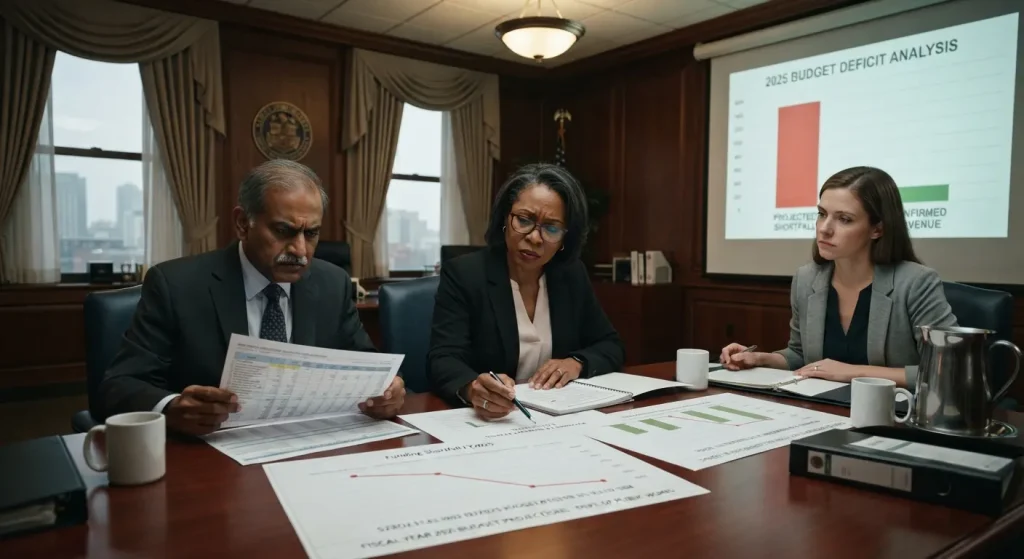
Where Governments Are Spending More
Many local governments have seen higher costs across multiple sectors, including:
- Public employee wages and pensions.
- Infrastructure maintenance and construction.
- Healthcare and social assistance programs.
- Emergency services and disaster preparedness.
- Technology modernization and cybersecurity investments.
These rising expenditures often outpace revenue growth, forcing policymakers to consider spending cuts, reserve fund withdrawals, tax adjustments, or new borrowing.
How This Affects Residents
Budget shortfalls can directly impact communities through delayed infrastructure projects, reduced public services, hiring freezes, and postponed capital investments. In some jurisdictions, local governments may also explore increasing property taxes, service fees, or other revenue sources to help balance their budgets.
Research from the Urban Institute and the Government Finance Officers Association (GFOA) emphasizes the importance of long-term fiscal planning and sustainable budgeting practices.
Can Governments Close the Gap?
Financial experts suggest that balanced approaches—including responsible fiscal management, economic growth initiatives, strategic infrastructure investment, and efficient public spending—can help strengthen long-term budget stability. Advances in digital government services and data-driven financial planning may also improve operational efficiency.
However, difficult policy decisions are likely to remain as governments seek to balance taxpayer expectations with growing demand for public services.
Readers can learn more through resources from the International Monetary Fund, the World Bank, the OECD, the Urban Institute, the Government Finance Officers Association, and the U.S. Census Bureau.
#StateBudgets #CostOfLiving #PublicFinance #Inflation #LocalGovernment #Economy #FiscalPolicy #BudgetCrisis #EconomicNews