

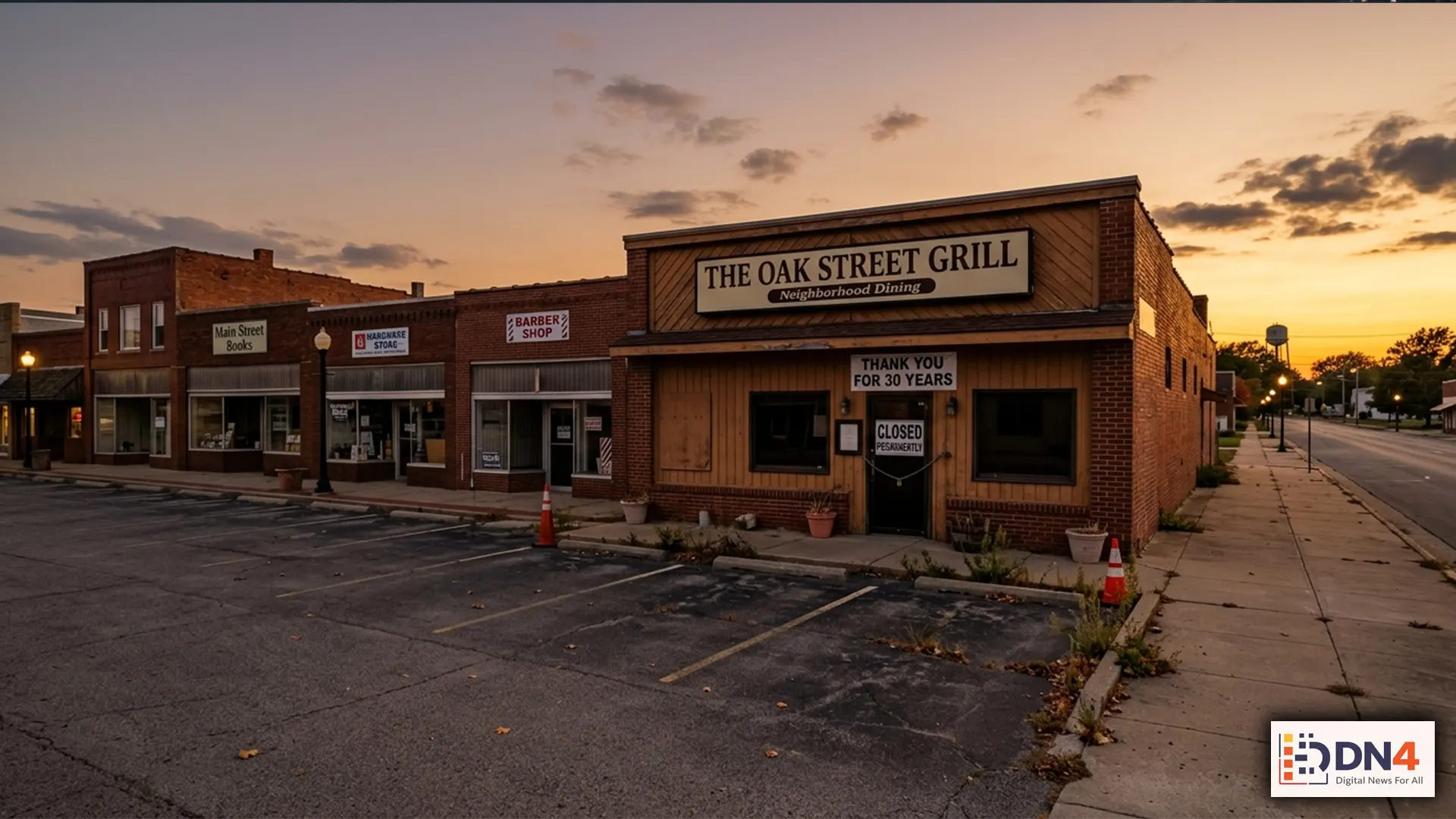
When a national restaurant chain closes one of its locations, it can be easy to view the event as simply another business decision. However, the recent closure of the Applebee’s restaurant in Calexico, California, represents something much larger than the loss of a familiar dining option. For many residents, employees, and nearby businesses, the shutdown highlights the interconnected role restaurants play within local economies. According to Applebee’s, restaurant locations regularly evaluate operational performance, market conditions, and long-term business strategies. Yet in smaller communities, closures often create ripple effects that extend well beyond the restaurant industry itself.
Jobs Lost, Income Reduced
The most immediate impact of any restaurant closure is employment. Restaurants provide opportunities for servers, cooks, managers, bartenders, hosts, maintenance staff, and suppliers.
Data from the National Restaurant Association consistently shows that restaurants are among the largest private-sector employers in many communities across the United States.
For affected workers, the closure may mean temporary unemployment, reduced household income, or the challenge of finding similar opportunities within the local market.

A Ripple Effect Across Local Businesses
Restaurants often act as economic anchors that help drive foot traffic to surrounding businesses. Customers who dine out may also visit nearby retail stores, gas stations, entertainment venues, and service providers.
Economic research highlighted by the U.S. Small Business Administration suggests that commercial activity frequently benefits from business clustering, where multiple establishments support one another through shared customer traffic.
When a recognizable chain restaurant closes, neighboring businesses may experience fewer visitors and lower sales.
The Community Impact
For many residents, Applebee’s served as more than a place to eat. It functioned as a gathering space for families, celebrations, sports viewing, business meetings, and community events.
Community gathering places contribute to local social connections and help support a sense of neighborhood identity.
While alternative dining options may exist, the loss of a familiar venue can still be felt by longtime customers.
What the Closure Says About Broader Economic Trends
The Calexico closure also reflects wider challenges facing the restaurant industry.
Industry coverage from Restaurant Business and QSR Magazine has documented rising labor costs, inflation pressures, changing consumer spending habits, and increased competition throughout the food-service sector.
Many operators continue adapting to evolving customer expectations, delivery trends, and economic uncertainty.

Can the Space Be Replaced?
One key question for local economic leaders is what comes next. Vacant commercial properties can create challenges, but they can also present opportunities.
Economic development organizations often work to attract new tenants capable of creating jobs, generating tax revenue, and restoring commercial activity.
The success of these efforts frequently depends on local demand, investment conditions, and broader economic trends.
Looking Ahead
While one restaurant closure may not define the future of a community, it can serve as an indicator of changing economic realities. For Calexico, the loss of Applebee’s highlights the importance of business diversity, local investment, and sustainable economic growth.
Residents, business owners, and local leaders will be watching closely to see what replaces the location and how the community adapts moving forward.
The closure of the Calexico Applebee’s is about more than dining choices. It affects jobs, local commerce, community gathering spaces, and economic confidence. While communities are often resilient, the event serves as a reminder that even a single business closure can have consequences that reach far beyond its front doors.
#Applebees #Calexico #LocalEconomy #RestaurantIndustry #BusinessNews #EconomicImpact #SmallBusiness #CommunityNews #LocalBusiness #CaliforniaNews