

 By Vinod Ram
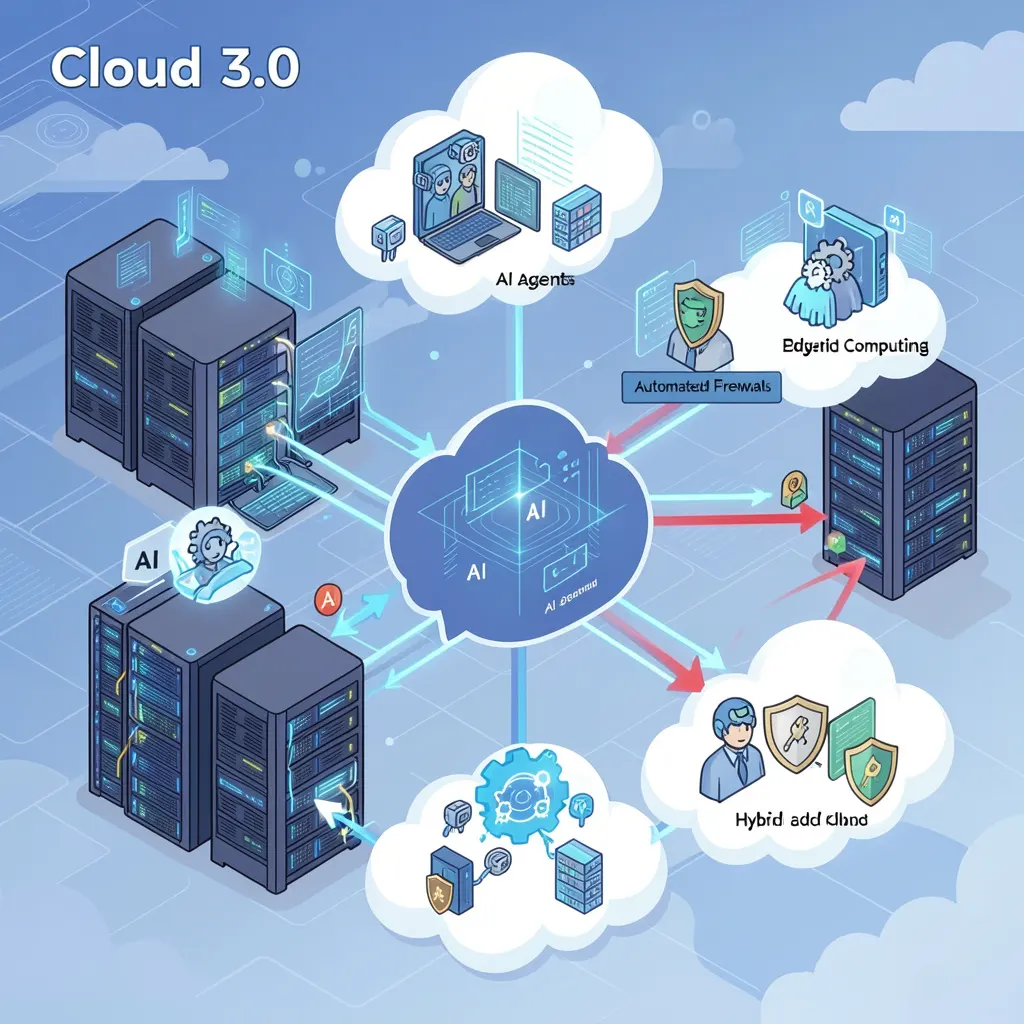
The rapid rise of artificial intelligence is pushing organizations to rethink their cloud strategies. As AI workloads become more demanding, enterprises are entering the era of Cloud 3.0— a new phase of cloud computing where flexibility, performance, and data sovereignty matter more than ever.
Rather than relying solely on public cloud platforms, businesses are increasingly adopting hybrid cloud architectures that combine on-premises infrastructure with public and private cloud environments. This approach is proving essential for scaling modern AI applications efficiently.
What Is Cloud 3.0?
Cloud 3.0 represents the next evolution of cloud computing, driven by AI, machine learning, edge computing, and real-time data processing. Unlike traditional cloud-first approaches, Cloud 3.0 emphasizes workload optimization across multiple environments.
Organizations are leveraging solutions from Amazon Web Services (AWS), Google Cloud, and Microsoft Azure while maintaining critical workloads in private infrastructure.

Why AI Demands Hybrid Cloud Infrastructure
AI models require enormous computing resources, large datasets, and high-speed connectivity. A hybrid cloud strategy offers several advantages:
- Scalability: Expand compute power instantly during model training.
- Cost Optimization: Balance workloads between public and private environments.
- Data Security: Keep sensitive data within controlled infrastructure.
- Compliance: Meet regional regulations and governance requirements.
- Performance: Reduce latency through localized processing.
The Role of Generative AI
Generative AI applications such as large language models are accelerating cloud transformation. According to research from Gartner, enterprises are increasingly investing in hybrid environments to support AI innovation while maintaining operational control.
Organizations using platforms like NVIDIA AI infrastructure and IBM Hybrid Cloud solutions are achieving greater flexibility and improved AI deployment efficiency.
Key Benefits for Enterprises
Hybrid cloud environments enable organizations to:
- Train AI models faster.
- Protect sensitive customer data.
- Optimize cloud spending.
- Deploy AI applications globally.
- Support edge AI and IoT initiatives.
The Future of AI and Cloud 3.0
As AI adoption accelerates, hybrid cloud architectures will become the foundation of enterprise digital transformation. Businesses that embrace Cloud 3.0 today will be better positioned to manage growing AI workloads, ensure compliance, and gain a competitive advantage in the data-driven economy.
The future belongs to organizations that can seamlessly combine the scalability of public clouds with the control and security of private infrastructure.
#HybridCloud #CloudComputing #Cloud30 #ArtificialIntelligence #EnterpriseAI #DigitalTransformation #DataSecurity #MachineLearning #TechInnovation #CloudInfrastructure