

 By Vinod Ram
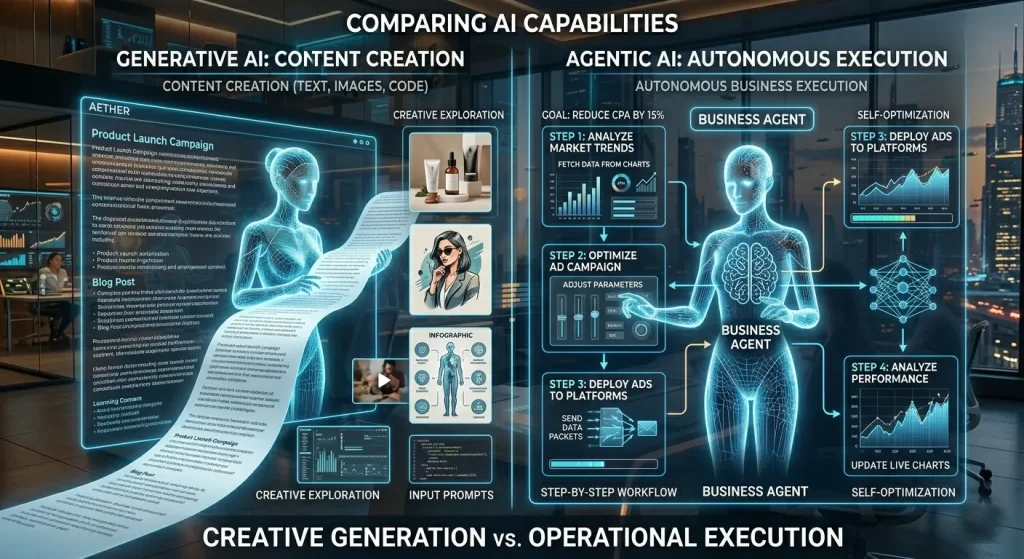
Artificial Intelligence is entering a new phase in 2026. While Generative AI transformed content creation, coding, and productivity over the last few years, businesses are now shifting toward Agentic AI — a more autonomous form of AI capable of making decisions, completing tasks, and operating independently.
The difference between these two technologies may define which companies lead the next decade of digital transformation. From customer service automation to AI-powered business operations, the move from “creating” to “acting” is changing enterprise strategy globally.
What Is Generative AI?
Generative AI refers to systems that generate content such as text, images, videos, and code. Platforms like ChatGPT, Google Gemini, and Anthropic Claude have revolutionized how businesses create marketing campaigns, automate customer interactions, and improve productivity.
These systems are reactive. They respond to prompts and produce outputs, but they still rely heavily on human direction.
What Makes Agentic AI Different?
Agentic AI goes beyond generating content. It can independently plan tasks, execute workflows, analyze results, and even make decisions with minimal supervision.
Companies like Microsoft AI and NVIDIA AI are investing heavily in AI agents capable of handling enterprise operations such as scheduling, research, analytics, cybersecurity monitoring, and automated reporting.
Why Businesses Must Prepare Now
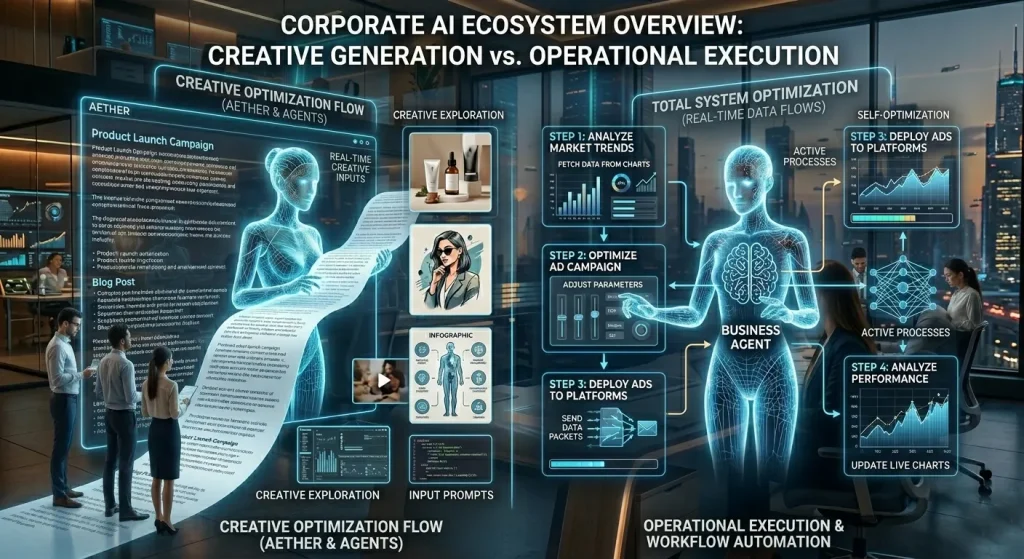
The rise of Agentic AI means businesses will soon automate entire processes rather than isolated tasks. This shift could significantly reduce operational costs while improving efficiency and decision-making speed.
- Customer support agents that resolve issues without human escalation
- AI financial analysts generating live business insights
- Marketing agents managing campaigns autonomously
- Supply chain systems predicting disruptions in real time
According to recent reports from McKinsey AI Insights, enterprise adoption of autonomous AI systems is expected to accelerate dramatically by 2026.
The Risks and Challenges
Despite its promise, Agentic AI introduces new concerns around accountability, ethics, data privacy, and cybersecurity. Businesses adopting autonomous systems will need stronger governance frameworks and human oversight.
Organizations that balance automation with transparency are likely to gain the strongest competitive advantage.
The battle between Generative AI and Agentic AI is not about replacement — it’s about evolution. Generative AI helps businesses create faster, while Agentic AI helps them operate smarter.
By 2026, the companies that successfully integrate autonomous AI workflows may redefine productivity across every industry.
#ArtificialIntelligence #AgenticAI #GenerativeAI #AITrends #BusinessAutomation #FutureOfWork #TechInnovation #AI2026 #EnterpriseAI