

 By Vinod Ram
Nvidia has once again stunned Wall Street with a massive surge in quarterly revenue, reinforcing its dominance in the rapidly expanding artificial intelligence industry. The company’s latest Q1 earnings report has intensified investor excitement around AI infrastructure, data centers, and next-generation semiconductor demand.
As businesses worldwide accelerate AI adoption, Nvidia’s powerful graphics processing units (GPUs) have become the backbone of modern artificial intelligence systems powering everything from generative AI chatbots to advanced cloud computing platforms.
Why Nvidia’s Revenue Growth Matters
Nvidia’s explosive revenue growth reflects the enormous global demand for AI computing power. According to reports from Reuters, the company’s data center division continues driving record-breaking sales as major technology firms aggressively invest in AI infrastructure.
Cloud providers, enterprise software companies, and AI startups are all racing to secure high-performance chips capable of training increasingly sophisticated machine learning models.
Analysts from CNBC say Nvidia has become one of the biggest beneficiaries of the global AI investment wave, with demand consistently exceeding supply for advanced AI chips.
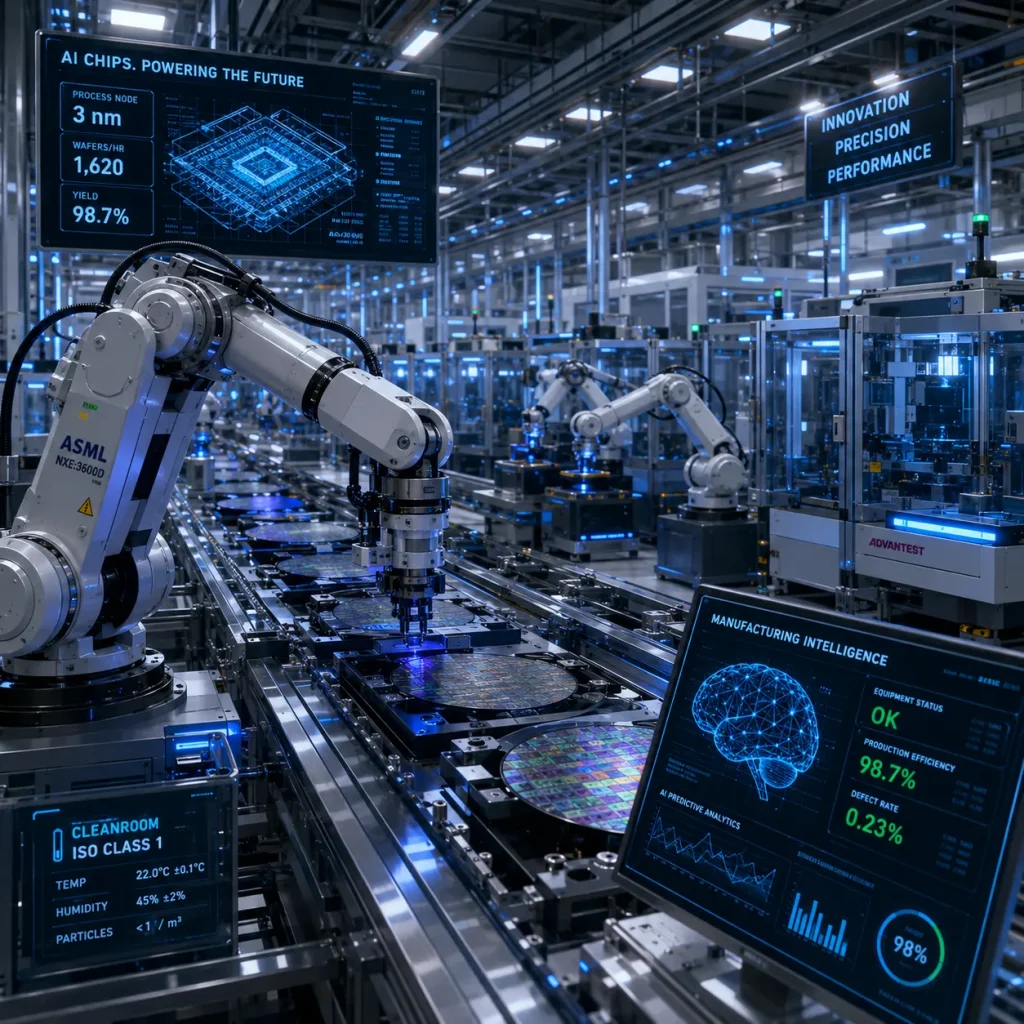
The AI Chip Race Is Accelerating
The competition for AI leadership is fueling one of the fastest-growing sectors in technology history. Companies including Microsoft, Google, and Amazon continue investing billions into AI-powered cloud systems and infrastructure.
This growing demand has dramatically increased the importance of advanced semiconductors capable of handling massive computational workloads.
According to market research discussed by Bloomberg, AI chip spending could remain elevated for years as businesses integrate artificial intelligence into core operations.
Why Investors Are Watching Closely
Nvidia’s stock performance has become a key indicator of investor confidence in the broader AI economy. Many analysts view the company as a bellwether for future technology spending and enterprise AI adoption.
The semiconductor industry itself is experiencing a major transformation as AI demand reshapes supply chains, manufacturing priorities, and global tech competition.
Reports from the Semiconductor Industry Association highlight how AI-related chip demand is increasingly driving global semiconductor growth.
Could the AI Boom Slow Down?
Despite the excitement, some investors remain cautious. Concerns include rising chip production costs, supply chain risks, export restrictions, and the possibility of future market saturation.
However, many technology analysts believe AI adoption remains in its early stages. Industries such as healthcare, finance, cybersecurity, manufacturing, and autonomous systems are only beginning to integrate large-scale AI solutions.
Experts from Gartner predict that enterprise AI spending will continue growing rapidly as organizations compete to improve productivity and automation capabilities.

The Bigger Economic Picture
The AI chip boom extends beyond Silicon Valley. Governments worldwide are investing heavily in semiconductor independence and AI research. Technology is increasingly tied to national security and economic competitiveness.
This has intensified the global race for semiconductor manufacturing leadership involving the United States, China, Taiwan, and Europe.
Nvidia’s massive Q1 revenue surge highlights the extraordinary momentum behind artificial intelligence and semiconductor demand. While questions remain about long-term sustainability, the current AI investment cycle appears far from over.
For investors, businesses, and technology leaders, Nvidia’s growth means more than a successful earnings report. It could signal the beginning of a much larger transformation driven by AI-powered computing.
#Nvidia #AIChips #ArtificialIntelligence #Semiconductors #TechStocks #AIBoom #DataCenters #StockMarket #TechnologyNews