

 By Vinod Ram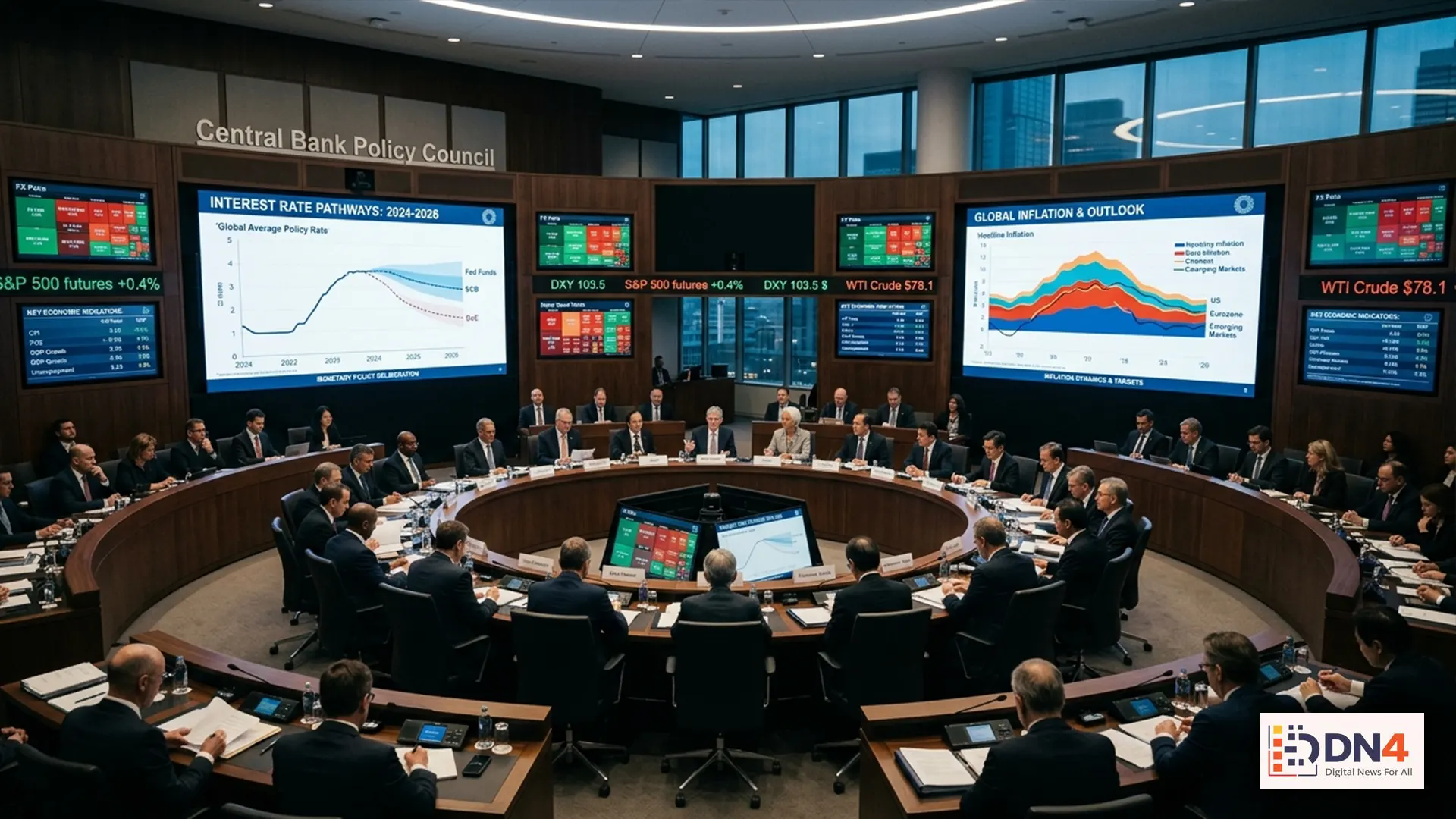
If you’ve been waiting for cheaper mortgages, lower EMIs, or easier business loans in 2026, you’re not alone. Around the world, millions of consumers and investors expected central banks to start cutting rates by now. Instead, policymakers are hitting pause.
That’s left one big question hanging over the global economy: Why aren’t interest rates dropping in 2026?
The short answer: inflation may be cooling, but it hasn’t cooled enough—and central banks don’t want to make the same mistake twice.
What Is the Global Central Bank “Pause”?
The “pause” refers to a strategy where major central banks stop raising rates—but also avoid cutting them too quickly.
That includes institutions like the U.S. Federal Reserve, the European Central Bank, the Bank of England, and other major policymakers watching inflation, wages, jobs, and consumer demand very closely.
Instead of declaring victory over inflation, central bankers are essentially saying: “We’d rather wait too long than cut too early.”
Inflation Fell — But Not Enough
Many people assume that once inflation starts coming down, interest rates should automatically follow. But that’s not how central banking works.
According to recent analysis from the International Monetary Fund (IMF), global inflation has moderated from its post-pandemic peaks, but services inflation, wage pressure, and housing-related costs remain stubborn in many economies.
That matters because central banks care less about whether inflation is “better” and more about whether it is durably under control.
- Food prices may have cooled in some regions
- Energy shocks are less intense than before
- But rent, wages, and service costs are still elevated
That makes policymakers nervous about cutting too soon and reigniting inflation all over again.
Why Central Banks Are Being So Careful
There’s one phrase shaping monetary policy in 2026: higher for longer.
After underestimating inflation in earlier years, many central banks are now determined to avoid another policy mistake. Officials increasingly prefer patience over speed—even if markets and borrowers don’t like it.
Market commentary from Reuters Markets and Bloomberg Economics has repeatedly shown that investors keep pricing in rate cuts faster than central bankers are willing to deliver.
Why the caution?
- Labor markets remain surprisingly resilient
- Consumer spending has not fully cracked
- Geopolitical risks can quickly push prices higher again
- Sticky inflation is harder to eliminate than headline inflation
What This Means for Your Mortgage, Loan, and EMI
This is where the “pause” becomes personal.
If central banks aren’t cutting aggressively, borrowing costs stay elevated longer. That affects:
- Home loans and mortgage rates
- Car financing
- Credit card interest
- Small business loans
- Personal loans and EMIs
Consumers hoping for dramatically cheaper monthly payments in 2026 may need to wait longer than expected.
Mortgage trend coverage from CNBC Personal Finance shows that even modest policy delays can keep housing affordability under pressure for months.
Why Savings Accounts and Bonds Still Benefit
It’s not all bad news.
Higher rates also mean savers and conservative investors can continue benefiting from stronger yields on:
- High-yield savings accounts
- Fixed deposits / term deposits
- Short-term government bonds
- Money market products
That’s one reason many financial analysts say 2026 is a very different environment from the low-rate era people got used to in the 2010s.
Rate outlook coverage from Investopedia and policy tracking from the World Bank suggest this “new normal” may last longer than consumers expect.

Why This Is a Global Story — Not Just a U.S. One
One of the biggest misconceptions is that this is only about the U.S. Federal Reserve. In reality, the “pause” is playing out across multiple major economies.
In Europe, policymakers are still balancing weak growth against inflation persistence. In the UK, wage growth remains a major concern. In emerging markets, central banks are also trying to protect currencies and capital flows while managing domestic inflation.
Global economic reporting from the OECD shows that while each country faces different pressures, the broader message is the same: central banks are not ready to declare the inflation fight over.
Why Markets Keep Getting It Wrong
Financial markets love to anticipate rate cuts because lower rates generally support stocks, property, and borrowing activity.
But markets often underestimate how cautious central bankers can be when credibility is on the line.
That’s why you keep seeing a pattern in 2026:
- Markets expect cuts
- Central banks sound cautious
- Rate cut expectations get pushed back again
This mismatch between investor optimism and policy reality is one of the biggest financial themes of the year.
What Could Finally Trigger Rate Cuts?
Rates won’t stay high forever. But for cuts to happen meaningfully, central banks will likely need clearer evidence of at least one of the following:
- Inflation falling closer to target consistently
- Wage growth slowing more decisively
- Consumer demand weakening sharply
- Labor markets cooling faster
- Economic growth slowing enough to justify relief
Until then, “pause” may be the most important word in global finance.
Interest rates aren’t dropping in 2026 because central banks still don’t fully trust the inflation slowdown.
They’re pausing, not pivoting.
For households, investors, and businesses, that means one thing: the era of waiting for “cheap money” to quickly return is looking increasingly unrealistic.
And that may be the most important financial reality of 2026.
#InterestRates #CentralBanks #Inflation #FederalReserve #MortgageRates #GlobalEconomy #FinanceNews