

 By Vinod Ram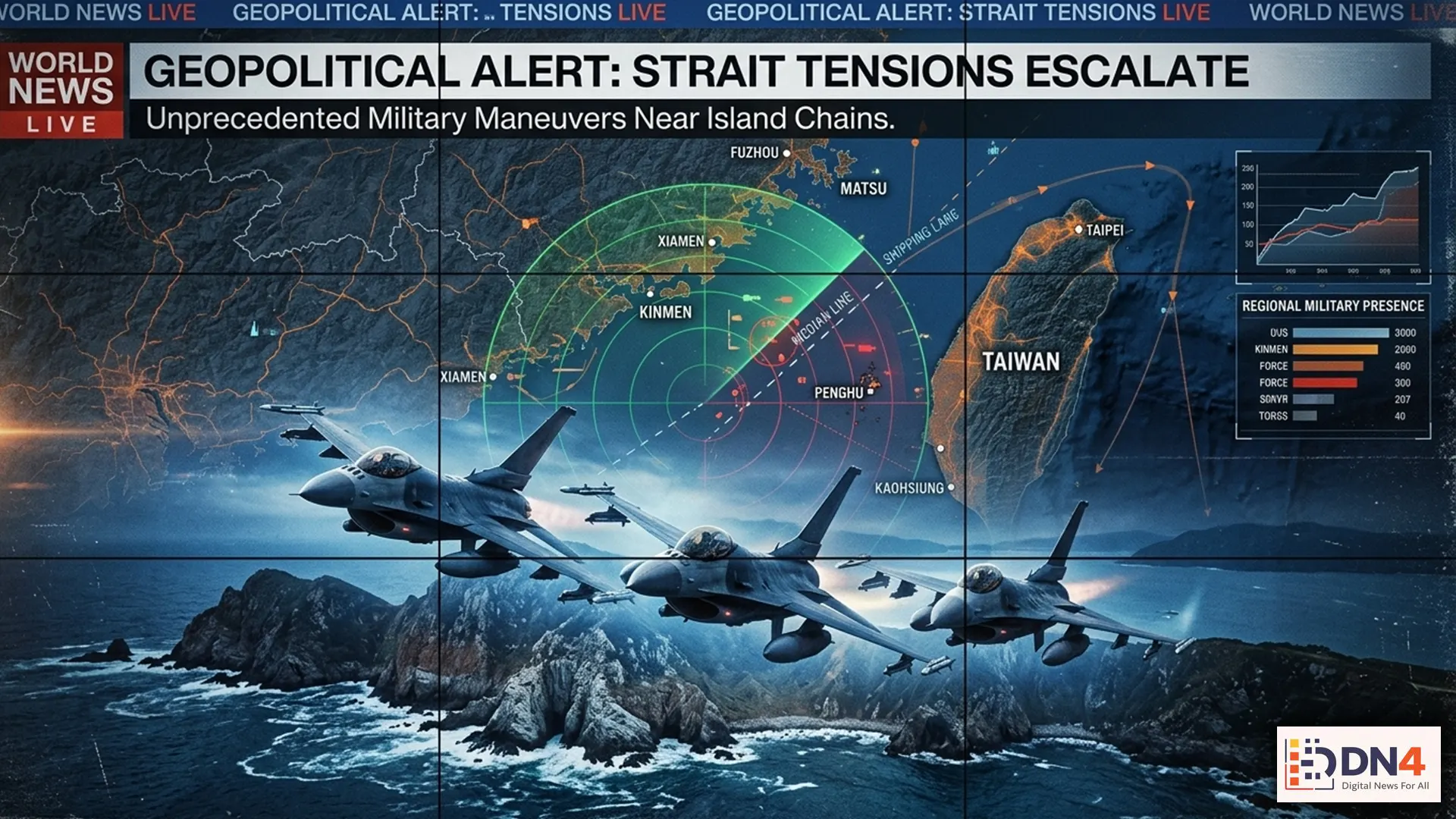
Tensions in the Taiwan Strait escalated this weekend after Taiwan’s defense authorities reported detecting 26 Chinese military aircraft operating near the island.
The surge in activity came just as reports emerged that U.S. President Donald Trump may visit Taiwan in April—a development that could significantly reshape regional diplomacy.
According to Taiwan’s Ministry of National Defense, the aircraft included fighters, surveillance planes, and support aircraft operating near Taiwan’s air defense identification zone (ADIZ).
What Happened This Weekend?
Officials in Taipei said the aircraft were detected over a 24-hour period, with several crossing the median line of the Taiwan Strait.
The flights prompted Taiwan’s military to deploy aircraft and monitor movements using radar and missile defense systems.
These types of sorties have become increasingly common in recent years as tensions between China and Taiwan continue to intensify.

Why the Skies Went Quiet During China’s Political Meetings
Interestingly, the surge comes shortly after a quieter period in Chinese military activity.
During the recent National People’s Congress, Beijing’s annual political gathering, aircraft incursions around Taiwan noticeably declined.
Analysts believe this pause may have been intentional. China often reduces military signaling during major domestic political events to maintain a controlled diplomatic environment.
Once the meetings concluded, activity quickly resumed.
The Trump Factor
The timing of the flights has drawn attention because of reports suggesting U.S. President Donald Trump could visit Taiwan in April.
Such a visit would be highly symbolic and potentially controversial.
The United States maintains unofficial diplomatic relations with Taiwan under the Taiwan Relations Act, while formally recognizing the People’s Republic of China.
Any presidential visit would likely trigger a strong reaction from Beijing, which considers Taiwan a breakaway province.
Experts from think tanks like the Center for Strategic and International Studies say military signaling often increases around major diplomatic developments.
Why China Conducts These Flights
Chinese military aircraft frequently operate near Taiwan for several strategic reasons:
- Military training: Testing coordination between aircraft and naval forces
- Political signaling: Sending messages during diplomatic developments
- Airspace familiarization: Practicing operations near Taiwan’s defenses
- Pressure tactics: Demonstrating capability without direct confrontation
These operations are usually conducted just outside Taiwanese territorial airspace but inside the broader ADIZ monitoring zone.

What This Means for the Indo-Pacific
The Taiwan Strait remains one of the most strategically sensitive regions in the world.
Major global powers—including the United States, Japan, and Australia—closely monitor military movements in the area.
According to geopolitical analysts cited by Reuters Asia Pacific, increased air activity often reflects broader shifts in regional security dynamics.
Even small changes in military posture can influence diplomatic relations across the Indo-Pacific.
The Bigger Picture
While 26 aircraft may seem like a dramatic number, analysts say such operations are part of a broader pattern of military signaling between Beijing and Taipei.
Still, the timing—coinciding with speculation about a potential Trump visit—adds another layer of geopolitical complexity.
As regional tensions continue to evolve, observers will be watching closely to see whether the flights represent a temporary show of force or the beginning of a new phase in Taiwan Strait diplomacy.
#TaiwanStrait #ChinaTaiwanTensions #MilitaryFlights #IndoPacific #GlobalPolitics #Geopolitics #DefenseNews