

 By Vinod Ram
On February 25, 2026, the National Hurricane Center made a stunning announcement: Hurricane Melissa has officially been upgraded to a Category 5 storm with sustained winds of 190 mph.
That means Melissa now ties Hurricane Allen (1980) as the strongest Atlantic hurricane ever recorded.
But here’s what makes this historic: the upgrade happened months after the storm ended. The reason? A scientific process called reanalysis.
What Is Hurricane “Reanalysis”?
Reanalysis is a post-storm scientific review conducted by experts at the National Oceanic and Atmospheric Administration (NOAA) and the National Hurricane Center.
After a hurricane dissipates, meteorologists gather:
- High-resolution satellite data
- Hurricane hunter aircraft measurements
- Dropsonde pressure readings
- Ocean buoy observations
- Advanced wind-field modeling
Using improved algorithms and recalibrated satellite intensity estimates, scientists reassess maximum sustained wind speeds and central pressure.
In Melissa’s case, newly processed satellite data revealed wind speeds reached 190 mph at peak intensity — higher than initially recorded.
For comparison, Category 5 begins at 157 mph according to the Saffir-Simpson Hurricane Wind Scale.
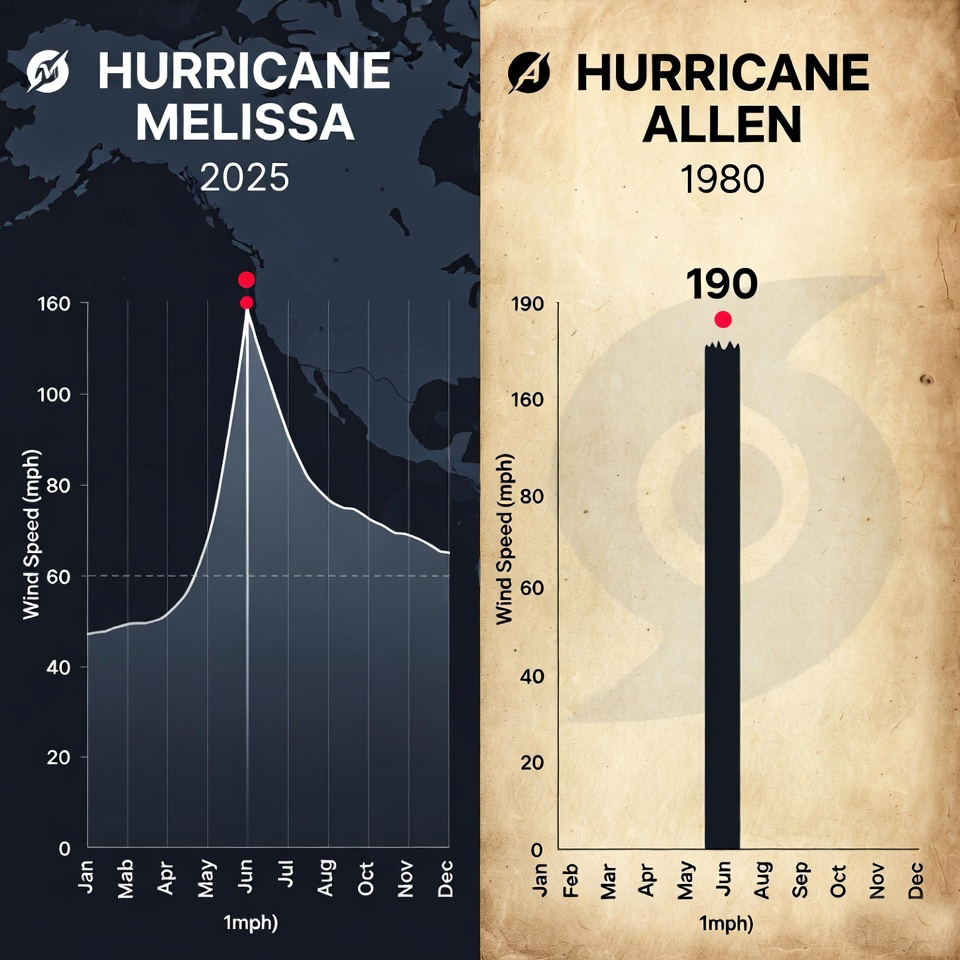
Melissa vs. Allen: The Most Intense Atlantic Hurricanes
| Hurricane | Year | Peak Wind Speed | Region Impacted |
|---|---|---|---|
| Hurricane Melissa | 2025 | 190 mph | Caribbean, Jamaica |
| Hurricane Allen | 1980 | 190 mph | Caribbean, Gulf of Mexico |
| Hurricane Dorian | 2019 | 185 mph | Bahamas |
| Hurricane Wilma | 2005 | 185 mph | Caribbean, Florida |
Melissa’s reclassification reshapes modern hurricane climatology and strengthens evidence that Atlantic storms are becoming more intense.
$8.8 Billion Recovery Effort in Jamaica
Jamaica bore the brunt of Melissa’s fury. Infrastructure, tourism hubs, and agricultural zones sustained severe damage.
The Jamaican government has launched an estimated $8.8 billion recovery initiative focused on:
- Coastal infrastructure rebuilding
- Climate-resilient housing
- Storm surge barriers
- Tourism sector revitalization
- Agricultural restoration programs
International agencies including the World Bank and regional climate funds are expected to assist.
Economic analysts say recovery spending could reshape Jamaica’s long-term climate resilience strategy.
What This Means for the 2026 Hurricane Season
The Atlantic hurricane season officially begins on June 1. Melissa’s upgrade raises urgent questions about preparedness.
According to NOAA Climate outlook models, warmer sea surface temperatures increase the likelihood of rapid intensification events — when storms strengthen dramatically within 24 hours.
Emergency management officials across Florida, Texas, the Gulf Coast, and Caribbean nations are reviewing response frameworks.
If Melissa’s 190 mph reanalysis is a preview, the 2026 season could test modern infrastructure in unprecedented ways.

Why Reanalysis Matters
Reanalysis improves:
- Historical storm accuracy
- Insurance risk modeling
- Building code standards
- Climate change attribution research
For insurers and policymakers, a 190 mph benchmark changes actuarial calculations — particularly in hurricane-prone states like Florida and Louisiana.
We Want to Hear From You
If you live in a hurricane-prone region:
- How did Melissa impact your community?
- What recovery lessons have you learned?
- What preparations are you making for 2026?
Share your story in the comments below — your insights could help others prepare.
#HurricaneMelissa #AtlanticHurricane #Category5 #ClimateChange #HurricaneSeason2026 #JamaicaRecovery #StormReanalysis #ExtremeWeather