

 By Vinod Ram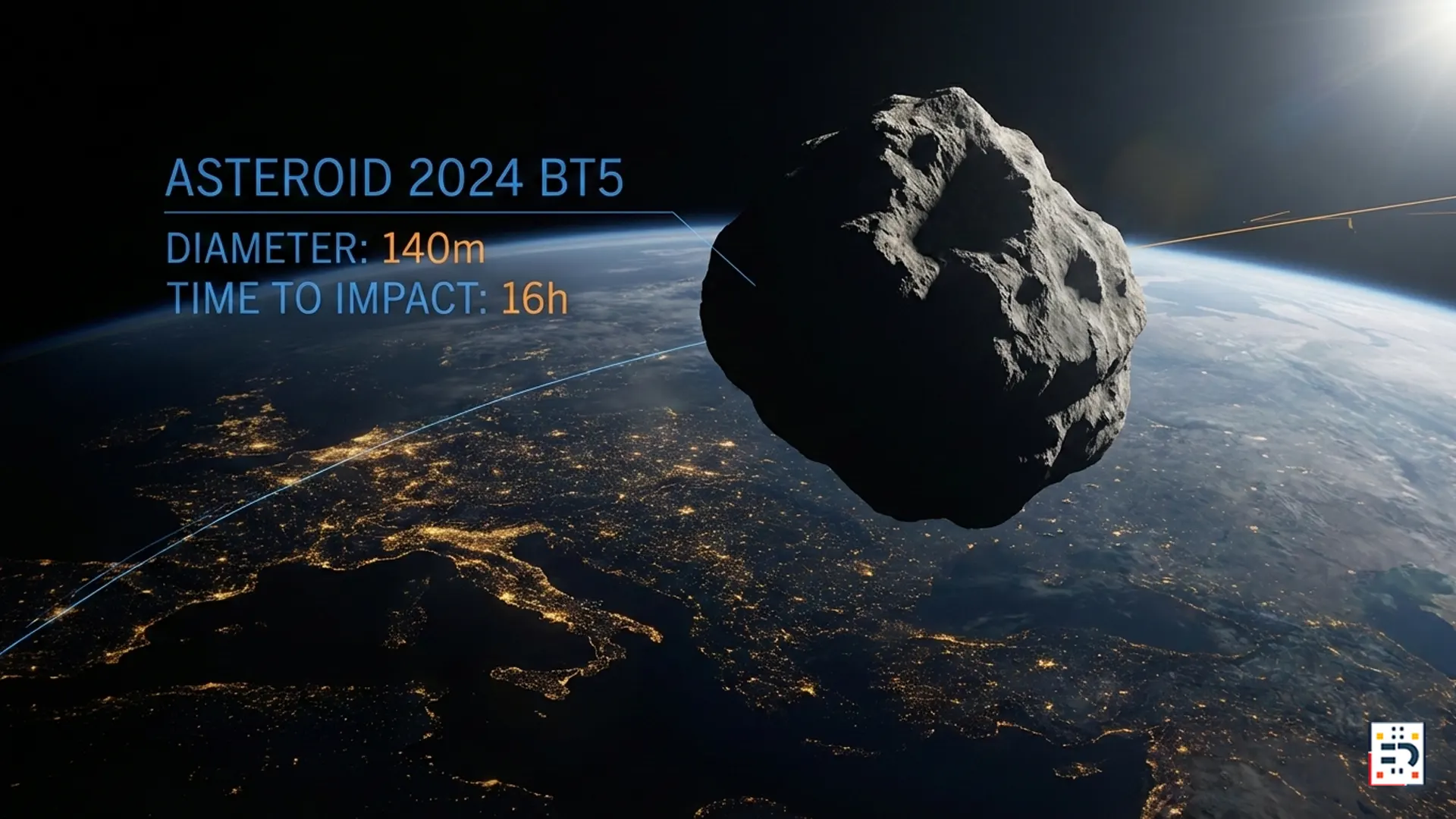
This week at the annual meeting of the American Association for the Advancement of Science (AAAS) in Phoenix (Feb 17, 2026), scientists from NASA delivered a sobering warning: nearly 15,000 medium-sized asteroids capable of destroying an entire metropolitan region remain undetected.
These objects, known as “city-killers”, may not wipe out humanity — but they could erase a city from the map in seconds.
What Is a “City-Killer” Asteroid?
NASA classifies a city-killer as an asteroid approximately 140 meters (460 feet) in diameter.
To put that into perspective:
- The Eiffel Tower stands about 330 meters tall.
- The Burj Khalifa reaches 828 meters.
A 140-meter asteroid is less than half the height of the Eiffel Tower — yet powerful enough to release energy equivalent to hundreds of nuclear bombs upon impact.
According to NASA’s Center for Near-Earth Object Studies, objects of this size can:
- Flatten entire cities
- Trigger massive fires
- Create shockwaves felt hundreds of miles away
- Cause regional climate disruption
The 2024 YR4 “Near-Miss” That Has Scientists Watching 2032
One object drawing particular attention is 2024 YR4, a recently discovered near-Earth asteroid.
While current calculations do not guarantee impact, orbital projections suggest a potential Earth — or even Moon — encounter window in 2032.
NASA’s Planetary Defense Coordination Office continues to refine its trajectory models. Even a slight gravitational shift could alter its path.
This isn’t science fiction. In 2022, NASA successfully tested asteroid deflection with the DART mission, proving we can move an asteroid — but only if we see it early enough.
The Dangerous “Blind Spot” Near the Sun
So why haven’t we found all 15,000 of these objects?
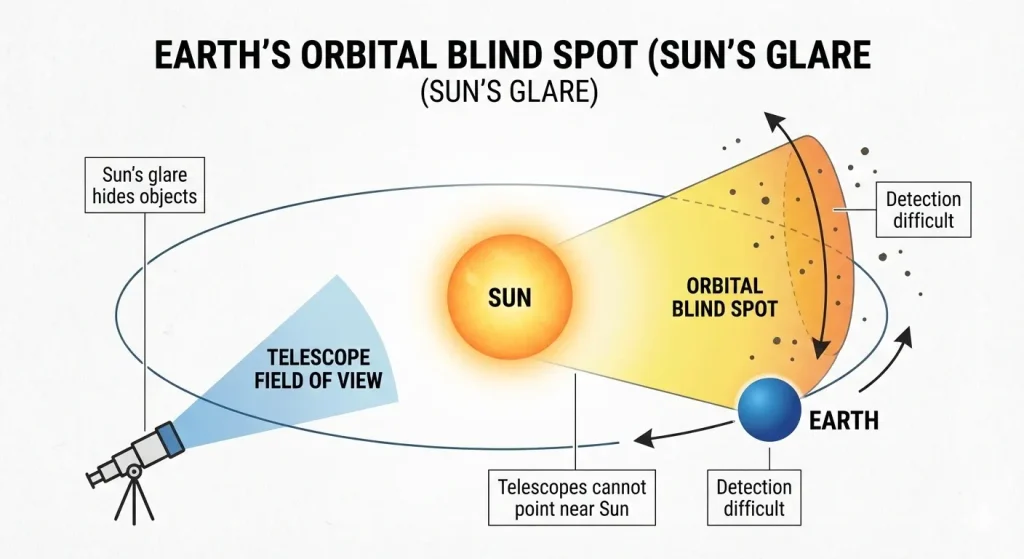
The answer: a solar blind spot.
Ground-based telescopes struggle to detect asteroids approaching from the direction of the Sun. The glare makes them nearly invisible until they’ve already passed Earth’s orbit.
This blind zone means a city-killer could theoretically approach undetected until it’s too late to respond.
The 2027 Solution: NASA’s NEO Surveyor Mission
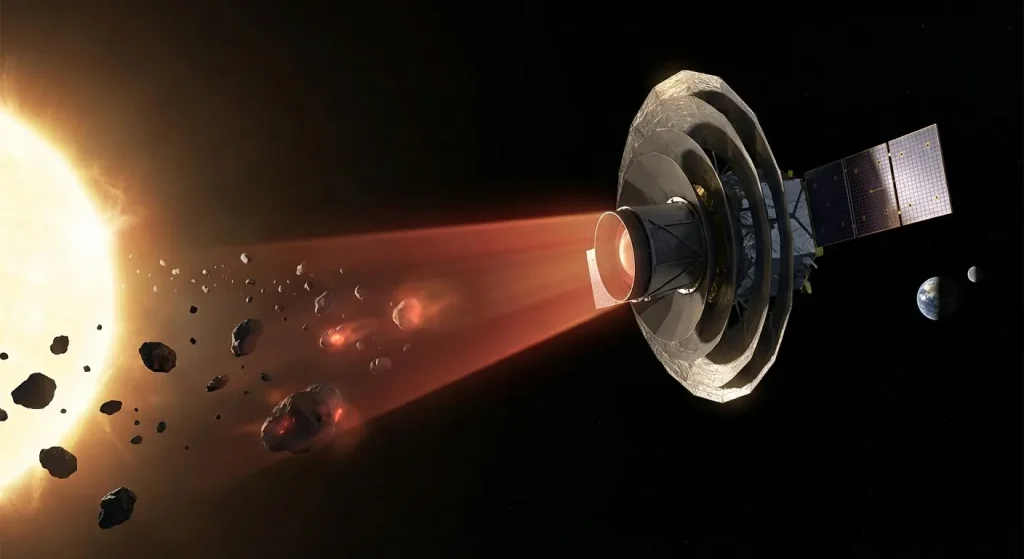
To fix this vulnerability, NASA is preparing to launch the NEO Surveyor mission in 2027.
Unlike traditional telescopes, NEO Surveyor will use infrared detection from space — allowing it to see dark asteroids even against the Sun’s glare.
Its mission: identify at least 90% of near-Earth objects larger than 140 meters.
Until then, scientists admit we are operating with incomplete awareness.
Are We Truly Defenseless?
Technologically? Not entirely.
Operationally? Possibly.
The real issue is detection time. Deflection strategies like kinetic impactors require years of preparation. A late discovery could leave evacuation as the only option.
What Would You Do?
Poll:
- 🔘 Increase planetary defense funding immediately
- 🔘 Maintain current funding levels
- 🔘 Prioritize other global risks instead
Should governments invest billions more into asteroid detection and defense?
Why This Matters Now
With thousands of unknown objects in our cosmic neighborhood, the risk isn’t zero. It’s statistical.
NASA estimates we have discovered most large extinction-level asteroids — but the mid-sized city-killers remain largely untracked.
The question isn’t whether an asteroid will hit Earth again.
It’s when.
#NASA #AsteroidThreat #CityKillerAsteroids #PlanetaryDefense #SpaceNews #NEOSurveyor #ScienceAlert