


The US-UK AI defense relationship is entering a new phase. During United Nations General Assembly week in New York, the British government announced a new artificial intelligence and autonomy partnership with the United States. The initiative is designed to help protect critical infrastructure and improve threat detection across sea lanes and airspace. The UK government’s UNGA speech confirms the announcement.
What Is the New AI Defense Partnership?
The partnership brings together Britain’s Rapid AI Delivery Taskforce and the U.S. Department of War’s Chief Digital and Artificial Intelligence Office. The two sides intend to accelerate trusted and interoperable AI and autonomous capabilities.
The UK Ministry of Defence says the cooperation will focus on using AI to detect threats, protect critical national infrastructure and strengthen deterrence.
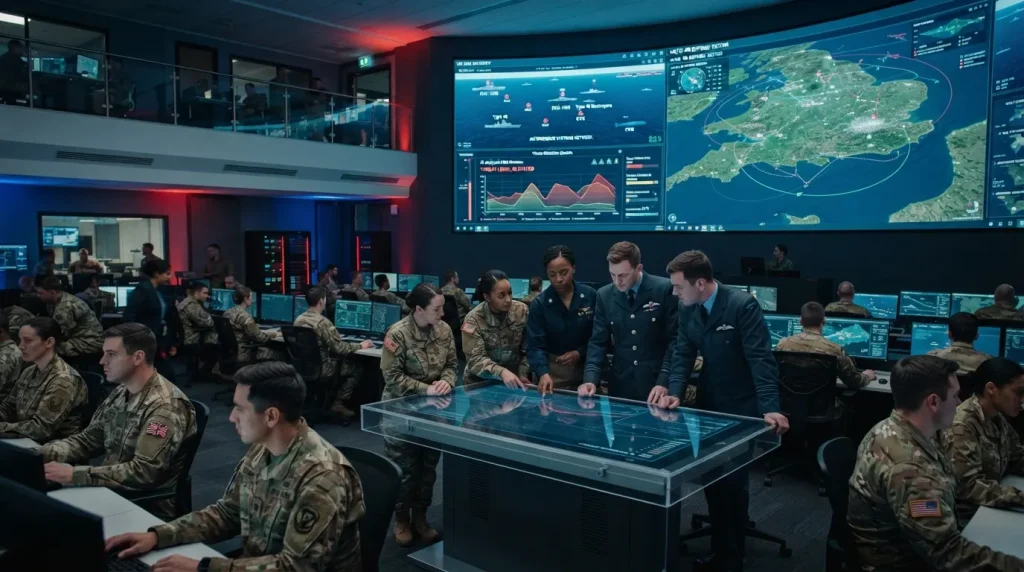
Could It Become a “Digital Iron Dome”?
The Iron Dome comparison is useful as a metaphor, but the new partnership is not an announced British-American Iron Dome system. Israel’s Iron Dome is a specific air-defense system designed to intercept short-range rockets and other threats.
The proposed US-UK model is broader. It involves AI, autonomy, sensors, data and military decision-support technologies across different environments. The goal is to connect capabilities rather than create one single interceptor system.
Britain has already created the Rapid AI Delivery Taskforce, which received £100 million through the country’s Defence Investment Plan. The Ministry of Defence says the taskforce is intended to accelerate operational deployment of AI, autonomy and other frontier technologies.
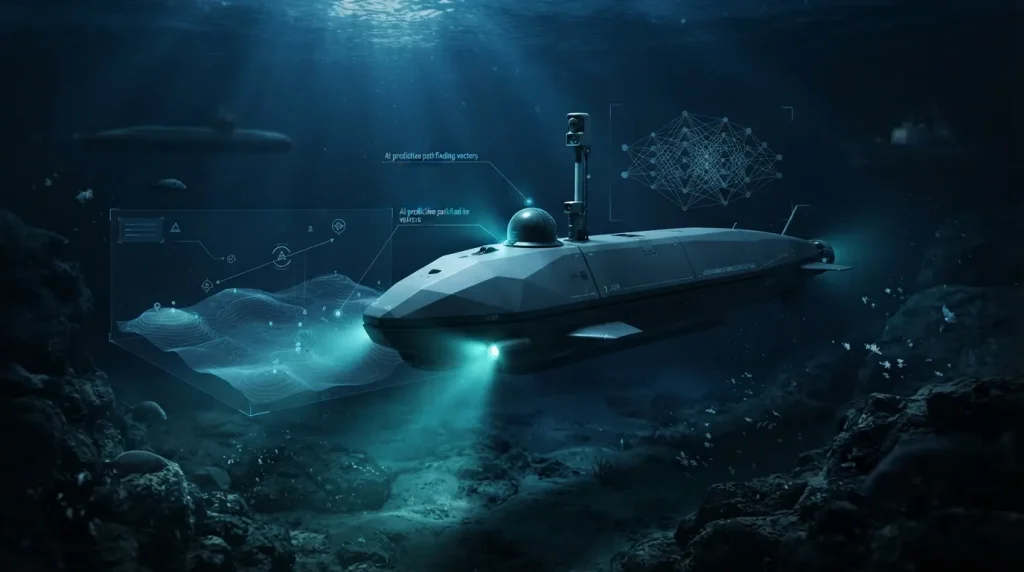
Undersea Drones Offer a Real-World Example
The announcement arrived alongside a significant demonstration of Anglo-American military interoperability. Britain fired a U.S. torpedo from a British-made undersea drone in what London described as a first.
The official announcement connects the demonstration with broader next-generation technology cooperation under AUKUS, the security partnership involving Australia, the UK and United States.
Why AI and Autonomy Matter
Modern military systems generate enormous volumes of sensor and intelligence data. AI can help process that information faster, identify patterns and support human decision-making.
The UK says its taskforce is exploring autonomous and uncrewed capabilities that could operate at greater scale and speed. The Defence Ministry’s June announcement says the technology could help personnel make decisions faster and reduce risks to human life.
The Partnership Still Has Major Questions
Interoperability is difficult. AI systems must exchange data securely, operate under different technical standards and remain reliable in contested environments.
Questions also arise about human oversight, cybersecurity, and accountability when militaries use autonomous systems in operations. Britain is still developing its own strategic approach to defense AI and expects to finalize it by the end of 2026. A UK Parliament response confirms that timeline.
A New Layer of Transatlantic Defense
The US-UK AI defense partnership is therefore better understood as an emerging digital layer across existing military cooperation rather than a literal Iron Dome replacement.
Its success will depend on whether AI systems can move from demonstrations into dependable, secure and interoperable military capabilities. For now, the New York announcement signals that Washington and London want AI and autonomy to become increasingly integrated into their shared defense architecture.
Earlier UK-US defense technology cooperation has already focused on data, AI and battlefield technologies, providing a foundation for the new partnership.
#USUK #AIDefense #ArtificialIntelligence #MilitaryAI #DefenseTechnology #NATO #AUKUS #AutonomousSystems #FutureOfDefense #CyberDefense #UK #USA